
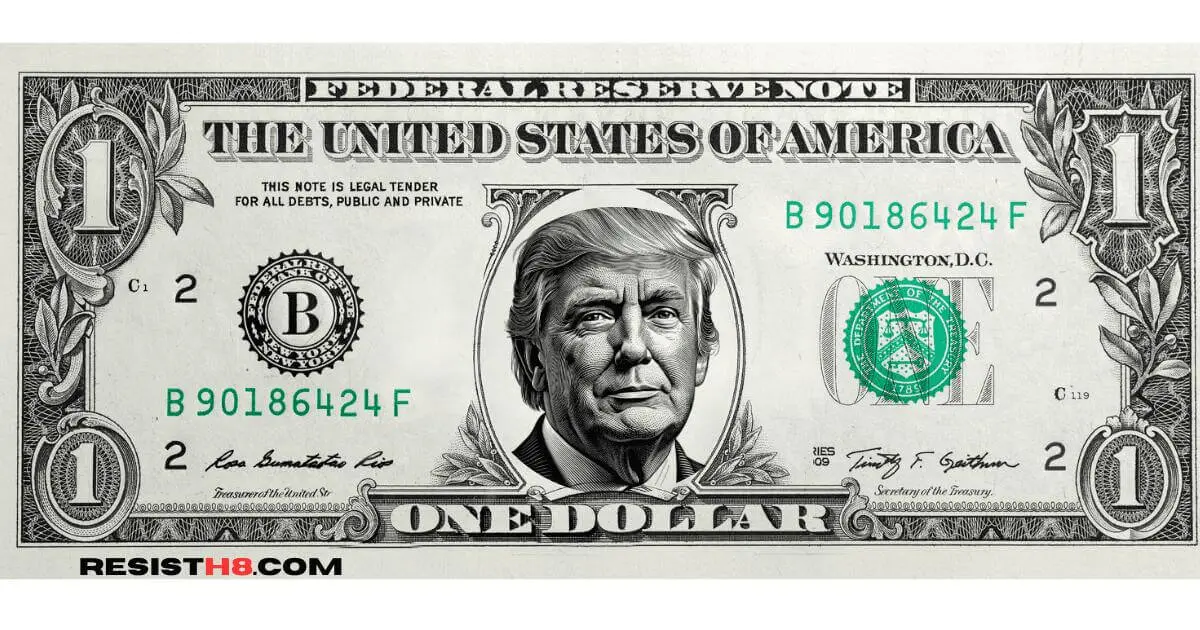

The President of the United States calls his fundraiser every night from the White House and asks one question: who wrote a check, and for how much?
That’s the opening of a Wall Street Journal investigation published July 30, and it doesn’t get less staggering from there.
The Journal reports that Trump calls his chief political fundraiser, Meredith O’Rourke, for a nightly update — which companies and donors have paid, which haven’t, and how much each one gave.
He then hands her names to call, frequently people who have just met with him.
And he tells her to ask for more than she planned. For some donors the number is $5 million. For others, it’s $50 million.
When O’Rourke makes those calls, she doesn’t hide who sent her. Sometimes she tells executives the request comes directly from the president.
Other times she’s blunter, referring to Trump simply as the boss who wants the money.
Trump, for his part, calls O’Rourke his “princess of darkness” — reportedly a compliment, because she’s so effective.
The Tally: More Than $800 Million
The Journal’s analysis puts the haul at more than $800 million since Trump returned to office. Where it went is the part worth looking at:
- The White House ballroom — the project that required demolishing the East Wing
- His presidential library
- 250th anniversary celebrations and Fourth of July events
- A helipad on the White House South Lawn
- Political action committees aligned with his agenda, some of which never have to disclose who gave
O’Rourke, notably, is not a government employee. She’s a private fundraiser who is nonetheless a regular fixture at the White House.
Who Paid, and What Happened Next
The Journal documented specific sequences that speak for themselves.
Lockheed Martin transferred upward of $10 million between late 2025 and early this year, tied to the anniversary events and D.C. construction projects.
The Pentagon then awarded Lockheed a June contract worth as much as $35 billion for missiles to replenish stockpiles drained by the Iran war.
Weeks later, Trump announced Lockheed was contributing roughly $5 million toward the South Lawn helipad.
Tobacco executives met Trump at his Jupiter, Florida golf club in May. O’Rourke sat in.
Trump told them he’d deliver most of what they wanted on vaping rules and the FDA.
Millions flowed to his political funds.
The FDA then dropped restrictions on a set of flavored vape products, and the agency’s top tobacco official was out.
Six Senate Democrats later wrote to Altria’s CEO suggesting the company’s money looked well spent.
Meta paid repeatedly — about $22 million to the library after settling Trump’s lawsuit over his suspended accounts, $10 million to a committee that doesn’t have to name its donors, plus money for the inauguration, the ballroom, and two Easter events.
Executives were asked so often they held internal calls just to figure out how to handle it.
Apple covered roughly $25 million of the ballroom. Microsoft put in about $10 million, Amazon about $5 million.

SoftBank was steered toward the library for $50 million. Chevron was asked for $50 million and paid a fraction of it.
Several executives told the Journal outright that they believe their donations are connected to their access to the president.
Why the Mob Comparison Keeps Coming Up
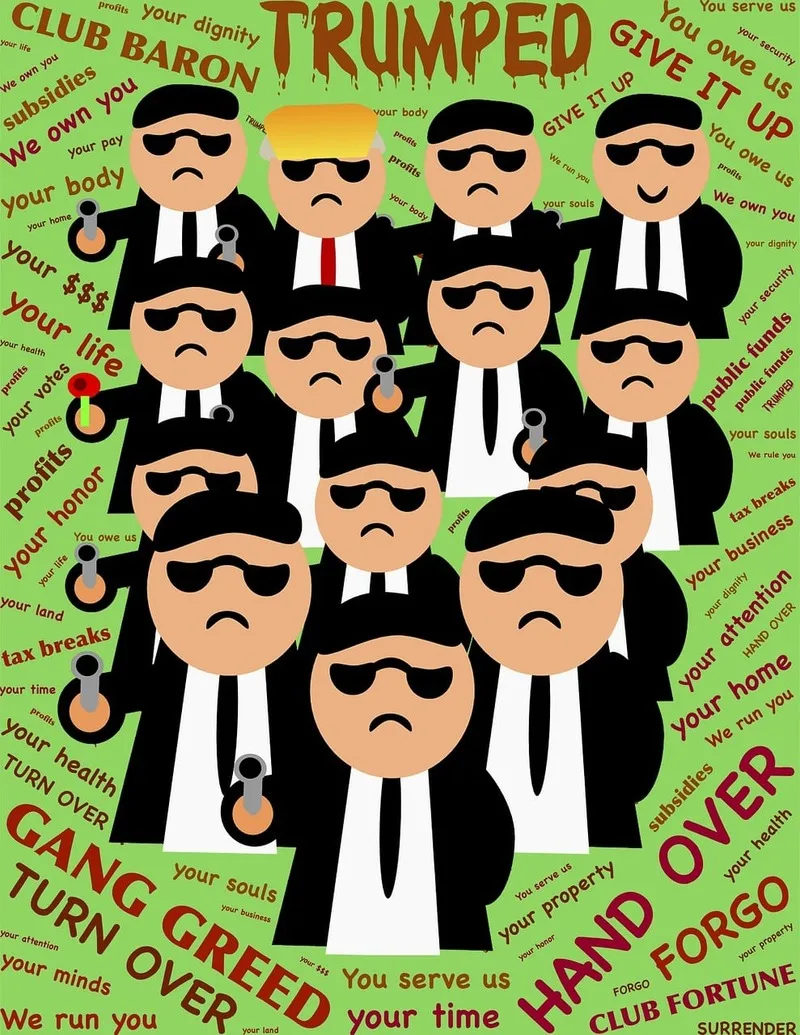
It isn’t subtle. A boss. Nightly accounting of who paid. Envelopes measured against expectations. Persistent follow-up calls.
One executive was hit up for another $1 million days after attending a thank-you dinner for a previous multimillion-dollar gift.
Even the people running it seem to feel it. The Journal reports that O’Rourke has told others some of Trump’s asks make her uncomfortable — a characterization his spokeswoman, Danielle Alvarez, called laughable.
Alvarez defended the operation, describing Trump as the most successful fundraiser in modern political history and saying the money will help Republicans in the midterms and build lasting political infrastructure.
Wall Street analyst Blair Levin told the Journal that companies have started calling it the “Trump Transaction Tax” — his point being that the free market is being replaced by a market for one man’s favor.
The uncomfortable part
Here’s what makes this worse rather than better: most of it is probably legal.
There’s no statute that stops a president from personally asking corporations for money, or from tracking who gave.
Bribery requires proving an explicit exchange — this for that — and nobody involved has any incentive to put that in writing.
The system runs on everyone understanding what’s happening without anyone having to say it.
Companies with billions in federal contracts, pending mergers, and regulatory fights write the checks.
The decisions land later. The two things are never formally connected.
That’s not a loophole. That’s the architecture of American campaign finance after Citizens United, and Trump is simply the first president to work it this openly, this personally, and this relentlessly.
It’s worth remembering that the man doing this ran in 2016 promising he couldn’t be bought — self-funding his campaign so no donor or lobbyist could control him.
He called super PACs a scam and had his team ask unauthorized groups to give money back.
Ten years later, he’s calling his fundraiser at night to find out who hasn’t paid yet.