
In Menasha, Wisconsin, people spent this week hauling what was left of their houses to the curb. An EF-3 tornado with 140 mph winds cut a twelve-mile path through Appleton, Neenah, and Menasha on July 27, ripping roofs off homes and flipping cars into power lines. Gov. Tony Evers declared a state of emergency. A woman was photographed walking through the debris of her neighborhood.
The federal agency created to help her is busy with something else.
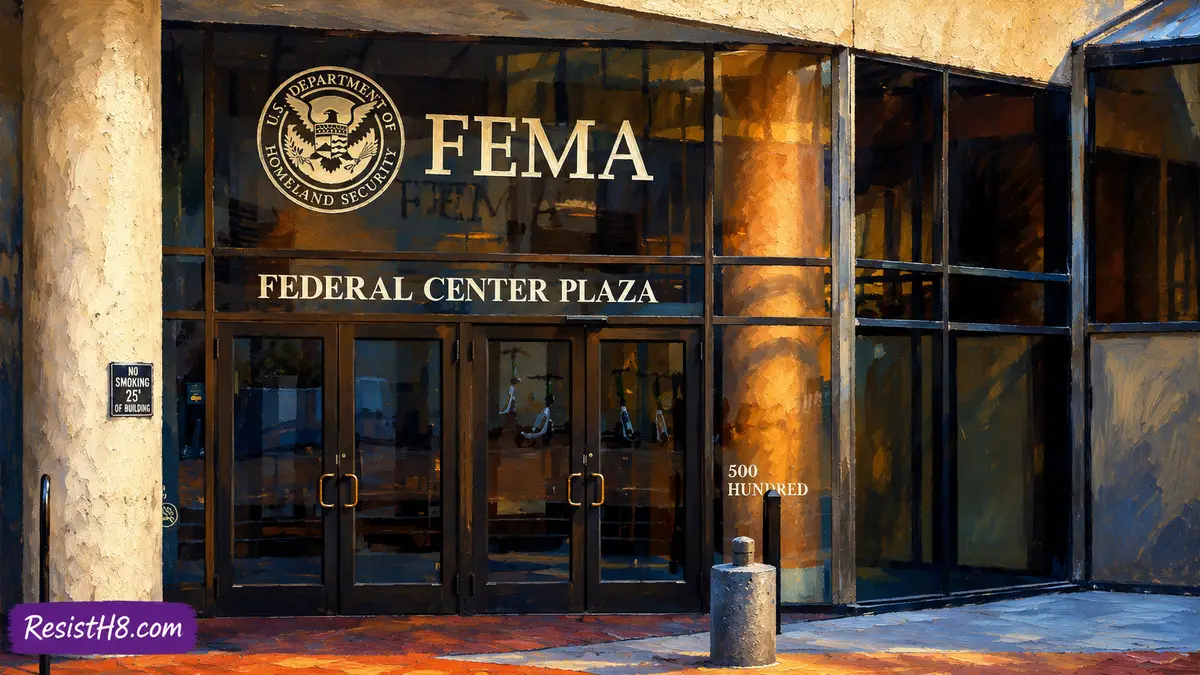
According to reporting by Ken Klippenstein, the Federal Emergency Management Agency has been handed a new assignment: domestic terrorism. Klippenstein obtained a FEMA information bulletin dated July 9 that instructs state and local governments to make "domestic terrorism" a priority in their grant applications — and tells them exactly what to spend the money on.
Not sandbags. Not generators. Not search-and-rescue training.
Instead, the bulletin points local agencies toward training to spot "social media-based indicators," analysts to monitor people's online behavior and digital footprints, and teams to manage "persons of concern" whose conduct supposedly suggests a trajectory toward terrorism. Klippenstein counted some form of the word indicator ten times in the eight-page document.
What "Indicator" Actually Means
Strip away the jargon and this is pre-crime.
Ordinarily, an investigation starts with evidence that a crime happened. An indicator-based approach starts with a prediction — something you posted, something you said, something an officer was trained to read as a warning sign about a crime that hasn't occurred and may never occur.
The bulletin asks agencies to train communities to report "concerning behaviors" and to run surveillance and counter-surveillance training to catch supposed casing of domestic targets.
These tools were built for organized foreign terror networks. They're now being aimed at Americans.
The Money Comes With a Threat Attached
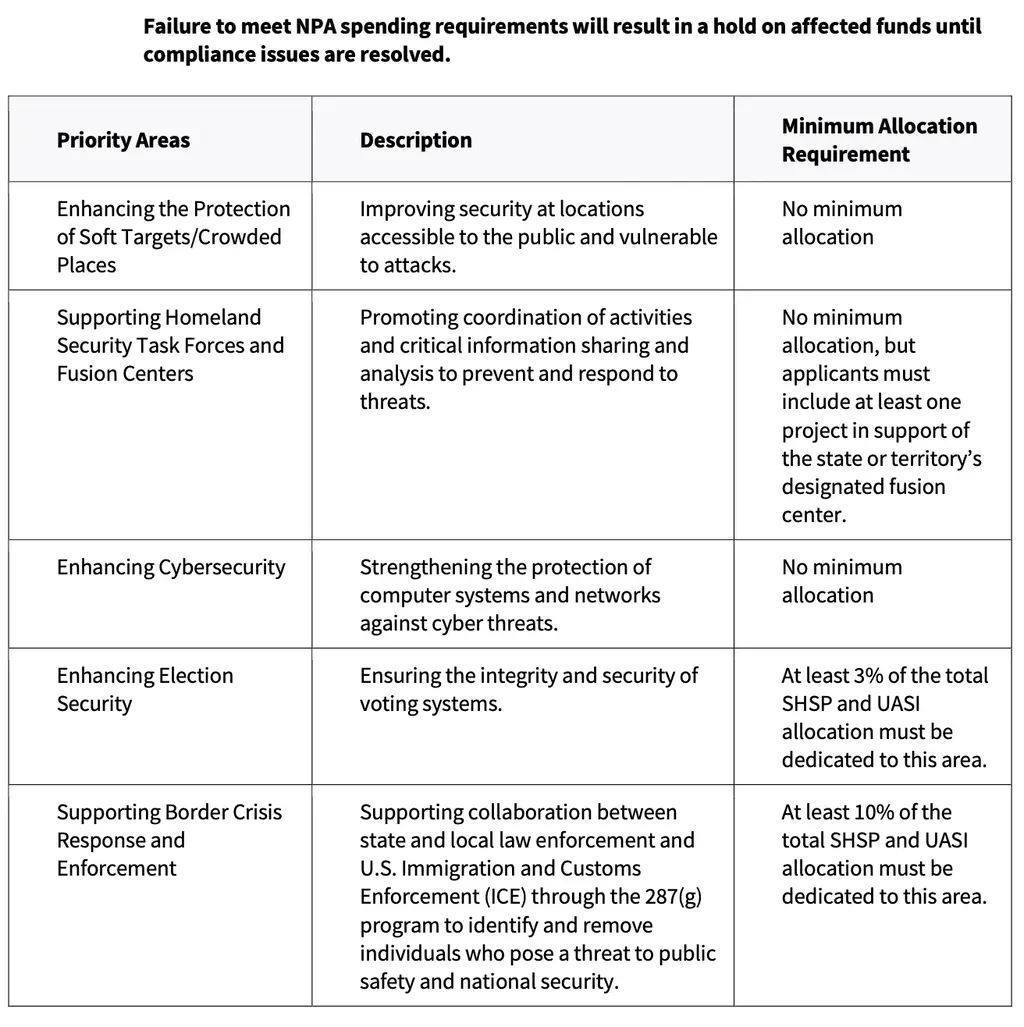
A second document Klippenstein obtained, a Department of Homeland Security grant notice, explains why any city council would sign up for this. It's a roughly $1 billion pot of federal money — but 35 percent must go to terrorism prevention, and another 30 percent to five DHS priorities.
Miss those spending requirements, the notice warns, and your funds get frozen until you comply.
That's not a grant program. That's leverage.
The five priorities read like a list of the president's personal fixations: border enforcement, election security, Homeland Security task forces and fusion centers, protecting "soft targets" and crowded places, and cybersecurity.
The border item steers local departments toward ICE's 287(g) program — which Klippenstein has previously reported effectively turns local cops into bounty hunters, paid bonuses based on how many immigrants they find. The "election security" line lands in a year when the president used a primetime address to claim China compromised the 2020 election.
Where This Came From
The origin point is NSPM-7, the national security memorandum Trump signed on September 25, 2025, three days after an executive order purporting to designate "Antifa" a domestic terrorist organization.

The memo opens by invoking the assassination of conservative activist Charlie Kirk and asserts that political violence in this country doesn't happen organically — that it's the product of coordinated campaigns.
Then it lists the "indicators" federal agencies should investigate. Not weapons. Not plots.
Beliefs: anti-Americanism, anti-capitalism, anti-Christianity, support for overthrowing the government, "extremism" on migration, race, and gender, and hostility toward people who hold traditional views on family, religion, and morality.
The ACLU called the memo an attempt to intimidate and silence opposition, noting it sweeps nonprofits, their donors, and activists into a growing list of enemies.
The Brennan Center concluded that both the order and the memo are ungrounded in fact and law, and that acting on them would violate free speech rights.
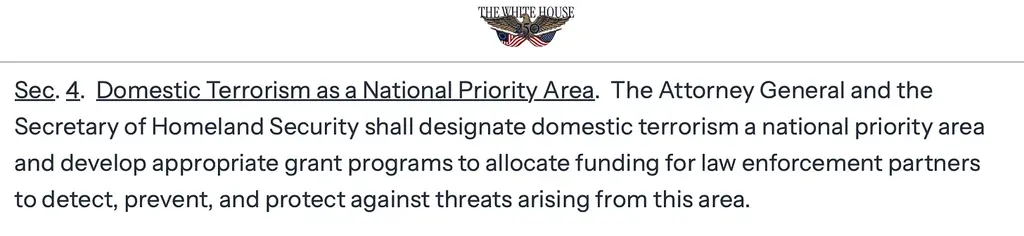
The Charity & Security Network pointed out that the memorandum creates no new powers — it repurposes existing law enforcement machinery to target left-leaning organizations.
Until now, that machinery has mostly been federal. The grant program reaches your county sheriff.



We Already Ran This Experiment
FEMA was an independent agency until 2003, when it was absorbed into the new counterterrorism-focused DHS and its preparedness functions were broken up. An undersecretary warned Secretary Tom Ridge in writing that the reorganization would gut disaster response.
He was overruled. Katrina came two years later.
Then came fusion centers — the state and regional intelligence hubs where local police, federal agents, and analysts pool information.
In October 2012, a bipartisan Senate Permanent Subcommittee on Investigations report found DHS couldn't even say how much it had spent on them — estimates ranged from $289 million to $1.4 billion.
Investigators reviewed thirteen months of reporting and found intelligence of uneven quality, often shoddy, rarely timely, and sometimes a danger to citizens' civil liberties.
Of 610 reports, 188 were never published — many because they were useless or risked violating privacy protections.
Flagged among them: a Muslim community group's book list, parenting advice, and a motorcycle club's pamphlet telling members to be courteous during traffic stops.
Not one report uncovered a terrorist threat. Not one contributed to disrupting a plot.
Fourteen years later, that same apparatus is being told to watch digital footprints for signs of anti-American sentiment — and paid to do it.
Meanwhile, the Actual Emergencies
FEMA has lost roughly 14 percent of its workforce since January 2025 while managing more than 300,000 projects across more than 600 open disaster declarations.
GAO found the agency shed 2,446 employees in the first half of 2025 alone, and warned that fewer staff spread across the same or more disasters could reduce the effectiveness of federal disaster response.
Internal planning documents obtained by CNN in January outlined a draft scenario cutting FEMA's surge workforce — the teams that rush in after a catastrophe — by 85 percent.
So when a tornado flattens a neighborhood in Wisconsin, or a hurricane takes a coastal town, or a wildfire runs through a county, the agency that shows up is smaller, thinner, and now partly repurposed into a domestic surveillance funder.
The families in Menasha sorting through what used to be their living rooms are not in danger from domestic terrorism. They're in danger from a warming climate, an administration that denies it, and a Congress that has decided none of this requires its attention.
FEMA was built to help people on the worst day of their lives. It should be allowed to do that — as a civilian agency, not a militarized one, and not one converted into an instrument for policing what Americans believe.