
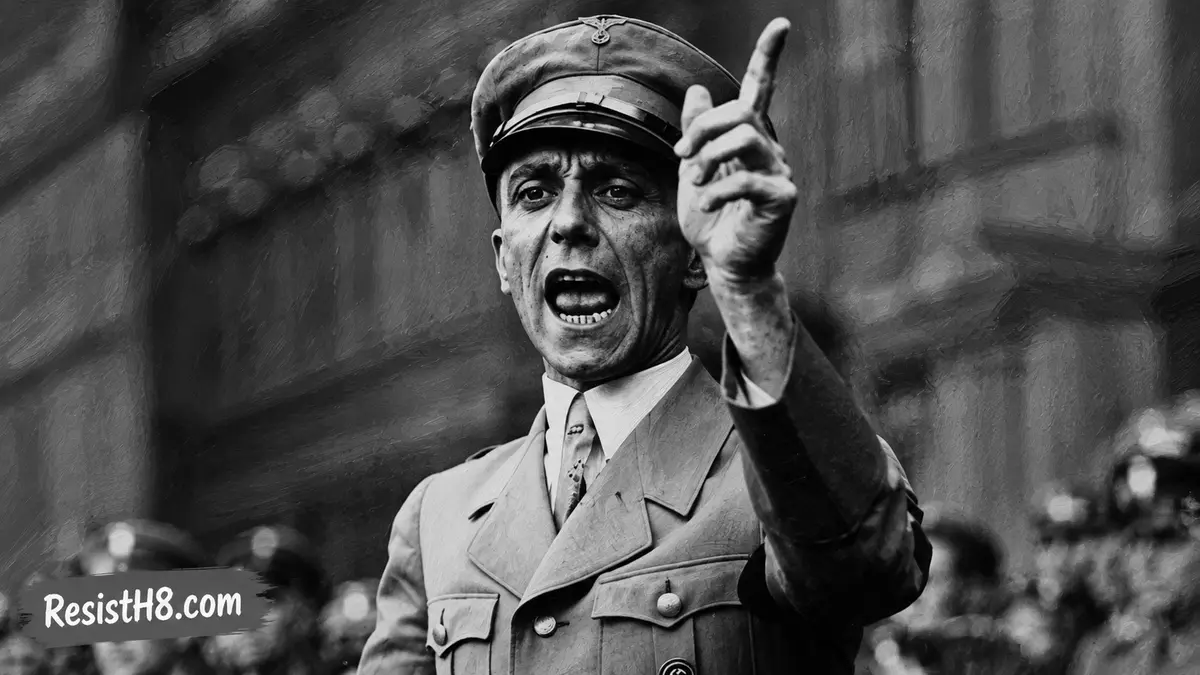

On July 16, 2026, in the Loy Henderson Conference Room at the State Department, the United States government convened representatives from more than 65 nations for something it called the Ministerial on the Resurgence of Political Terrorism. Secretary of State Marco Rubio opened it. Treasury Secretary Scott Bessent spoke about money. Then, White House Deputy Chief of Staff Stephen Miller stood in front of assembled diplomats and told them that protesters were “deformed.”
He said Americans who protest can be identified by how they look.
Not by what they do.
By how they look.
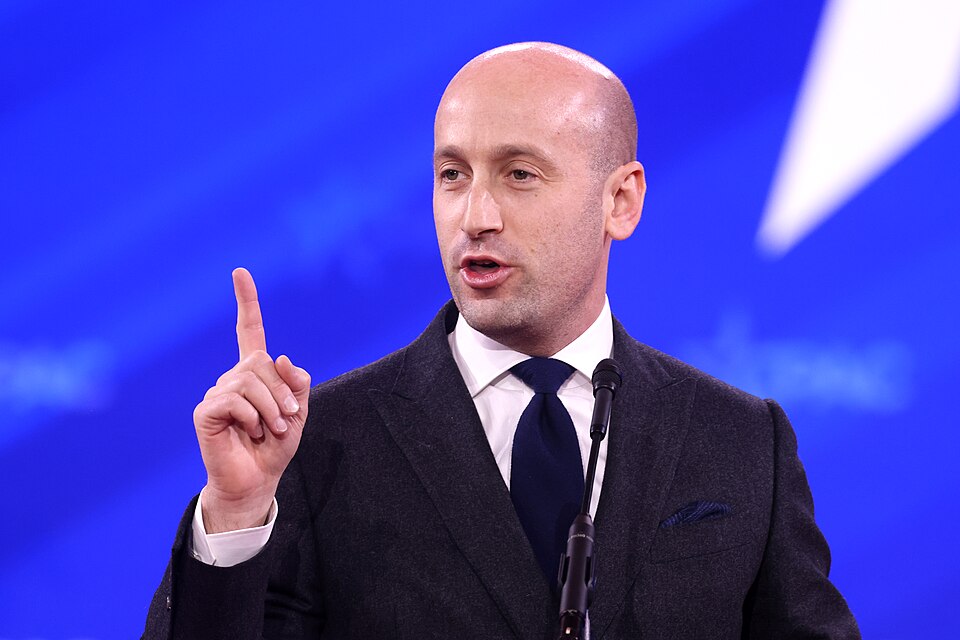
What Miller Actually Said
Miller was talking about Antifa demonstrations, a term the administration applies expansively and which is not an organization with membership rolls or a headquarters.
Looking at photographs of protesters, he said, "not one of the people that is demonstrating looks like a normal person."
He repeated it: not one looks normal.
They are, he said, "all deformed in some way" — in their appearance, in their dress, in their mannerisms.
Then he asked the room why.
He invited the diplomats to compare two photographs, an ordinary American on the street and a crowd of protesters, and to notice that not a single normal-looking person appeared among the second group.

Miller supplied his own answer. A person's outward appearance, he explained, becomes a manifestation of the hatred inside them. (That explains Miller’s appearance. 🤫)
That is the entire claim. You can see moral corruption on a face. Trust your eye. You will know them when you look at them.
Miller also described left-wing politics as a fatal cancer of civilization, said it always ends in a gulag, and warned the room that when a leftist claims his rights are being violated, he is lying.
That last line does something: it pre-discredits every future complaint from anyone the government decides to place in the category. The objection is disqualified before it is made.
The remarks are not a hostile paraphrase or a clipped video. They are in the official transcript of a State Department event, delivered to foreign governments the U.S. was recruiting into a joint enforcement effort.
What Rubio Said
Rubio's language ran in a parallel track, less about bodies and more about a kind of moral ugliness.
He argued American counterterrorism had a blind spot on the political left, and that the labels vary — anarchist, Marxist, communist, anti-capitalist — while the underlying character stays the same.
He called it a poisonous resentment dressed up in the vocabulary of justice and equality, an urge to tear down what better men built on behalf of people "only filled with ugliness and have nothing else to offer the world."
Through violence, he said, they seek to impose that ugliness on everyone else.
Rubio did not make the physical claim Miller made. The distinction matters, and it is worth keeping straight, because the accurate version is damning enough.
Rubio painted a category of people as spiritually worthless. Miller said you can spot them by sight.
Together, delivered from the same stage in the same hour, they describe political opponents as a defective type of human being.

Why People Immediately Reached For the 1930s
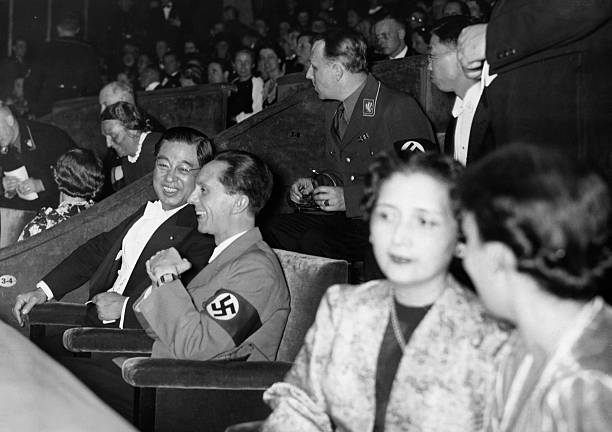
The comparison came fast, and not only from the usual quarters. MSNBC alum Joy Reid called the pair of speeches "decaf Nazism" on her show.
Legacy media described Miller's framing as recasting political opponents as a physically marked, degenerate element whose appearance proves their unfitness.
The comparison is an interpretation. The history behind it is not.
Physiognomy — the discredited belief that character is legible on the body — was official doctrine in Nazi Germany, welded to a eugenics program that ended in forced sterilization and involuntary euthanasia.
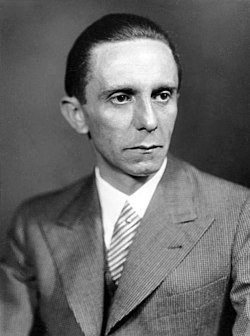
In June 1937, Joseph Goebbels authorized the confiscation of "degenerate" artwork from German museums; more than 16,000 works were seized, and the resulting Munich exhibition was staged to invite viewers to compare the healthy against the diseased and see the difference for themselves.
Look at two images. Notice which one is normal. That was the pedagogy. It is also, almost exactly, what Miller asked a room of diplomats to do.
None of this means the United States is Germany in 1937. It does mean that a senior White House official used a rhetorical device with a documented and catastrophic lineage, in an official capacity, in front of the world.
The Part That isn't Rhetoric
Speeches would matter less if nothing were attached to them. Something is.
The ministerial was an effort to internationalize enforcement — to get dozens of governments coordinating on a threat category the administration defines.
Bessent was there to talk about designations, frozen assets, and penalties for so-called facilitators.
Congressional Democrats had already written to Rubio disputing the premise that left-wing violence is now the country's primary terrorist threat.
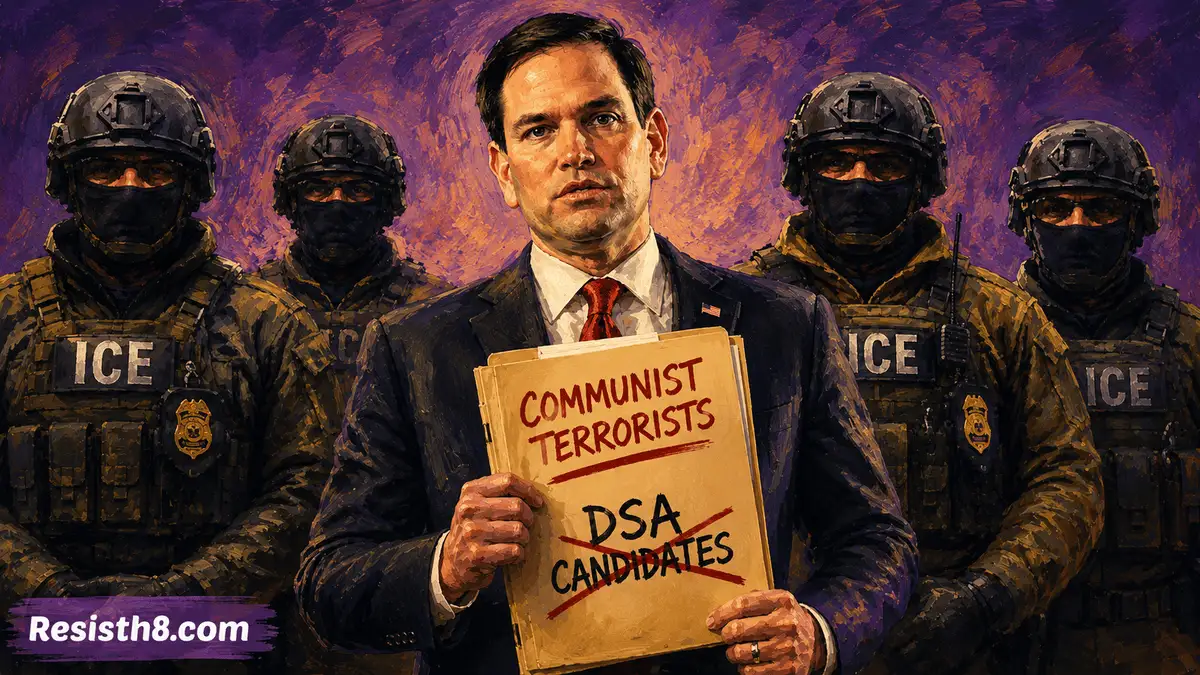
Categories like this do not stay narrow. They start with a word almost nobody will defend, and then the word stretches.
When the definition of a terrorist is elastic and the standard of evidence includes what someone looks like, the risk is not theoretical for anyone who marches, organizes, donates, or shows up.
Miller told the room to trust their instincts about what a normal person looks like. Americans have every reason to distrust his.