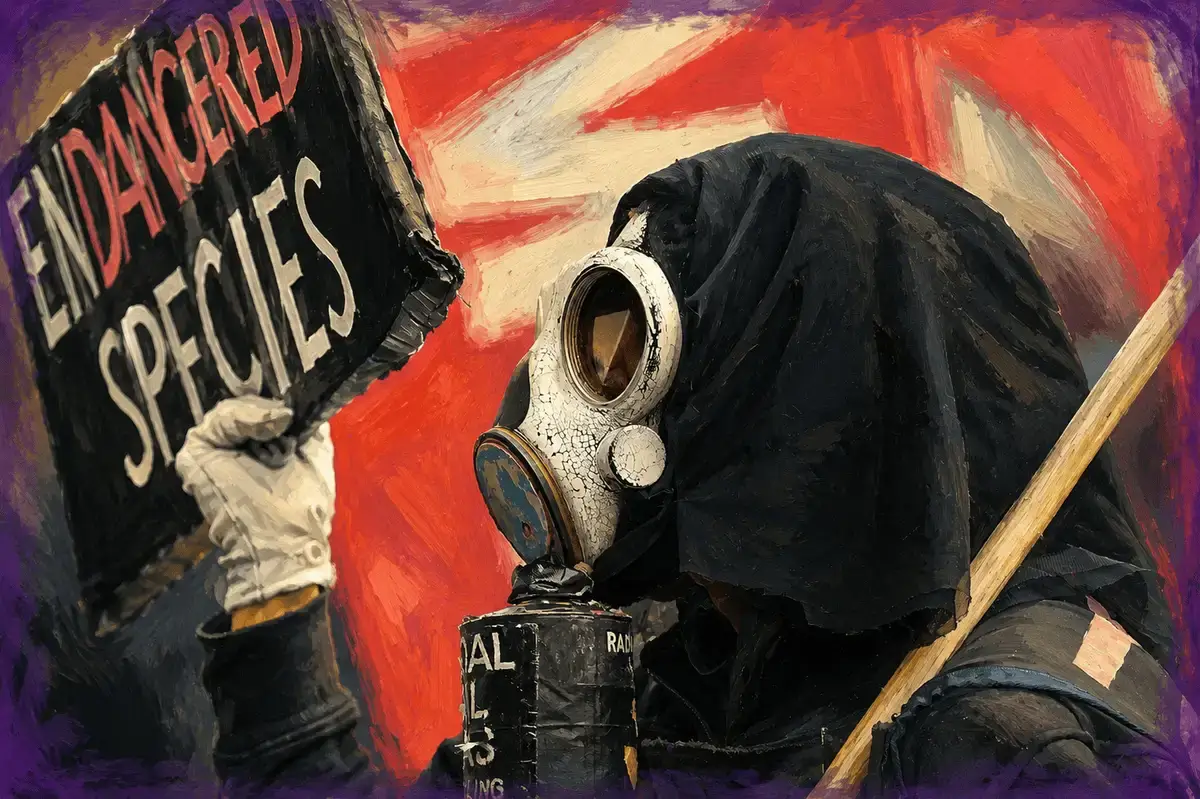

The Trump administration just rewrote one of America's strongest conservation laws without repealing a single line of it. Instead, it deleted the definition of one word.
On July 10, the Interior Department finalized a rule that strips the longstanding meaning of "harm" out of the Endangered Species Act.
For more than fifty years, "harm" has included wrecking the places that endangered animals and plants need to survive.
Take that meaning away, and you take away most of what the law actually protects.
Legal experts told Inside Climate News it's the biggest change to the Act since Congress passed it in 1973.
This week, a coalition of nine environmental groups and two Washington State tribes fired back, filing lawsuits to block the change before it takes hold.
What "harm" really meant

Here's the part the administration is counting on you to find boring. The Endangered Species Act bans anyone from "taking" a protected species — harming, hunting, trapping, or killing it.
For decades, the word "harm" in that list covered destroying an animal's habitat, because a bulldozed forest or a poisoned river kills wildlife just as surely as a gun does.
That interpretation has been the single most important tool for protecting habitat on private land, according to Pat Parenteau, an emeritus professor at Vermont Law and Graduate School.
And private land matters enormously here: more than two-thirds of species listed under the Act live at least partly on non-federal property, and one in ten live only there.
The science backs the alarm. A 2019 study found that 81 percent of species listed between 1975 and 2017 were pushed toward extinction mainly by habitat loss and degradation — not by hunting or direct killing.
A separate legal analysis concluded that most of the habitat protection the Act provides flows through that one word.
In practice, the harm rule rarely stopped a project cold.
It usually just asked companies to work around wildlife — shifting construction away from a bird's nesting season, or rerouting a road so it didn't cut grizzlies off from food.
Annoying to some industries? Sure.

Fatal to their business? No.
The administration's spin
Interior is selling this as relief for regular people.
Its press release promised the change would "reduce unnecessary permitting, cut compliance costs, and eliminate confusion" for landowners, farmers, ranchers, and energy producers, while insisting the law's core protections stay "firmly in place."
Interior Secretary Doug Burgum went further, claiming federal agencies had spent years abusing the Endangered Species Act to trap families and businesses in red tape.
Strip away the language and the real beneficiaries come into focus.
This is the latest in a run of moves to weaken the Endangered Species Act on behalf of oil, gas, and development interests, all in the name of "energy dominance."
In March, an obscure panel of top officials nicknamed the "God Squad" voted to exempt Gulf of Mexico oil and gas drilling from the Act entirely — a decision conservationists warn could wipe out the vanishingly rare Rice's whale.


Other proposed changes would shrink the list of species that get the highest level of protection and limit the government's ability to shield wildlife from a warming climate.
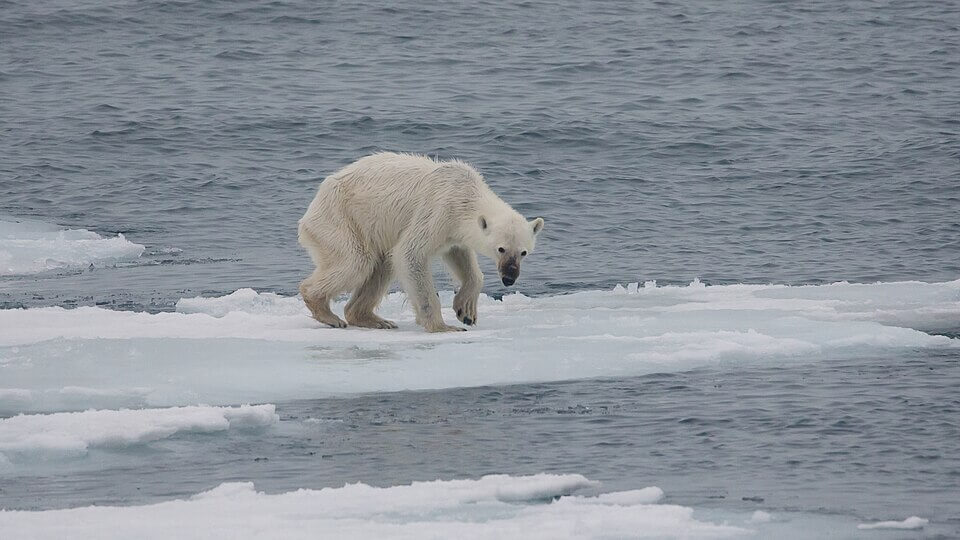
The public noticed.
When the rule was first proposed, roughly 358,000 comments poured in, many warning it amounted to a blueprint for extinction.
Some industry groups cheered it on, with the Forest Landowners Association calling it a welcome efficiency for the regulated community.
Salmon, and the people who depend on them
The lawsuit that cuts closest to the bone comes from the Swinomish Indian Tribal Community and the Squaxin Island Tribe, who filed in federal court in Western Washington. Their case isn't abstract. It's about salmon.
The Swinomish submitted thousands of pages of science during the comment period showing how much habitat protection matters for the salmon that fill their waters — fish that are both dinner and something sacred.
Gut the harm rule, tribal leaders say, and salmon habitat degrades, and the runs shrink.
"Because salmon is both food and spiritual nourishment," said Tandy Wilbur, a Swinomish senator and fisheries manager, "I fear for the health of our people and our cultural lifeways."
That's what a deleted definition looks like on the ground.
As Parenteau described it, without the rule the losses stack up fast: manatees starving in polluted water, salmon unable to spawn in rivers grown too warm and clogged with sediment.
What happens now
The rule is set to take effect September 14.
The coalition — Earthjustice, the Center for Biological Diversity, the Sierra Club, Oregon Wild, and others — is racing to overturn it first.
Earthjustice attorney Ben Levitan said the law and the science are "on our side."
There's a catch, and it's a real one.
If this fight climbs to the Supreme Court, as a nearly identical habitat battle did in 1995, today's far more conservative bench could do worse than uphold the rollback — it could lock it in place far more permanently than any agency memo ever could.
The last time the justices weighed the harm rule, they sided with the wildlife.
Whether that holds is exactly what's now at stake.
The Trump administration declined to answer Inside Climate News's questions about the lawsuits, or about how it plans to protect endangered species' homes once the meaning of "harm" is gone.