


The death of Jordan Neely on a New York City subway became one of the most divisive stories in recent American history.
Almost immediately, Americans split into opposing camps.
Some saw Daniel Penny as a hero who stepped in to protect frightened passengers. Others saw him as a man who used deadly force against someone who never should have died.
Three years later, the case still raises difficult questions — not only about self-defense and the criminal justice system, but about homelessness, mental illness, politics, and whose lives Americans value.
Those questions deserve more than slogans.
Jordan Neely was a human being
He was known for performing as Michael Jackson on New York City subway platforms and in Times Square, moonwalking for commuters and trying to earn enough money to survive.
People who encountered him years earlier often described him as energetic, talented, and charismatic.
A fellow Michael Jackson tribute artist who mentored him for years remembered him as a gifted, kind young soul who used dance to find joy — and to quiet his pain.
Below: A haunting look back at Jordan Neely doing what he loved. Known across the city for his Michael Jackson impersonations, this footage captures him performing on the subway—the same place where his life would tragically end.

Before he became a headline, Jordan Neely was a boy whose life was marked by profound trauma.
In 2007, when Neely was 14, his mother, Christie Neely, was murdered by her boyfriend.
Her body was found stuffed inside a suitcase and dumped along a Bronx parkway.
Five years later, 18-year-old Jordan had to testify at her killer's trial.
His family says he was never the same.
According to relatives, he developed severe depression, schizophrenia, and PTSD after his mother's death.
He spent part of his youth in foster care, and as an adult he cycled through hospitals, shelters, jails, and the streets.
By 2023, New York City itself had acknowledged how far he had fallen: Neely was on the city's own "Top 50" list of homeless New Yorkers considered most urgently in need of help, as The New York Times reported after his death.
So by the time he stepped onto that subway train in May 2023, he was not just "some homeless man."
He was someone the system knew by name — and someone who had fallen through nearly every safety net society claims to have.
That doesn't excuse frightening behavior. But it helps explain how someone could end up in such desperate circumstances.
What happened on the subway?
On May 1, 2023, Neely boarded a northbound F train in Manhattan behaving erratically.
Witnesses said he threw his jacket to the floor and shouted that he was hungry, thirsty, and didn't care if he died or went back to jail.


Some passengers later said they feared he might become violent.
Others described him as emotionally distressed but noted that he had not physically attacked anyone before Penny intervened.
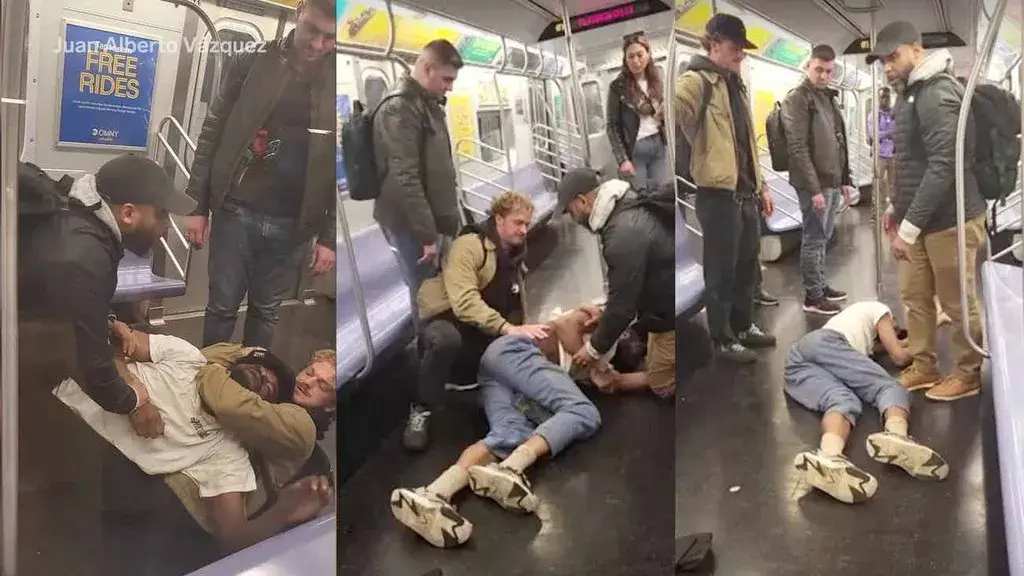
Daniel Penny, a former Marine, approached Neely from behind and placed him in a chokehold, bringing him to the floor.
Other passengers helped restrain Neely's arms.
The restraint lasted roughly six minutes.
At trial, prosecutors argued that whatever threat Neely posed lasted about 30 seconds — while the chokehold continued long after, even as bystanders urged Penny to let go.
Neely lost consciousness and never woke up.
Two days later, the city's medical examiner ruled his death a homicide caused by compression of the neck.
A freelance journalist's cell phone video of those minutes would later be seen around the world.
Penny was questioned by police and released the same day.
This raises two critical questions about equal treatment under the law: First, if a Black individual had used fatal force against a white individual in this scenario, would the response from law enforcement have been the same?
Second, does the system inherently place less value on the lives of people who are experiencing homelessness, regardless of their race?
Penny was arrested and charged nearly two weeks later, after days of protests.
The central legal and moral question became whether Penny reasonably believed the amount of force he used was necessary to protect himself or other passengers.
Reasonable people have reached different conclusions.
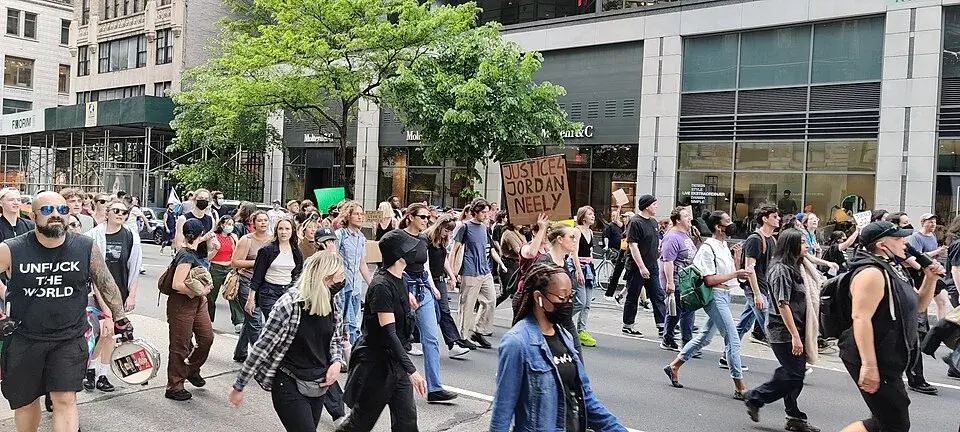
The trial of Daniel Penny for the death of Jordan Neely
Penny was charged with second-degree manslaughter and criminally negligent homicide, facing up to 15 years in prison.
His five-week trial in late 2024 became a national spectacle.
Prosecutors argued that Penny continued restraining Neely long after any immediate danger had passed.
They contended that whatever threat existed at the beginning did not justify maintaining the chokehold until Neely stopped moving.
The defense argued that Penny was trying to protect fellow passengers, not kill anyone.
They maintained that he reacted in a chaotic situation and never intended for Neely to die — and their own pathologist disputed that the chokehold caused Neely's death at all, pointing instead to synthetic marijuana, schizophrenia, and a genetic condition.
(Such an obvious attempt to blame the murder victim for their own death gives me flashbacks of the Chauvin trial. 😡.)
Intent matters in criminal law.
So does reasonableness.
The jury deadlocked twice on the manslaughter charge, which the judge dismissed at prosecutors' request on December 6, 2024.
Three days later, after more than 24 hours of deliberations across five days, jurors acquitted Penny of criminally negligent homicide.
Manhattan DA Alvin Bragg said his office respected the verdict — while condemning the wave of threats his prosecutors received throughout the trial.
The verdict settled Penny's criminal liability.
It did not settle the ethical questions.
Those remain.
The case that isn't over
Neely's father, Andre Zachery, filed a wrongful death lawsuit against Penny in New York Supreme Court while the criminal jury was still deliberating, alleging negligence, assault, and battery.
Penny's attorneys have denied the claims and sought dismissal. As of mid-2026, the case remains active.
Civil court operates under a lower burden of proof — a preponderance of the evidence rather than proof beyond a reasonable doubt — which means a jury that couldn't convict Penny of a crime could still find him liable for Neely's death.
The family's attorney, Donte Mills, has framed the suit as their last path to accountability, putting it bluntly: "Daniel Penny could have let go before Jordan died."
The two Americas
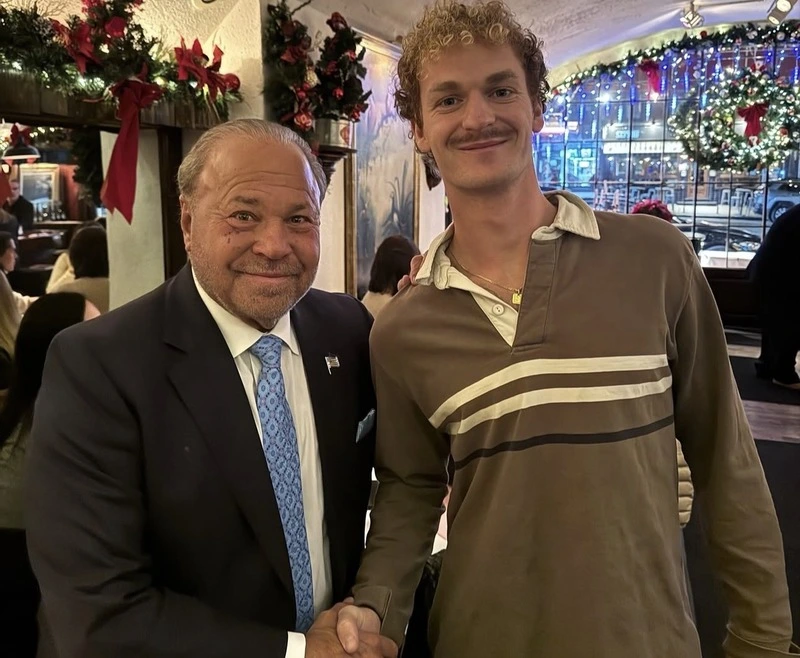
Perhaps the most revealing part of this story wasn't what happened on the subway.
It was what happened afterward.
For many on the political right, Daniel Penny quickly became a symbol.
Days after the verdict, he sat in a luxury box at the Army-Navy football game as the personal guest of Donald Trump and JD Vance. Vance called the prosecution itself a scandal.
Two months later, Silicon Valley's most powerful venture capital firm, Andreessen Horowitz, hired Penny as a deal partner on its "American Dynamism" team — a hire the firm celebrated and the vice president publicly cheered.

Supporters portrayed Penny as an ordinary citizen forced into an impossible situation by rising crime, public disorder, and government failure.
Many Americans genuinely believed that if Neely had attacked passengers, people would have criticized bystanders for doing nothing.
That concern deserves to be acknowledged.
People have a right to defend themselves and others from genuine threats.
But another story emerged alongside that one.
Jordan Neely often disappeared from the conversation entirely.

Instead of asking why someone with severe mental illness repeatedly cycled between homelessness, hospitals, shelters, and jail, much of the public debate focused almost entirely on whether Penny should be celebrated or prosecuted.
At the courthouse on verdict day, one voice cut through: Gwen Carr, the mother of Eric Garner — another Black man killed by a chokehold in New York a decade earlier — reminded the crowd that no one deserves to die that way, and that people were cheering a verdict while a family grieved.
The missing conversation
America spends enormous amounts of time arguing about what should happen during moments of crisis.
We spend far less time asking why so many crises happen in the first place.
Why do people with severe mental illness so often end up living on sidewalks?
Why are families unable to get loved ones sustained treatment before tragedy strikes?
Why do subway riders become the people expected to handle psychiatric emergencies?
Those questions rarely dominate cable news because they require long-term solutions instead of emotional arguments.
It’s easier to argue about heroes and villains.
It’s much harder to fix broken systems.
What the celebration revealed
People naturally empathize with someone they imagine protecting innocent passengers.
That reaction is understandable.
But there is a difference between believing someone should not be criminally convicted and celebrating a death.
Some public reactions crossed that line.
Jordan Neely's death became something to cheer because many people had already decided his life mattered less.
He was homeless.
He struggled with mental illness.
He had prior arrests.
Everything except what he actually was: a human being whose life had value.
For some observers, those facts seemed to erase his humanity. Yet they should have inspired compassion.
Trauma, untreated illness, addiction, and homelessness rarely occur in isolation. They often build on one another until a person becomes almost invisible — noticed only when they inconvenience someone else.
A mirror held up to America
The death of Jordan Neely forced Americans to confront uncomfortable truths.
Many people no longer trust public institutions to keep them safe. Many others no longer trust those same institutions to protect vulnerable people.
Those fears can exist simultaneously. The danger comes in when empathy becomes conditional.
If we only care about victims we identify with, our compassion shrinks until it serves only our own side.
Jordan Neely deserved better long before he stepped onto that subway.
Daniel Penny deserved to live in a society where ordinary citizens were not placed in situations that felt dangerous and chaotic.
Passengers deserved a transit system where severe psychiatric crises were met by trained professionals rather than strangers forced to make split-second decisions.
Instead, everyone inherited the consequences of decades of failures.
What now?
The future of America will be shaped by how we respond to people who are struggling.
If homelessness becomes something we fear, rather than something we try to understand and address, tragedies like this will continue.
If mental illness is treated primarily as a criminal justice issue instead of a healthcare issue, more families will lose loved ones.
If political movements continue turning human tragedies into ideological trophies, Americans will become even more divided.
The humanity we can't afford to lose
Jordan Neely's life was precious. He deserved more than being reduced to a headline: Homeless man killed on subway.
Somewhere beneath that headline was a little boy who lost his mother to horrific violence — violence that, in a cruelty almost too painful to name, took the same shape as the violence that would one day take his life.
A talented street performer who made strangers smile with his Michael Jackson routines.
A man whose untreated mental illness slowly consumed the life he might have lived.
Daniel Penny walked away from the courtroom a free man after a jury concluded prosecutors had not proved criminal guilt beyond a reasonable doubt.
In America, jury verdicts deserve respect, even when we disagree with them.
But legal innocence does not answer the larger question this case leaves behind.
Why did Jordan Neely reach a point where his final moments unfolded on the floor of a subway car instead of inside a hospital, a treatment program, or a home?
That is not Daniel Penny's failure alone. It’s ours.
We failed when trauma went untreated.
We failed when mental illness became something people simply learned to walk past.
We failed when homelessness became so common that many Americans stopped seeing the people experiencing it.

And perhaps most disturbingly, many of us failed when we forgot that every person — no matter how troubled, poor, mentally ill, or homeless — possesses the same basic human dignity as everyone else.
The political reaction may ultimately tell us more about America than the incident itself.
Many conservatives viewed Daniel Penny as a symbol of ordinary citizens forced to restore order when government could not.
Many progressives saw Jordan Neely as a symbol of systemic neglect and the devaluation of vulnerable lives.
Yet somewhere in the middle, Jordan Neely disappeared.
He stopped being a person.
He became "the homeless guy."
When that happens — when labels replace names and political tribes replace compassion — we all lose something.
America's future will not be decided by whether we can agree on every controversial verdict.
It will be decided by whether we can still recognize each other's humanity after the verdict is read.
If we cannot look at a man like Jordan Neely and see someone whose life had inherent worth — someone who deserved help long before he needed restraint — then the greatest tragedy wasn't only what happened on that subway train.