


Drowning is the leading cause of death for American children between the ages of 1 and 4. It is one of the top three causes of unintentional injury death for everyone under 30. And it does not happen evenly.
Black children between the ages of 10 and 14 drown in swimming pools at 7.6 times the rate of white children the same age. Across all settings, Black children that age drown at nearly four times the rate of their white peers.
American Indian and Alaska Native children and young adults drown at twice the rate of white children. These gaps have not narrowed. The gap between Black and white drowning deaths has actually grown wider since 2005.
The data behind those numbers comes from the Centers for Disease Control and Prevention. The CDC team that produced it was cut in 2025 under the Trump administration’s restructuring of federal health agencies.
This explainer covers what causes these disparities, what history has to do with it, and what works to close the gap.
How big is the problem
More than 4,500 people drown each year in the United States. After decades of decline, the rate began climbing again in 2020. Drowning rates increased 28% for children aged 1 to 4 and 19% for adults aged 65 to 74 between 2019 and 2022.
The CDC’s most recent comprehensive analysis covered the years 1999 to 2019. During that period, 34,315 people under 30 died from drowning. The overall rate fell from 1.5 to 1.2 deaths per 100,000 people.
The rate for American Indian and Alaska Native people stayed at 2.5. The rate for Black people held at 1.8 — and grew compared to the white rate over the second half of the study period.
Globally, at least 235,000 people drown each year. The UN General Assembly has called drowning “largely unrecognized relative to its impact.”
Where the deaths happen
The setting changes with age. For babies under one year old, most drownings happen in bathtubs. For children between one and 13, most happen in swimming pools. For teenagers between 14 and 17, most happen in natural bodies of water — lakes, rivers, oceans.
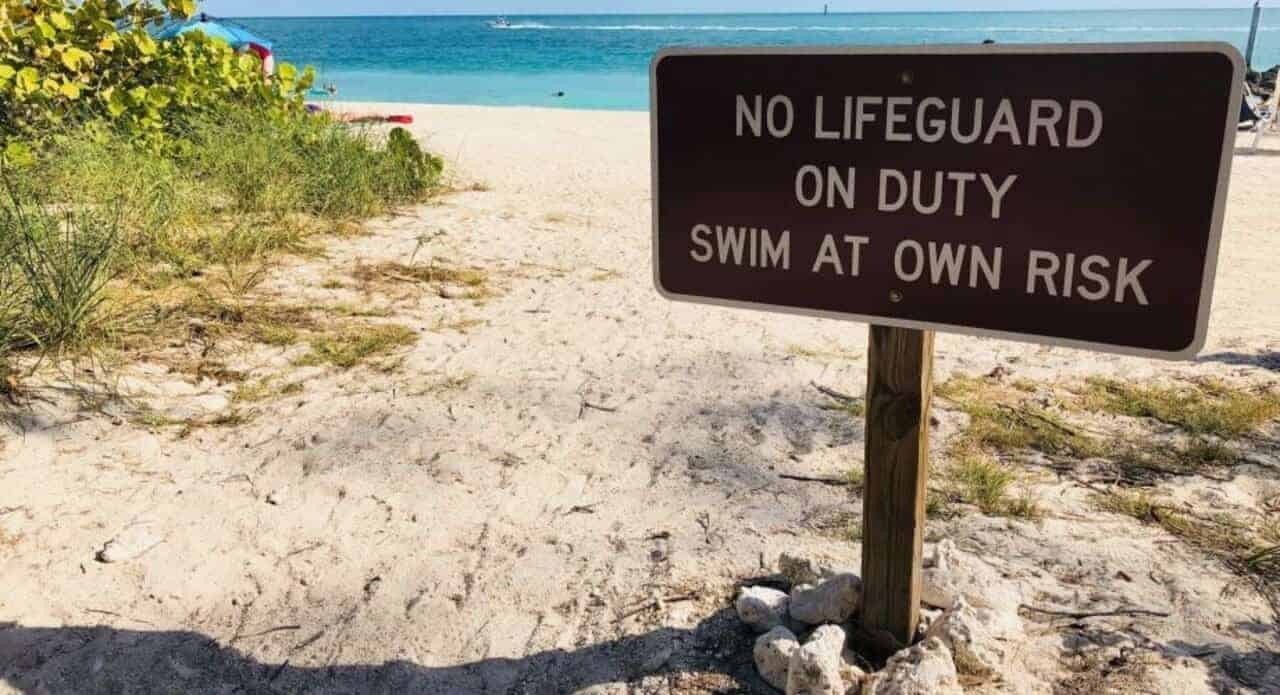
The setting also changes by race. White children who drown in pools are most often drowning in residential pools. Black children who drown in pools are most often drowning in public pools, often at motels or hotels — and those pools frequently do not have lifeguards on duty.
Why the gap exists for Black children
The first thing to know is that there is no biological reason for it. As the American Academy of Pediatrics has stated plainly, “with no physiologic differences to explain the difference in drowning risk, race and ethnicity are likely a proxy for social and cultural differences between the groups.”
The history matters. In the United States, public swimming pools were segregated through the first half of the twentieth century. When desegregation arrived in the 1950s and 1960s, the response in many cities was not to integrate public pools but to close them — and to shift recreational swimming to private clubs and backyard pools that excluded Black families through cost rather than law.
Jeff Wiltse, a history professor at the University of Montana who wrote the definitive history of American swimming pools, calls this the “deadly legacy of swimming pool discrimination.” In a 2014 paper by that name, he wrote that limited access to swimming facilities and swim lessons, combined with the unappealing design of pools that were earmarked for Black communities, meant that “swimming did not become integral to the recreation and sports culture within African American communities.”
The downstream effects are measurable. 37% of Black adults in the United States say they cannot swim, compared with 15% of all adults. More than 60% of Black adults and 72% of Hispanic adults have never taken a swimming lesson. Parents who cannot swim are far less likely to enroll their children in swim lessons, and children whose parents do not swim are themselves much less likely to learn.
The pattern is not behavioral failure. It is the result of two or three generations of families being denied access to the place where the skill is learned.
Why the gap exists for American Indian and Alaska Native children
There is less research on this disparity than on the Black-white gap, and that is itself part of the story. The CDC researchers who documented the persistence of the disparity have acknowledged the gap in understanding what drives it.
What is known points in several directions at once. Most reservation communities do not have swimming pools. In Alaska, where many villages sit directly on the water, the water is cold enough year-round that recreational swimming is rare — but residents are often around water for work and transportation. Subsistence fishing, travel by boat, and travel by snowmobile across ice that may be thinning all involve real water risks without the safety infrastructure that more affluent communities take for granted.
Dean Seneca, a Seneca Indian and the CEO of a public health consulting firm who has taught courses on Indigenous health disparities, has pointed out that water safety messaging is often nonexistent in tribal communities. “Look at the Navajo Nation and many of our tribes in the Southwest. They’re struggling just to have water. They don’t even have running water to drink. A pool is probably a last priority.”
There is also a data problem on top of the policy problem. The CDC has acknowledged that as many as 40% of American Indian and Alaska Native deaths are misclassified on death certificates, which means the official drowning numbers for these communities are almost certainly undercounts.
Class matters too
Income alone does not predict whether a child learns to swim, but it correlates strongly with access to the places where swimming is taught. The American Academy of Pediatrics has noted that “inadequate funding for pools, swimming programs, and lifeguards, as well as the cost associated with swimming lessons, may affect water competency and community resources for low-income populations.”
Wiltse describes this as a class-based disparity that the racial disparity sits on top of. “We’re going to find, especially in children of poor and working-class Americans of all races, drowning at a much higher rate than the children of middle- and upper-class Americans,” he has said. “Unless we reverse, and again reinvest in public swimming pools and swim lessons at public pools, I think we’re going to see worsening of growing drowning disparities along class lines.”



The two disparities reinforce each other. Black and Indigenous families are disproportionately poor and working class, in part because of the same history of housing, employment, and education discrimination that closed the public pools. The same public divestment that has hollowed out community swimming infrastructure has hit the communities most likely to need it the hardest.
Climate change is making it worse
This used to be a footnote in drowning research. It is becoming a chapter.
Warmer winters are producing thinner, more unpredictable ice on lakes and rivers. A 2020 study in PLOS One found that winter drownings rise as winter temperatures approach 32°F, because ice cover becomes unstable. Children playing or skating on ice that looks safe but is not account for many of these deaths.
Hotter summers send more people into the water — earlier in the season, before lifeguards are on duty, before water temperatures have caught up to air temperatures. The United Kingdom is currently living through this in real time. A record-breaking May heatwave has killed at least nine people in open water this week, seven of them children. The pattern is the same one American researchers have been describing for years: hot air, cold water, no supervision, families desperate for relief.
What works
The research is consistent enough on this point to be worth listing plainly.
Formal swimming lessons reduce drowning risk substantially. The barrier is not whether they work — it is whether they are available, affordable, and culturally welcoming. Programs that recruit instructors who reflect the communities they serve, that provide materials in languages other than English, and that involve parents alongside children show the strongest results.
Lifeguards work. Pools and beaches with lifeguards on duty have dramatically lower drowning rates than those without. The drowning disparity between Black and white children would close significantly if every public and motel pool had a lifeguard on duty during operating hours.
Life jackets work when people wear them. A 2024 review of 47 studies confirmed that they are highly effective at preventing drowning. The problem is that adoption is low. In one striking example, drowning rates in Alaskan villages along the Yukon and Kuskokwim rivers fell by 53% after researchers distributed lightweight coats that doubled as flotation devices, with a marketing message developed by tribal elders.
Barriers around pools work. Mandatory four-sided pool fencing reduces residential drowning deaths significantly.
Public investment in pools and swim programs works. The historical pattern is clear: when communities have access to free or affordable supervised swimming, drowning rates fall. When that access disappears, they rise.
The federal response in 2026
The CDC’s drowning prevention work was a small program inside a small division. In May 2024, that team produced the analysis that gave public health officials, journalists, and water safety advocates the data they needed to push for change. In 2025, the team was eliminated as part of the Trump administration’s restructuring of federal health agencies.
States still receive water safety grants, but as Sharon Gilmartin of the Safe States Alliance has noted, the CDC team had been “crucial in preventing drownings, especially in Black and minority communities who have long faced disproportionate rates of drowning.” Without the federal infrastructure to track the problem, the targeted interventions that have driven reductions in particular communities — like the Florida programs that successfully closed the Black-white drowning gap in that state — become harder to design and harder to evaluate.
A public health problem that disproportionately kills Black and Indigenous children, that researchers have documented for decades, has now lost its dedicated team at the agency responsible for tracking it.
The bottom line
Black and Indigenous children in the United States drown at multiples of the rate at which white children drown. This is not because of anything inherent to those children. It is the result of a hundred years of public policy choices — to segregate pools, to close them rather than integrate them, to underfund swim programs in the communities that needed them most, to leave reservation communities without water infrastructure of any kind — combined with a present-day failure to invest in the interventions that work.
The fix is not a mystery. It is more pools, more lifeguards, more lessons, more life jackets, in the places that have been historically denied them. The obstacle is not knowledge. It is will.