
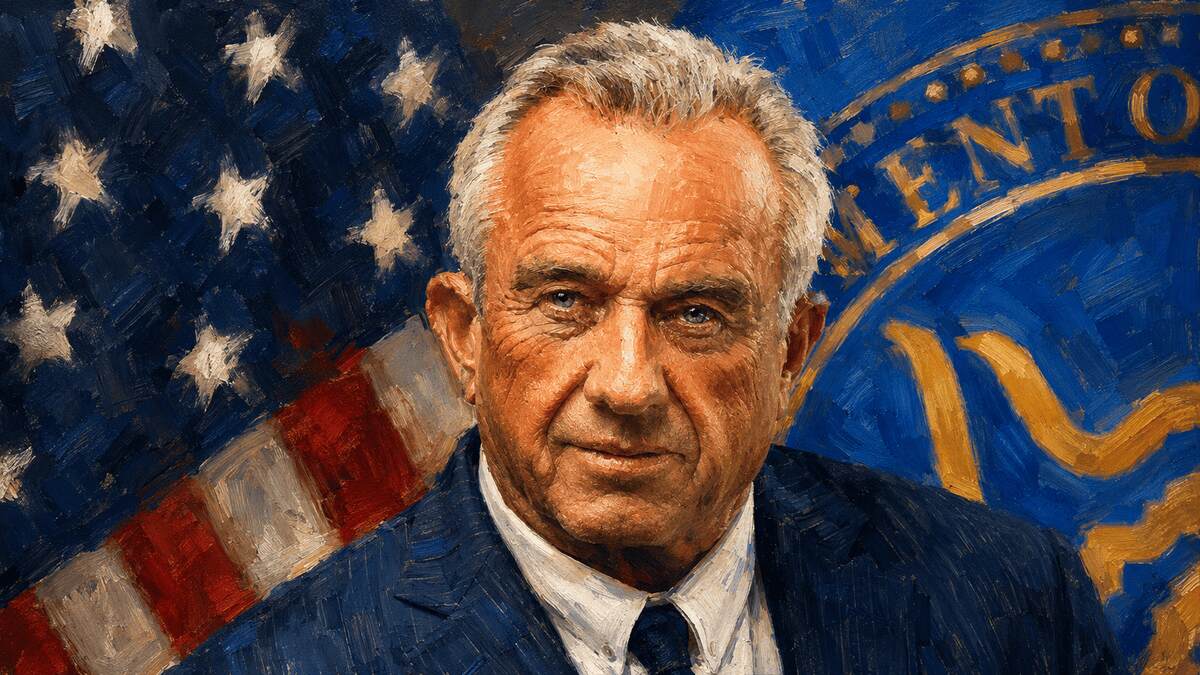

On August 26, a 20-page HHS gender ideology report was published by the Department of health and Human Services with a title built for a headline: Where the Clinic Meets the Movement: Does Gender Ideology Arm Left-Wing Authoritarian Psychology?
Within a day, The New York Post, The Daily Caller, Blaze Media, and The Washington Examiner were reporting it as proof that trans people and their allies are a violence risk.
We read the full report. Here’s what it actually found, and why that matters a lot right now.
What the researchers measured
The authors built a new questionnaire they call the Clinical Gender Affirmation Scale, or CGAS.
It has five statements, pulled almost word-for-word from the published guidance of the American Psychological Association, the American Academy of Pediatrics, and the World Professional Association for Transgender Health.
Here is the full scale. Agree strongly with these five and you score high on "gender ideology":
- Not affirming a trans person's identity raises their risk of serious psychological distress.
- People should be supported in expressing a transgender identity.
- Using the name someone chooses during transition is a real form of support.
- Using someone's pronouns is a real form of support.
- Parents should support a child exploring their gender.
That's it. That's the ideology.
Call someone by their name, use their pronouns, don't throw your kid out — and a federal agency now has the instrument to score you.
The researchers then paired the CGAS with a pre-existing 13-item Brief Left-Wing Authoritarianism scale, and with six questions asking how justified respondents found various acts of political violence: arson at ICE buildings, damaging rich people's property, violence against police, and the killings of Donald Trump, Charlie Kirk, and UnitedHealthcare CEO Brian Thompson.
They found correlations, so HHS published it.
Four problems the report can't get around
It never measured violence. Not one act, not one intention. The survey asked people to rate how justified hypothetical acts were on a scale.
HHS concedes this. So does the Human Rights Campaign's response, which called the paper a "junk report" that wastes taxpayer money.
An opinion about a hypothetical is not a plan, and it is certainly not a crime.
The measuring stick is contaminated. The left-wing authoritarianism scale the authors borrowed contains this item: "Anyone who opposes gay marriage must be homophobic."
Another asks whether the real terrorism threat comes from the far right. So one of the questions used to detect authoritarianism is itself a question about LGBTQ+ attitudes.
Of course the two scores move together. The overlap was baked in before anyone answered a thing.
There is no comparison group. The survey never asked whether respondents would justify violence against trans people, immigrants, or protesters.
It never asked what they think of the administration's own anti-trans policies. There is no right-wing authoritarianism scale here, no control condition, nothing to measure the findings against.
A study with only one side of the ledger can only ever produce a one-sided answer.
The sample isn't the country. The 1,208 respondents came from an online survey panel, not a probability sample.
Fifty-five percent leaned Democratic, against roughly 29% of U.S. adults nationally.
And the trans and gender-nonconforming respondents — the people the coverage is really about — made up 1.1% of the sample.



That's about thirteen human beings.
The authors themselves write that violence tied to gender ideology is largely undocumented in the academic literature.
They are, in effect, publishing a psychological profile for a phenomenon they admit has no established record.
Who wrote the HHS gender ideology report
The five authors are affiliated with Rutgers, the Manhattan Institute, and the Network Contagion Research Institute.
Trans journalist Aleksandra Vaca traced their records: co-author Colin Wright is a Manhattan Institute fellow whom Montana's Republican government hired to defend its ban on changing gender markers on birth certificates.
Co-author Lee Jussim has spent a decade arguing that bias training manufactures false claims of racism.
NCRI's founder has publicly cast the Democratic Socialists of America as a threat vector — the same framing the State Department used when it accused DSA members of conspiring with Cuba in July.
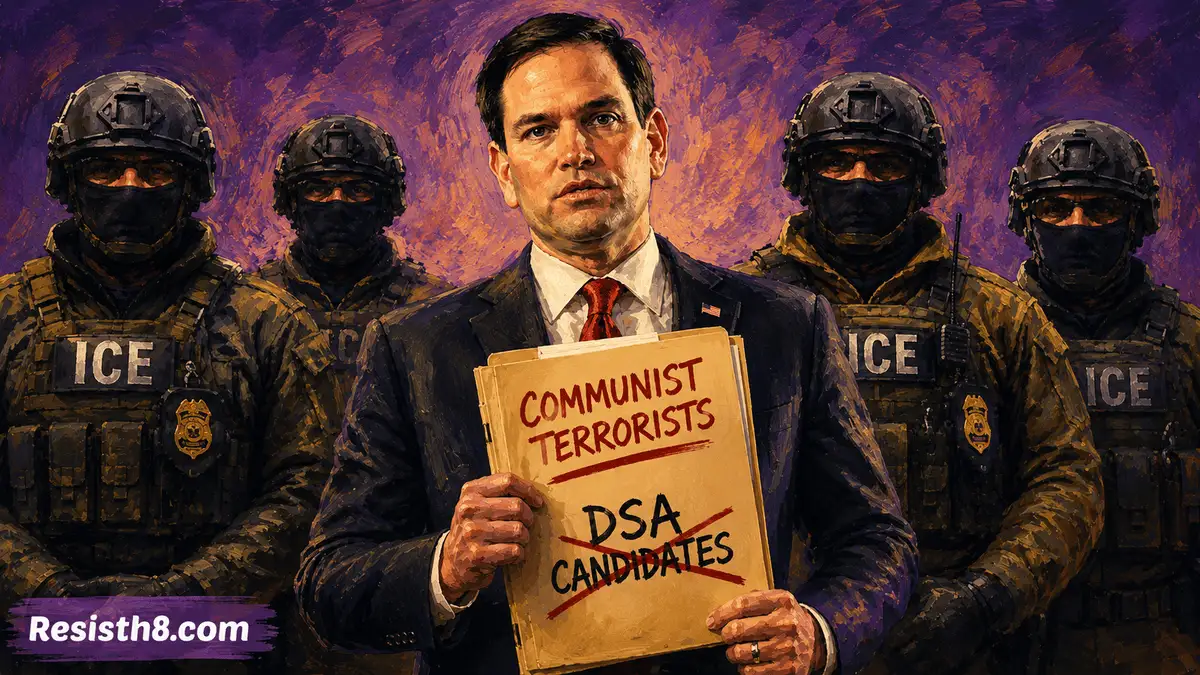
This is the same HHS that issued a 400-page report recommending conversion therapy in May 2025 — written in 90 days, with anonymous authors and no peer review, and called inaccurate by the country's largest pediatric group.
Why a health agency wrote a threat assessment
The last page is the one you should read twice.
The authors write that federal agencies and public safety officials care about radicalization pathways, and that the machinery they claim to have found may be running through clinical guidelines and professional standards that current threat-detection frameworks don't catch.
That sentence has an address. NSPM-7, issued in September 2025, told federal law enforcement to treat "radical gender ideology," anti-capitalism, and anti-Christianity as markers of domestic terrorism.
A December 2025 Justice Department memo told prosecutors to build a list.
An FBI Joint Mission Center drawing staff from ten agencies now exists to find targets.
Free speech advocates have warned from the start that this collapses dissent into terrorism.
Meanwhile, the administration cut funding for programs countering white supremacist violence and sued the Southern Poverty Law Center, the organization that tracks it.
So here’s the pipeline: a task force needs targets, a health agency commissions a survey, the survey turns "use her pronouns" into a variable, Right-wing outlets turn the variable into a headline, and the next time a parent, a therapist, or a school counselor supports a trans kid, there's a federal document that calls it a radicalization pathway.
Trans people are not a threat model. They are your neighbors, your coworkers, your kids' teachers, and right now they are the most surveilled minority in the country.
Everyone else on that CGAS — everyone who agreed that a person deserves to choose their own name — has now been counted too.