
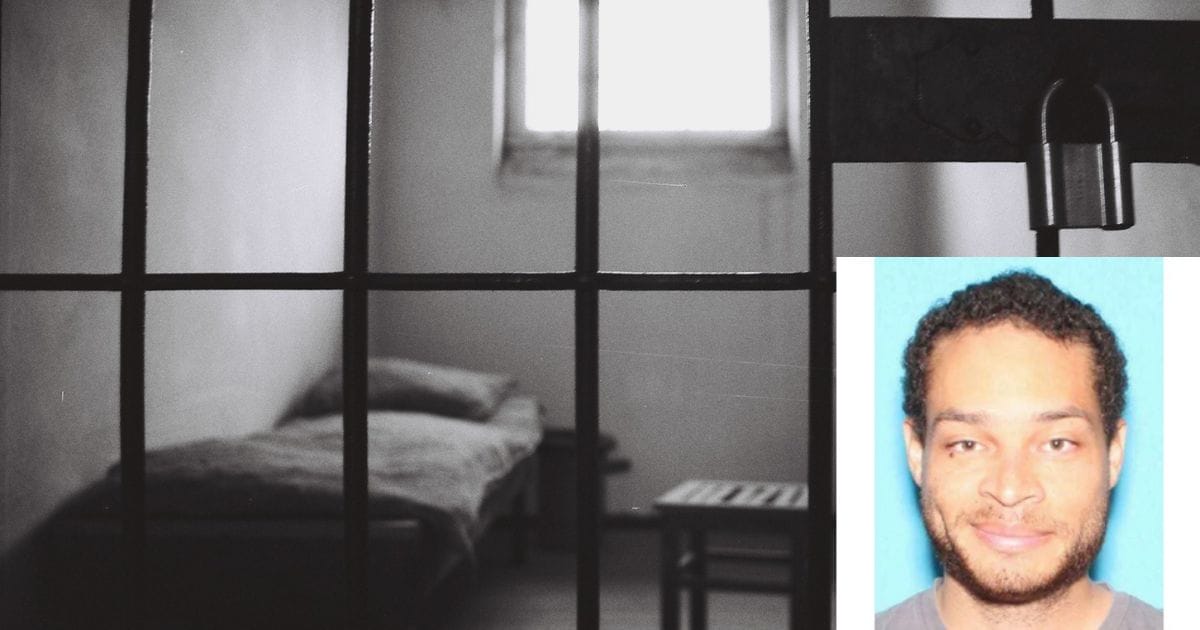

The man accused of trying to assassinate Donald Trump at the White House Correspondents’ Dinner is being treated worse than any Capitol rioter Magistrate Judge Faruqui ever saw — and Faruqui is not letting it pass quietly.
In a federal courtroom in Washington, D.C. on Monday, a magistrate judge did something unusual. He apologized — directly, on the record — to a man charged with attempting to assassinate the President of the United States.
Cole Tomas Allen, the 31-year-old from Torrance, California accused of rushing a security checkpoint with a shotgun at the April 25 White House Correspondents’ Association Dinner, has been held without bond at the D.C. jail since his arrest. According to court filings from his federal public defenders, what has happened to him there has nothing to do with safety and everything to do with punishment.
For days, Allen was placed in a “safe cell” — a padded room with constant lighting, no clothing beyond a restrictive vest, and 24-hour lockdown. He was denied phone calls, denied legal paperwork, denied a Bible he requested.
When his attorneys came to meet with him, they were forced to talk to him through a single phone while he sat inside a locked cage in full five-point restraints, with jail staff and other lawyers standing close enough to overhear every word of his defense strategy.
Allen has no criminal history. A jail psychiatrist had already cleared him from active suicide watch. None of that mattered.
“I Have Not Forgotten”
Magistrate Judge Faruqui called an emergency hearing on his own initiative — even after Allen’s lawyers tried to withdraw their motion once they learned the most severe restrictions had been quietly lifted. Faruqui said he had “grave concerns” about what he described as “seemingly unprompted solitary confinement for days.” He wanted answers on the record, with the Department of Corrections present.
What followed was one of the more extraordinary judicial statements of the year.
“I can tell you I have never had a January 6th defendant who was put in five-point restraints or a safe cell,” Faruqui told prosecutors and Tony Towns, the acting general counsel for D.C.’s Department of Corrections.
Then he went further.
“A lot of people have seemed to forget about January 6, but I have not. Pardons erase convictions but do not erase history.”
Judge Faruqui has presided over scores of January 6 cases. He knows precisely what the Capitol rioters did, and he knows precisely how they were treated inside the same D.C. jail system.

He pointed out that even the most serious January 6 defendants — people charged with seditious conspiracy, with attacking police officers, with hunting elected officials through the halls of Congress — were housed in the Correctional Treatment Facility, a markedly less restrictive setting. None of them were ever shackled at five points. None were ever placed in a safe cell.
“They were hanging gallows outside,” Faruqui reminded the courtroom.
The contrast he was drawing could not have been sharper. Donald Trump pardoned roughly 1,500 January 6 defendants on his first day back in office, including those convicted of violent felonies. Many of those people walked free. Cole Allen, presumed innocent under the Constitution, sat in a padded cell with the lights on around the clock.
The Apology
Toward the end of the hearing, Faruqui turned and addressed Allen directly.

“We are obligated to make sure you are treated with the basic dignity, and it seems you are not, and I am sorry. Whatever you’ve been through I apologize for that now.”
He told Allen he was “being treated differently than anyone I’ve ever observed” — including, in the judge’s own comparison, defendants charged as terrorists, gang members, and others accused of political violence.
That apology has predictably set off the right-wing media ecosystem, with U.S. Attorney Jeanine Pirro publicly attacking Faruqui for what she framed as “preferential treatment” for someone “armed to the teeth and attempting to assassinate the president.” Fox News and others piled on.
But the apology was not about Cole Allen’s alleged crime. The judge made no excuses for what Allen is accused of doing. The apology was about something else entirely — the constitutional principle that pretrial detention is not punishment, and that a person who has been convicted of nothing must be treated as a presumed-innocent human being.
The whole point of the Bill of Rights is that it does not get suspended for people we hate.
What This Hearing Actually Exposed
Strip away the politics, and what Judge Faruqui exposed on Monday is a two-tier justice system operating in plain view.
When the people accused of political violence belonged to a political movement aligned with the sitting administration, the system bent to accommodate them. Pardons came. Convictions vanished. Some of those defendants now hold jobs in the federal government.



The judge’s pointed line — pardons erase convictions but do not erase history — was a refusal to let that historical record be quietly memory-holed.
When a person accused of political violence does not belong to that movement, the same system finds itself capable of inventing new categories of restraint. Five-point shackles for a man with no record. Solitary confinement without a documented psychiatric basis. Denial of access to counsel in any meaningful sense of the word. Denial of a Bible.
Judge Faruqui ordered prosecutors and the D.C. Department of Corrections to email him by Tuesday morning with a final decision on where Allen would be held. He told Allen’s attorneys, plainly: “Do not accept that these things are acceptable.”
It is rare to watch a federal judge raise his hand in real time and say, on the record, that the machinery of detention is being operated unequally based on who the prisoner is and what side of the political map they fall on. It is rarer still when that judge is willing to draw the line directly back to the most consequential criminal cases of the last decade.
Cole Allen is presumed innocent. He may well be convicted of one of the most serious federal crimes a person can commit. The Constitution does not care which of those is true while he sits in a cell awaiting trial. Judge Faruqui was reminding everyone — the prosecutors, the jail, the public, and quite possibly the country — that this is not optional. It is the bare minimum.
Whether the system actually listens to him is another question.