


There has never been one immigration policy in the United States. There have been dozens, each one created to answer a question the country was asking at the time: Who do we need? Who do we fear? Who belongs here?
Two years ago, this was the main argument of an election season. In 2026, it’s a $170 billion federal operation running in your neighborhood.
Every president since 1986 has governed by executive order because the legislature stopped doing its job 40 years ago.
To understand how we got here, we have to look at where America’s immigration policies began. Almost every tool in use right now originated a long time ago, created by people who told us exactly what they were doing.
Immigration Policy in the United States: A Timeline
The Colonial Era: Rules For Thee, Not For Me

In the early colonial period, there was essentially no federal immigration policy, because there was no federal government. European settlers came for land, wealth, and religious freedom, and nobody was checking papers at the dock. That “open door” is the version of history you hear at Thanksgiving.
What no one said is who the door was open to.
The very first citizenship law, the Naturalization Act of 1790, limited naturalization to "free white persons of good character." The door wasn't open for everyone — only Europeans.
The First Closed Doors
As the country grew, Congress started to make decisions about who it wanted to keep out.
The Naturalization Act of 1855 tied a married woman's citizenship to her husband's.
The Page Act of 1875 effectively barred Chinese women.
Then came the Chinese Exclusion Act of 1882, the first law in American history to ban an entire nationality from entering the country and to make an entire nationality ineligible for citizenship.
The justification then is the same one you'll hear on cable news tonight: they're taking our jobs, and they don't fit in. Lawmakers said it more bluntly, arguing openly for cultural homogeneity.
Quotas, and the Pseudoscience Behind Them
The Immigration Act of 1924 set national origin quotas designed to freeze the country's ethnic makeup in place.
It slashed immigration from Southern and Eastern Europe, barred most Asian immigration outright, and left the door wide open for Northern and Western Europeans.
Its supporters were explicit that the goal was preserving an Anglo-Saxon America — a category that, as historians have pointed out, was largely invented for the occasion.
Those quotas were still in force when Jewish refugees tried to flee Nazi Germany. The system worked exactly as designed, and people died because of it.
1965: the Door Reopens

Four decades later, the Immigration and Nationality Act of 1965 abolished the national origin quotas and replaced them with a preference system based on family ties and job skills.
It's the reason modern America looks the way it does. Its sponsors, incidentally, promised it would barely change the country's demographics. They were wrong, and the country is better for it.
1986: the Last Real Reform
The Immigration Reform and Control Act of 1986, signed by Ronald Reagan, gave legal status to roughly three million undocumented immigrants while penalizing employers who hired workers without authorization.
The legalization happened. The employer enforcement mostly didn't — because American agriculture, construction, and meatpacking depend on that labor and still do today.
That is the last time Congress passed comprehensive immigration reform. Every president since 1986 has governed by executive order because the legislature stopped doing its job forty years ago.
A bipartisan border bill was negotiated in 2023 that would have solved many of the issues in our immigration system. Unfortunately, then-presidential candidate Donald Trump wanted to run on a broken immigration system. He contacted Speaker of the House Mike Johnson and successfully stopped the bill's passage.
What the Data Really Says
Before we get to the present, there’s one number worth remembering. Undocumented immigrants paid $96.7 billion in federal, state, and local taxes in a single year, according to the Institute on Taxation and Economic Policy — including $25.7 billion into Social Security and $6.4 billion into Medicare, programs they are barred from ever collecting from.



Politicians have been telling us these programs are running out of money. So, cutting $25.7 billion and $6.4 billion in yearly contributions is the smart thing to do, right?
We covered that study when it came out. ITEP also calculated the flip side: for every million people deported, public services lose about $8.9 billion in revenue.
The First Trump Term: Separating Children
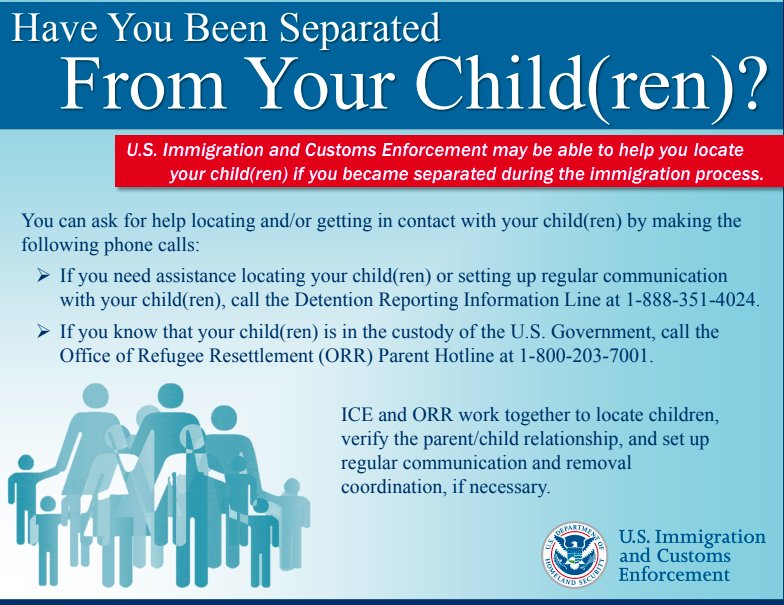
The family separation policy took children from their parents at the border as a deterrent. Parents reunited with their kids years later described it as kidnapping.
One of the first things President Joe Biden did after taking office in 2021 was create a task force to reunite the children we “kidnapped” during the Trump administration with their parents.
Some families were never reunited. That’s a wound the government inflicted on purpose and then “lost the paperwork.”
2026: Enforcement at a Scale the Country Has Never Seen

The 2025 budget reconciliation law changed everything. It directed roughly $170.7 billion to immigration and border enforcement through 2029, including $45 billion for detention alone.
The Brennan Center calls the result a "deportation-industrial complex" — ICE now commands more money than every state and local police department in the country combined, with a stated goal of one million removals a year. Less than 8% of that money went to the immigration courts, which are capped at 800 judges and buried under millions of cases.
Here’s what that money bought:
- Detention. ICE held about 40,000 people when Trump took office in 2025. By January 2026 it passed 70,000 for the first time in recorded history, and the American Immigration Council found the system is on track to rival the entire federal prison system.
- Who's inside. Roughly 70% of detainees had no criminal conviction of any kind. Nearly all of the growth came from people with no charges at all.
- Removals. ICE reported more than 356,000 removals with two and a half months left in the fiscal year, and July set a record for monthly arrests under a White House quota of 2,000 arrests a day.
- Deaths. At least 47 people have died in ICE custody since January 2025, with 16 of those in the first months of 2026 alone.
Legal immigration was cut just as much. The refugee ceiling was set at a record-low 7,500 — most of it reserved for white South Africans — before being nudged up to 17,500, with every added slot going to Afrikaners.
A travel ban covering two dozen countries took effect January 1, 2026.
And in June, the Supreme Court ruled in Mullin v. Doe that TPS terminations aren't reviewable by courts at all, clearing the way to deport roughly 330,000 Haitians and 6,000 Syrians who had been living and working here legally for years.
The One Thing That Held
On June 30, 2026, the Supreme Court struck down the executive order that tried to end birthright citizenship.
Chief Justice Roberts, writing for a 6–3 majority in Trump v. Barbara, held that children born here to parents unlawfully or temporarily present are citizens at birth, full stop.
Five weeks later, the president signed two more executive orders chipping at the edges of the same right.
What History Repeatedly Tells Us
Every restrictive era in American immigration history was sold as protection — of jobs, of safety, of culture. Every one of them was later understood as something uglier.
The Chinese Exclusion Act was repealed. The 1924 quotas were abolished.
Family separation is remembered as a national disgrace even by people who supported it at the time.
The current chapter is being written right now, with a $170 billion budget and almost no oversight.
If you want to understand why it targets certain people, start here — the dehumanization always comes first, because it has to.
You can follow our ongoing coverage at the ICE and Immigration hub.
The one constant across two and a half centuries: the country has never once regretted letting people in. It has only ever regretted keeping them out.