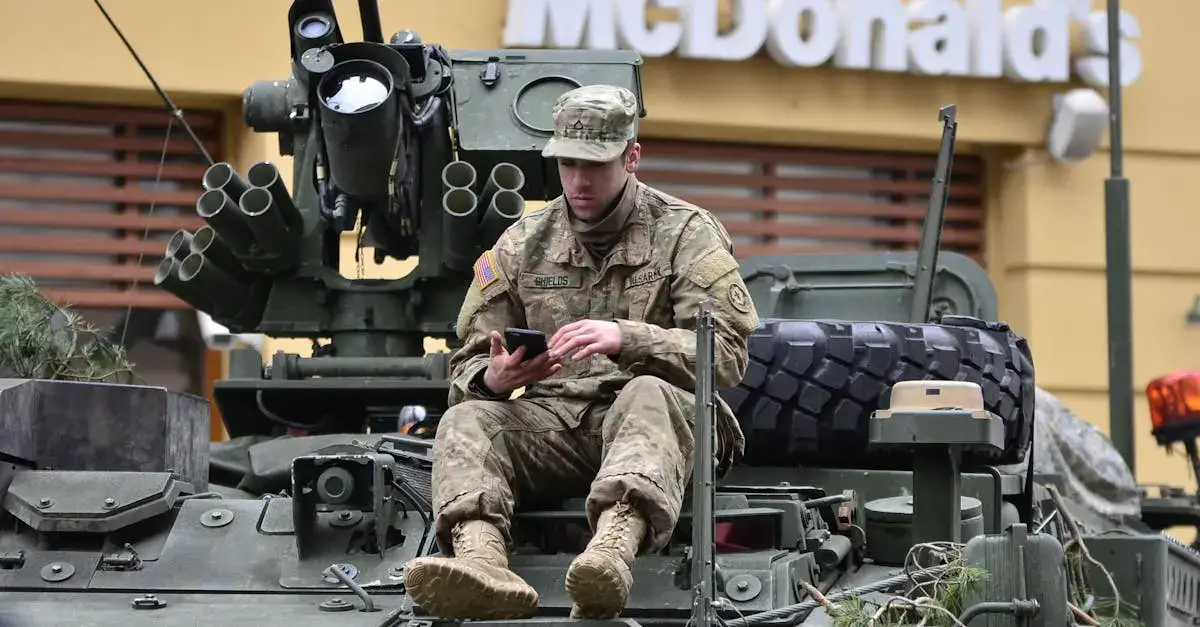

The president has threatened to invoke the Insurrection Act and deploy troops inside the United States. But that’s not the same thing as martial law, and neither gives a president unlimited power.
The phrase martial law conjures images of soldiers patrolling American streets, curfews, checkpoints and civilians suddenly living under military rule.
It’s an alarming possibility. It’s also one of the most misunderstood concepts in American law.
President Donald Trump has repeatedly talked about using military force inside the United States. In January 2026, he threatened to invoke the Insurrection Act in Minnesota amid protests over his administration’s immigration crackdown.
That threat understandably revived questions about martial law.
But there is an important distinction:
Invoking the Insurrection Act is not the same as declaring martial law. Deploying the National Guard is not necessarily martial law either.
And despite what Americans sometimes hear from politicians, television commentators and social media, a president cannot simply announce “martial law” and make the Constitution disappear.
The reality is more complicated, and the limits on presidential power matter.
What Is Martial Law?
There is no single federal law called the “Martial Law Act.”
In fact, the Constitution does’t mention martial law at all, and Congress has never enacted a statute providing a comprehensive definition of it.
The term generally describes an extraordinary situation in which military authority replaces civilian government, rather than merely assisting it.
The Brennan Center for Justice describes martial law generally as the displacement of civilian authorities by military authorities.
That distinction is crucial.
Soldiers protecting a federal courthouse are not necessarily exercising martial law.

National Guard troops assisting after a hurricane are not exercising martial law.
Even federal troops assisting civilian authorities under the Insurrection Act do not automatically place an area under martial law.
True martial law would involve something much more extreme: the military assuming governmental powers normally exercised by civilian institutions.
That could potentially include military authorities attempting to perform functions ordinarily carried out by police, courts or civilian government.
And that is precisely where enormous constitutional problems begin.
Can President Trump Declare Martial Law?
This is where the answer may surprise people.
There is no existing federal statute that gives the president explicit authority to declare martial law.
The Supreme Court has never definitively ruled that the federal government possesses a general martial-law power, much less that a president can invoke one unilaterally.
Legal scholars at the Brennan Center concluded after an extensive review of federal law and Supreme Court precedent that the president currently lacks legal authority to impose martial law on his own.
That does’t mean a president couldn’t attempt it.
Presidents can issue orders that exceed their lawful authority. The existence of an order and the legality of that order are two different questions.
An attempted declaration would almost certainly trigger immediate lawsuits and an extraordinary constitutional confrontation involving the White House, Congress, state governments and federal courts.
And there is powerful Supreme Court precedent limiting what the military can do to civilians.
The Supreme Court Has Already Drawn a Line
One of the most important cases is Ex parte Milligan, decided by the Supreme Court in 1866 after the Civil War.
Lambdin Milligan was a civilian in Indiana who was arrested and tried before a military commission while civilian courts remained open.
The Supreme Court rejected that arrangement.
The basic principle that emerged was enormously important: where civilian courts are open and capable of functioning, the government cannot simply replace them with military tribunals for civilians.
The Supreme Court reinforced that principle decades later in Duncan v. Kahanamoku, a case arising from martial law in Hawaii during World War II.
After the attack on Pearl Harbor, Hawaii was placed under martial law. Military authorities exercised sweeping powers, including trying civilians before military tribunals.
But civilian courts were functioning.
In Duncan v. Kahanamoku, the Supreme Court rejected the idea that military rule could simply displace functioning civilian courts.
The Court emphasized something fundamental to American democracy: the military is subordinate to civilian government.
That principle doesn’t go away just because the executive branch declares an emergency.
Martial Law Does Not Automatically Erase the Constitution
This is another important misconception.
A declaration of martial law does not create a constitutional black hole.
The First Amendment does not automatically disappear.
The Fourth Amendment does not automatically disappear.
Due process does not automatically disappear.
Elections do not automatically disappear.
Congress does not automatically disappear.
Federal courts do not automatically lose their authority.
And a president does not suddenly acquire unlimited power.
Military actions would still face constitutional limits and judicial review.
That doesn’t mean civil liberties could never be restricted during a genuine emergency. American history contains disturbing examples of emergency powers being used to restrict individual rights.
But there is an enormous difference between rights being restricted under claimed emergency authority and rights ceasing to exist because a president said so.
The Constitution contains no presidential emergency button labeled OFF.
What About Habeas Corpus?
One right deserves special attention because it frequently appears in discussions about martial law: habeas corpus.
Habeas corpus allows a person being detained by the government to challenge the legality of that detention before a court.
The Constitution specifically addresses its suspension.
Article I states that the privilege of the writ of habeas corpus shall not be suspended unless, in cases of rebellion or invasion, public safety requires it.
Even then, the constitutional language does not say that suspending habeas corpus suspends every other constitutional right.
Nor does it say that the president may simply suspend the Constitution.
The history surrounding Abraham Lincoln’s suspension of habeas corpus during the Civil War produced one of America’s most consequential debates over emergency presidential power.
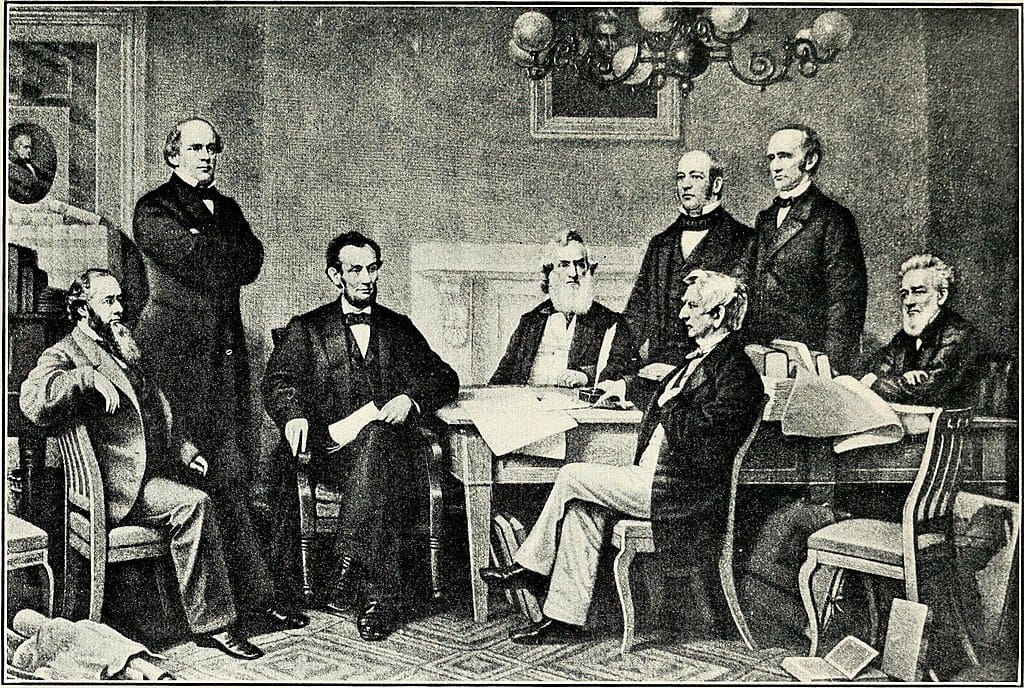
That history is precisely why claims of extraordinary emergency authority deserve scrutiny rather than automatic deference.
Then What Is the Insurrection Act?
This is where the current political debate becomes much more relevant.
The Insurrection Act is a collection of federal statutes allowing a president, under certain circumstances, to deploy military forces domestically.
Unlike presidential martial law, this authority actually exists in federal statute.
The law can permit military forces to assist in enforcing federal law or suppressing certain insurrections, rebellions or domestic violence under circumstances described by Congress.
That makes it an important exception to America’s longstanding rule against using the federal military as an ordinary domestic police force.
But there is an essential distinction:
The Insurrection Act allows the military to assist civilian government. Martial law involves the military replacing civilian authority.
The Brennan Center’s explanation of the Insurrection Act makes this distinction explicit: invoking the law does not itself establish martial law.
That difference can get lost very quickly when Americans see armed troops deployed in their cities.
The Posse Comitatus Act
The reason presidents cannot ordinarily use the military as a national police department is rooted partly in the Posse Comitatus Act.
Under 18 U.S.C. § 1385, federal armed forces generally cannot be used to execute domestic law unless the Constitution or Congress specifically authorizes it.
The principle behind the law is simple and deeply important:
The military and civilian law enforcement have different jobs.
Police officers enforce civilian law.
Soldiers fight military threats.
Blurring that distinction creates obvious dangers in a democracy.
Congress has created exceptions, however, and the Insurrection Act is among the most significant.
That means the immediate danger is not necessarily a president formally announcing “martial law.”
A president may already possess substantial statutory authority to put troops on American streets without calling it martial law at all.
Why Trump’s Insurrection Act Threat Matters
On January 15, 2026, Trump threatened to invoke the Insurrection Act amid protests against federal immigration operations in Minnesota.
The threat came after the fatal shooting of Renee Nicole Good by an ICE officer and amid escalating confrontations between federal agents and protesters.
Trump wrote that he would invoke the law if Minnesota officials did not stop what he characterized as attacks by “professional agitators and insurrectionists” against ICE officers.
The episode matters because Trump has repeatedly used the language of rebellion, insurrection, invasion and domestic enemies when discussing immigration, protests and Democratic-led cities.
Those words aren’t merely political adjectives when spoken by a president.
They also appear in laws governing extraordinary presidential powers.
That doesn’t mean a president can transform lawful protest into an insurrection simply by calling it one.
It does mean Americans should pay attention when ordinary political dissent is increasingly described using the vocabulary historically associated with military emergencies.
Protest Is Not Insurrection
This distinction deserves its own section.
The First Amendment protects the rights of Americans to speak, assemble and petition the government.
A protest does not become an insurrection because protesters oppose the president.
Civil disobedience does not automatically become rebellion.
Individual acts of violence or property destruction do not automatically transform every person participating in a larger protest into an insurrectionist.
People who assault officers or commit other crimes can be arrested and prosecuted under ordinary law.
That is fundamentally different from declaring an entire political movement or protest an uprising against the United States.
In a democracy, dissent is not evidence that democracy has failed.
Dissent is part of how democracy works.
Could Troops Be Sent Into a State Without the Governor’s Permission?
Under some provisions of the Insurrection Act, yes.
One portion allows a state legislature or governor to request federal assistance during an insurrection.
Other provisions can permit presidential action without the state’s consent under specified circumstances.
That is one reason the law is so powerful.
It is also why Trump’s repeated threats to invoke it have generated alarm among civil-liberties organizations.
The ACLU warned in January 2026 that using the statute against protests in Minnesota could pose serious risks to civil liberties.
The central issue is not whether the Insurrection Act exists. It unquestionably does.
The question would be whether the factual and legal circumstances actually justified invoking it and whether actions taken under it remained within constitutional limits.
What Would Actually Happen If Trump Tried to Declare Martial Law?
There probably would not be a cinematic moment when every police officer went home and tanks suddenly appeared on every street.
The first battlefield would likely be the courts.
Civil-rights organizations, affected individuals, state governments or local governments could seek emergency injunctions against unlawful military actions.
Federal judges would be asked to determine what authority the president claimed and whether federal law or the Constitution actually provided it.
Congress would also matter.
Congress controls military appropriations and possesses extensive constitutional authority over the armed forces.
State governments could challenge federal actions that interfered with their own authority.
Military commanders would face the critical distinction between lawful and unlawful orders.
Unlawful orders and the military brings back memories of that time Democrats made a little video:

And journalists, watchdog organizations and ordinary citizens would suddenly have an enormously important role documenting what government forces were actually doing.
The result could be a constitutional crisis.
But a constitutional crisis is not the same thing as automatic presidential victory.
Could Trump Cancel an Election Under Martial Law?
No president has a general power to cancel federal elections simply by declaring an emergency or martial law.
The Constitution establishes congressional and presidential terms, and federal election dates are governed by laws enacted by Congress.
A president cannot extend his own constitutional term simply by issuing an executive order.
That point matters because fears about martial law sometimes jump immediately from “troops in the streets” to “there will never be another election.”
Those fears are understandable when democratic institutions are under pressure, but accuracy matters.
An authoritarian-minded president could attempt unlawful actions.
He could pressure other institutions.
He could create chaos around an election.
He could exploit an emergency.
But a declaration does not magically create legal authority that the Constitution withholds.
Could the Military Arrest Civilians?
This depends entirely on the circumstances and legal authority being invoked.
Military personnel can detain people in some narrowly defined situations, and the Insurrection Act can permit military involvement in domestic law enforcement that would ordinarily be prohibited.
But that’s not a blank check.
Military detention of civilians, particularly when civilian courts remain operational, would raise profound constitutional questions.
The Supreme Court’s martial-law cases exist precisely because the government has crossed this line before.
Americans should be skeptical of claims that military deployment automatically means soldiers can arrest whomever the president identifies as an enemy.
They cannot simply operate outside the Constitution.
Could a President Use Martial Law to Silence the Press?
Declaring martial law would not repeal the First Amendment.
A government might attempt censorship, restrict access to certain locations, impose security measures or claim that particular restrictions are required by an emergency.
Those actions could be challenged in court.
The distinction is important.
The danger of authoritarian government is not that a leader discovers a magic legal phrase that eliminates constitutional rights.
The danger is that government officials violate those rights anyway, justify the violations as necessary, and depend upon fear, confusion or institutional weakness to prevent effective resistance.
That is why independent journalism and access to accurate information become particularly important during an emergency. (Now is a good time to bookmark our website so you can quickly find us again if there would be an emergency. 😉)
America’s History With Martial Law
Martial law isn’t purely hypothetical in the United States.
According to historical research compiled by the Brennan Center, federal and state officials have declared martial law at least 68 times throughout American history.
Those declarations arose from dramatically different circumstances, including wars, labor disputes, civil unrest and natural disasters.
One of the most important examples followed the Japanese attack on Pearl Harbor in 1941.
Hawaii was placed under martial law. The military assumed sweeping control over civilian life, and civilians were tried before military tribunals.
Years later, the Supreme Court’s decision in Duncan v. Kahanamoku rejected the military’s continued displacement of functioning civilian courts.
That history offers an important lesson.
Emergency powers can expand rapidly during moments of genuine fear.
Courts may eventually declare some actions unlawful.
But the people whose rights were violated experienced those violations before the final court decision arrived.
Legal limits matter.
So does enforcing them in time.
The Bigger Danger May Be Something Short of Martial Law
This may be the most important takeaway.
Americans understandably fear the phrase martial law because it sounds dramatic.
But democratic erosion does not require a formal announcement.
A government can deploy troops.
It can expand surveillance.
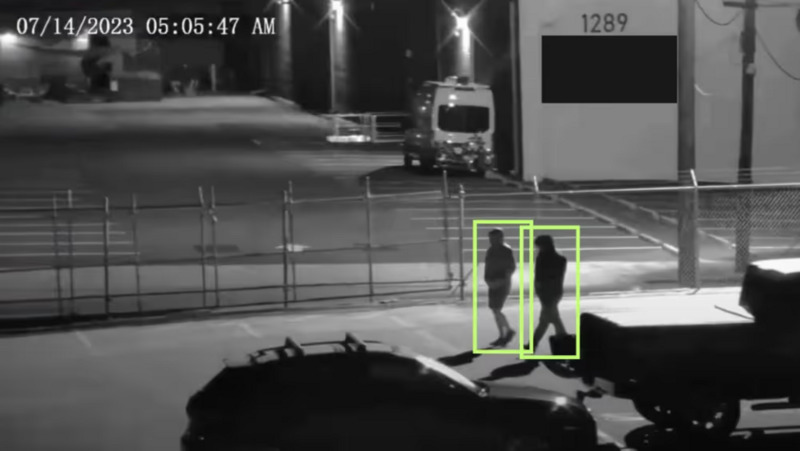
It can characterize protesters as enemies. 15 ICE protesters in Minnesota were labeled and tried as“Antifa terrorists,” resulting in prison sentences ranging from 30 to over 100 years. (Reference added after this article published.)
It can stretch emergency statutes.
It can pressure journalists.
It can aggressively prosecute political opponents.
It can use federal law-enforcement agencies in increasingly militarized ways.
It can normalize actions that once would have been considered extraordinary.
And it can do many of those things without ever declaring martial law.
That is why focusing exclusively on whether Trump says the magic words “martial law” risks missing the larger issue.
The more useful questions are:
What authority is the government claiming?
What are soldiers or federal agents actually being ordered to do?
Are civilian institutions still functioning independently?
Are courts able to review government actions?
Is Congress exercising oversight?
Are Americans still free to criticize their government, organize, protest and report what they see?
Those questions tell us far more about the health of a democracy than the label attached to an executive order.
What Americans Should Watch For
The deployment of troops by itself does not prove that martial law has begun.
Instead, watch what powers the government actually claims.
Pay particular attention if military forces are ordered to perform ordinary civilian policing; if officials attempt to replace civilian courts with military tribunals; if peaceful political opposition is formally characterized as rebellion or insurrection; if the government attempts to prevent courts from reviewing detentions; or if emergency powers are used to suppress constitutionally protected speech, journalism or assembly.
Those would represent far more serious warning signs than soldiers simply being visible in a city.
And information matters.
Read the actual executive orders.
Read court decisions.
Read the statutes being invoked.
Separate what politicians say they can do from what the law actually authorizes them to do.
Those two things are not always the same.
The Bottom Line
Martial law is one of the most extreme exercises of governmental power imaginable because, in its traditional sense, it involves military authority displacing civilian government.
But the president of the United States does not possess a clearly established, unlimited power to declare martial law.
The Constitution does not contain such a presidential power. Congress has not enacted a federal statute granting one. Supreme Court precedent strongly protects functioning civilian courts from being replaced by military tribunals.
The Insurrection Act is different.
It gives presidents substantial authority to deploy military forces domestically under specified circumstances, which is why Trump’s repeated threats to invoke it deserve serious scrutiny.
But even the Insurrection Act does not make the president a dictator.
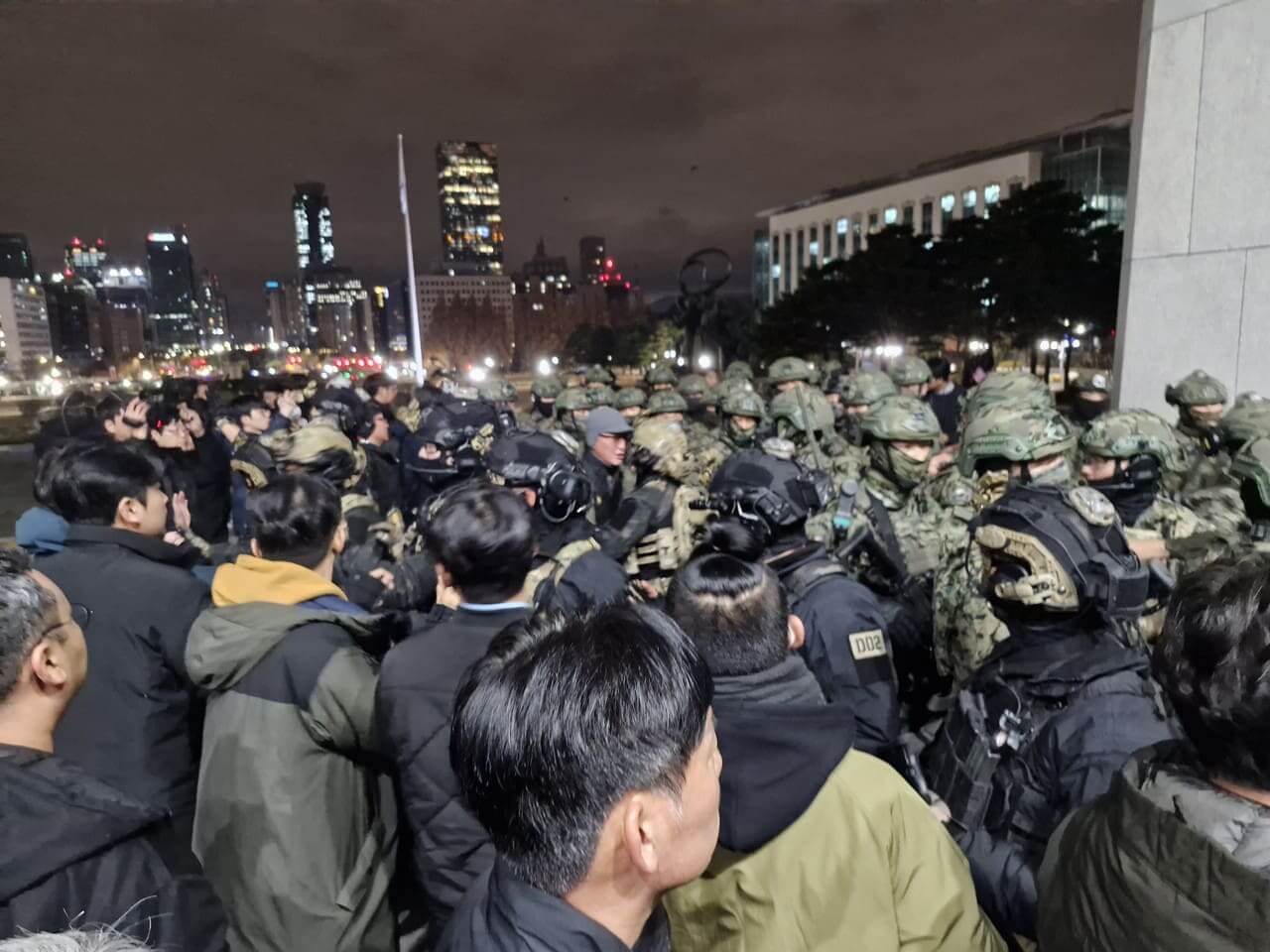
It does not abolish the Constitution.
It does not automatically cancel elections.
It does not eliminate the courts.
And it does not convert political dissent into treason.
Perhaps the most important lesson from American history is that constitutional rights do not protect themselves.
Courts must enforce them. Congress must defend its own authority. State and local officials must challenge unlawful actions. Journalists must document abuses. Military personnel must follow lawful orders rather than unlawful ones.
And citizens must understand the difference between government power and government claims of power.
In a democracy, those are not always the same thing.