



Last October, dozens of journalists walked out of the Pentagon and handed in their badges rather than sign a policy telling them what questions they were allowed to ask. More than 30 news organizations refused, including Fox News, where Pete Hegseth worked as a morning talk show co-host. Those journalists had no idea that the press was about to be replaced with military influencers.
When the dust settled, about 15 credentialed reporters remained in the building — mostly freelancers, foreign outlets, and friendly Right-wing sites.
The military influencers were hired as civil employees by the Pentagon to act as cheerleaders for Pete Hegseth and attack dogs for the Trump administration.
We now know a little more about the people who filled the space after the press cleared out.
Will Sommer of The Bulwark was first to report on the Pentagon’s paid influencers after discovering that GOP influencer, DataRepublican, was working as a special government employee for the Pentagon.
He covered the Pentagon’s paid influencer army in his False Flag Newsletter.
Then, on August 30, the Washington Post published its “exclusive” report on the Pentagon quietly hiring several veterans with large social media followings — conservative military influencers on X — and putting them in government roles.
The Pentagon didn't disclose what those roles were.
The accounts would publicly amplify Hegseth's views on culture war issues while they "attacked those who scrutinized the Trump administration."
What the records show
The three men named in the Post’s reporting are all retired colonels with real service records and a large following.
Rob Maness, retired Air Force, has more than 135,000 followers on X.
Kurt Schlichter, retired Army and a longtime Townhall columnist, has nearly 620,000.
Thomas Anderson, retired Army and now an attorney, posts under the pen name Cynical Publius to more than 323,000 followers.
Pentagon records reviewed by the Post showed Maness and Schlichter with active government email addresses carrying a .civ suffix — the markers used for civilian employees rather than uniformed personnel or contractors.
Anderson appeared in the records earlier this year and was no longer listed by late August.
All three were assigned to the office of Anthony Tata, the undersecretary of defense for personnel and readiness.
They were reportedly brought on as "special government employees (SGEs)" or "highly qualified experts," classifications that allow temporary or specialized service — an SGE can work up to 130 days a year.
The Pentagon wouldn’t say whether the three were being paid with taxpayer money, what their actual duties were, or how long their assignments would last.
This from a group that promotes itself as the most transparent administration in history.
One of the military influencers answered — sort of
Schlichter didn't stay quiet. He responded in a Townhall column, saying he, Maness, and Anderson had been hired to review the military's war colleges and write a report with recommendations.
He said they visited campuses, interviewed people, and read course materials, and that "None of our duties involved tweeting or messaging".
He acknowledged that DEI was one component of the review but disputed that it was the focus.
That's a real answer that deserves to be reported, but it’s also incomplete.

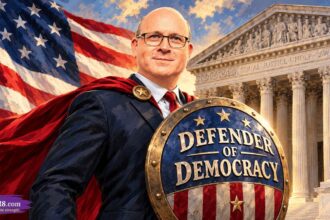

The three men participated in Hegseth's Senior Service College Task Force, which he announced in March to conduct a 90-day review of institutions like the Army War College, the Naval War College, and National Defense University.
Hegseth wasn't subtle about the goal. He said some of those schools promote ideologies he'd seen at civilian universities and that “We need to rip 'em out.”
So the question was never whether these men were paid to tweet.
The question is why three men with X accounts were given government credentials and influence over schools that train future generals.
They never disclosed it to their audiences as they were posting in defense of the department that hired them.
Readers had no way of knowing that the guy explaining why the Pentagon's critics are wrong was, in some capacity, working for the Pentagon.
Political writer Jim Stewartson called it a way to use "taxpayer money to pay for psyops against taxpayers."
Whether or not you'd be that blunt, the gap between hiring and disclosure is the story.
The person’s office they worked in
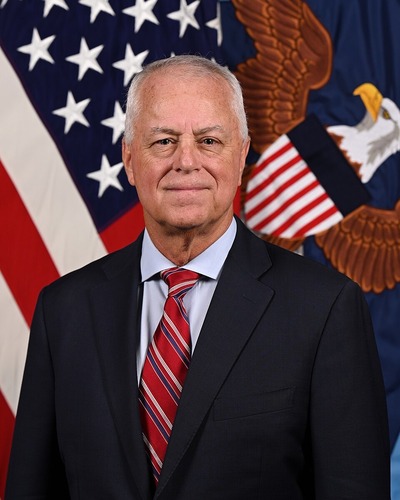
Tata is worth a paragraph of his own. He's a retired Army brigadier general and former Fox News commentator whose 2020 nomination to a senior Pentagon policy job collapsed after Republicans on the Senate Armed Services Committee canceled his hearing over past statements, including calling Barack Obama a "terrorist leader."
He was confirmed to his current post in July 2025 on a 52–46 party-line vote, after telling senators the remarks were out of character and pledging to be apolitical.
Civil rights groups had urged the Senate to reject him, citing a record of Islamophobic and anti-Black rhetoric and a history of promoting conspiracy theories. His office now oversees personnel policy for roughly three million service members and civilian employees.
The timing is the tell
The military influencer story broke the same weekend the Post published details from a leaked classified orders book in which the heads of the Army, Navy, and Air Force and multiple four-star commanders warned Hegseth that the Iran war is grinding down American readiness.
Several pro-Hegseth military commentators went after the Post for publishing it.
As the Washington Examiner noted, some of those commentators had quietly been on the department's payroll.
That's the loop. Independent reporters are pushed out of the building. Commentators with undisclosed government affiliations are brought in.
When actual news leaks without the Pentagon reporters there, the military influencers attack the outlet that published it, and the audience has no idea anyone's getting a check.
Why any of this matters
The press restrictions that started this are already in court. A federal judge ruled in March that parts of the credentialing policy violated the First and Fifth Amendments and ordered credentials restored to seven New York Times journalists.
In April, that same judge found the Pentagon's revised policy still flouted his order. The Society of Professional Journalists said the policy reeked of prior restraint.
The military belongs to the public, and the public pays for it. Roughly a trillion dollars a year buys us the right to know how it's run, who's making decisions, and who's being paid to tell us those decisions are good ones.
Every layer of independent scrutiny that gets stripped away makes it easier for the next bad decision to go unchallenged until it's already cost someone something.
Ask who's paying the person telling you not to worry about the Strait of Hormuz. It's a fair question, and right now the Pentagon won't answer it.