
In a 5–4 decision called Citizens United v. FEC, the Supreme Court ruled that corporations, unions, and the wealthy could spend unlimited money to influence elections — and it has been reshaping who actually holds power in this country ever since.
In a democracy, the promise is simple: one person, one vote. Your voice is supposed to count the same as your neighbor's — and the same as the billionaire's. But with the Citizens United ruling on January 21, 2010, the Supreme Court rewrote that promise.
Here's what the decision did, why it has corroded representative government, and how a growing movement is fighting to undo it (including Resist Hate).
What the Court Actually Decided
The case started small. A conservative nonprofit called Citizens United wanted to air a film attacking Hillary Clinton during the 2008 primaries, which ran up against federal campaign finance limits.
Instead of ruling narrowly, the Court's conservative majority — all five Republican-appointed justices — used the case to tear down decades of law.
Writing for the majority, Justice Anthony Kennedy declared that the government cannot limit "independent" political spending by corporations and unions, because “spending money is a form of free speech protected by the First Amendment.”
Independent spending, he wrote, "does not give rise to corruption or the appearance of corruption."
Corruption, in the majority's narrow view, meant only outright bribery — a direct cash-for-favors deal.
Justice John Paul Stevens, in a blistering dissent, warned that the ruling would cause Americans to "lose faith in our democracy," and reminded the Court that corporations are not "We the People."
Days later, President Obama criticized the decision in his State of the Union address, saying it would "open the floodgates" to special interests.
Former President Jimmy Carter would later put it more bluntly, calling the United States "an oligarchy with unlimited political bribery."
The Birth of the Super PAC
Citizens United didn't act alone. Just two months later, a federal appeals court took the ruling's logic one step further in a case called SpeechNow.org v. FEC.
If independent spending can't corrupt, the court reasoned, then there's no reason to limit how much money people can give to groups that only do independent spending.
And so the super PAC was born — a committee that can raise and spend unlimited amounts from individuals, corporations, and unions, as long as it doesn't hand the money directly to a candidate.
That last rule, the supposed wall between super PACs and campaigns, has proven almost meaningless in practice.

The same donors fund both, and candidates routinely headline super PAC fundraisers.
The Money Exploded
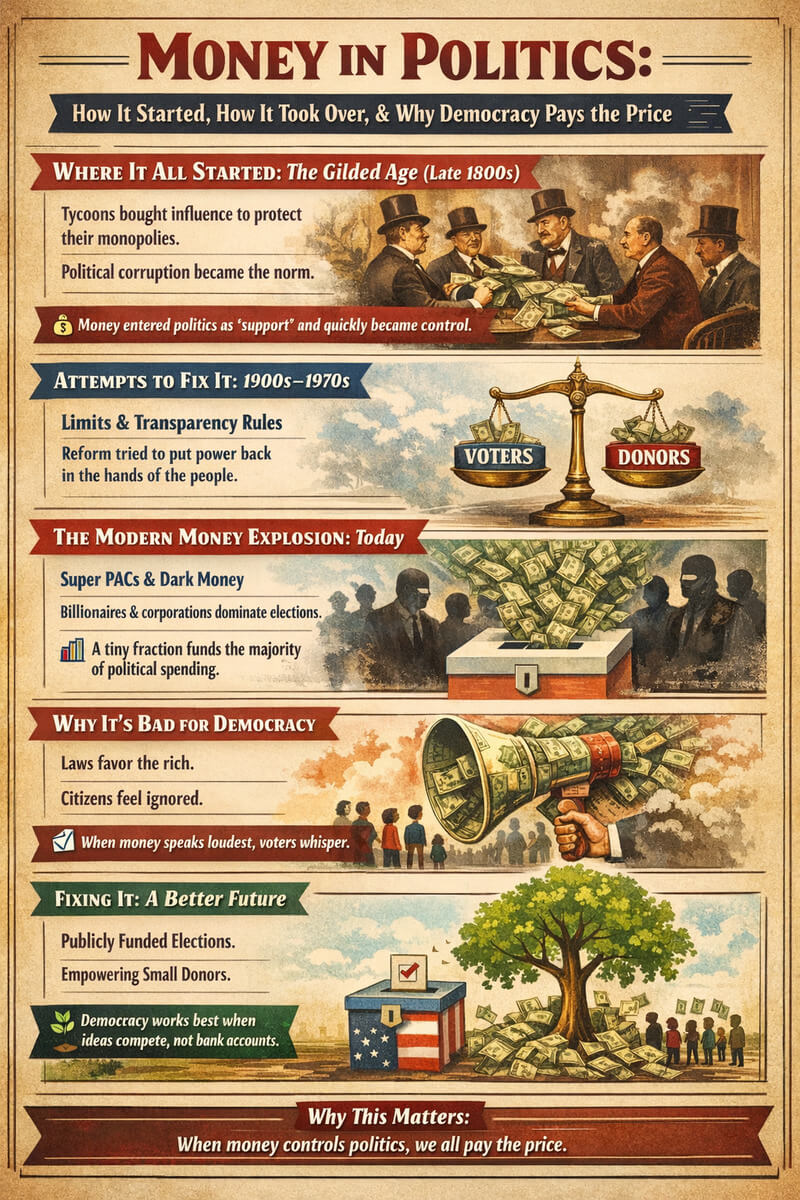
The results were immediate and staggering. Outside spending — money from groups other than the candidates themselves — grew more than 28-fold between 2008 and 2024, from $144 million to over $4.2 billion.
The 2024 federal election became the most expensive in history at roughly $15.9 billion, and when you add in state races, the combined total topped $20 billion.
Much of that money now flows in the dark.
In 2024, more than half of all outside spending came from groups that don't fully disclose where their funding originates — over $1 billion in untraceable "dark money."
Meanwhile, just ten individual donors accounted for nearly $600 million, while ordinary Americans giving under $200 made up only 16% of all the money raised.
Who the System Answers to Now
This is the heart of the damage. A representative is supposed to answer to constituents — the people who live in their district and cast the votes.


But when a single billionaire or a corporate-funded super PAC can spend more than every small donor combined, the incentive shifts.
Politicians spend hours of every week dialing for dollars. They learn which votes will unleash a flood of attack ads.
The people holding the megaphone are no longer the voters; they're the funders.
That isn't a hypothetical — it's the daily math of governing under Citizens United.
Who Can Even Afford to Run
The price of a campaign has climbed so high that running for office is increasingly out of reach for anyone without wealth or wealthy friends. Consider a few recent record-breakers:
The 2024 Senate race in Ohio between Democrat Sherrod Brown and Republican Bernie Moreno cost around $500 million, making it the most expensive Senate race in American history.
Pennsylvania's 2024 Senate race drew roughly $240 million, landing it among the dozen priciest contests ever.
And in Maine, Senator Susan Collins's seat went from a $10 million race in 2014 to a $200 million race in 2020 — a twenty-fold jump in just six years.
When campaigns cost this much, the candidate pool narrows to the self-funding rich and those who can win the blessing of big donors before a single vote is cast.
The barrier isn't talent or ideas. It's access to money.
The Fight to Get Money Out
Here's the good news: this is one of the rare issues where Americans across the spectrum agree.
Polls consistently show that more than 70% of both Democrats and Republicans want big money out of politics. And a serious movement is working to make it happen.
The most ambitious effort is a constitutional amendment to overturn Citizens United outright.
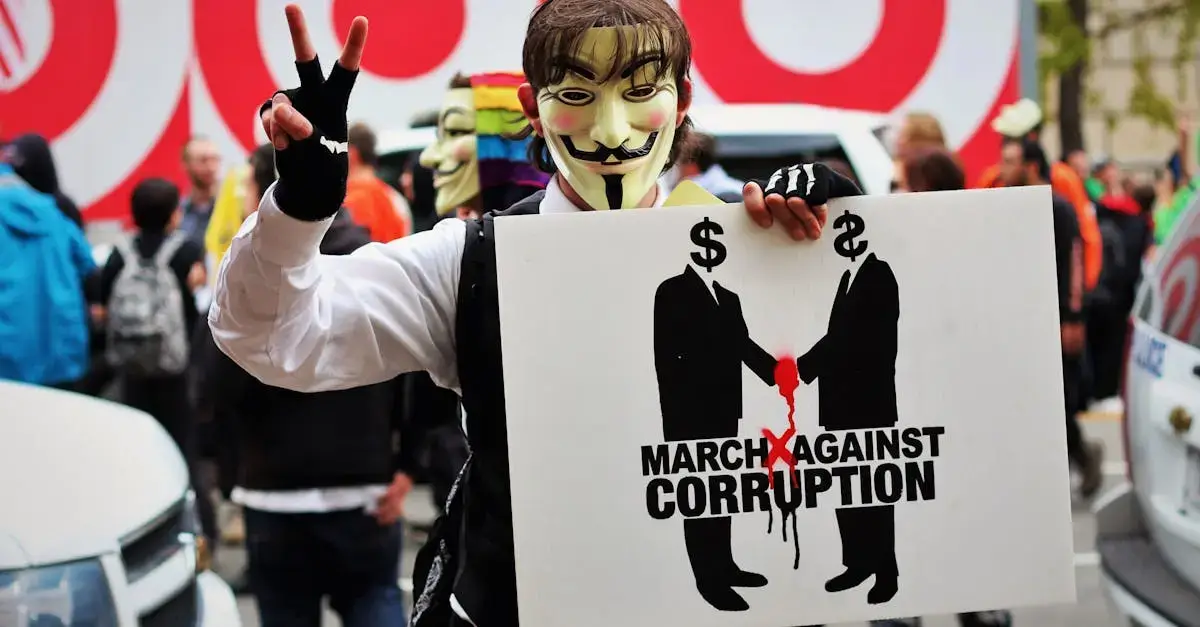
Organizations like American Promise are organizing state by state to pass what they call the For Our Freedom Amendment — which would become the 28th Amendment and restore the power of Congress and the states to set reasonable limits on political spending.
Roughly two dozen states have already passed resolutions calling for such an amendment, on the way to the 38 states needed to ratify one.
In Congress, lawmakers have repeatedly introduced versions like the Democracy for All Amendment and the Citizens Over Corporations Amendment.
Reformers are fighting in the states and the courts, too. In 2023, Maine voters passed a ballot initiative with 86% support to cap contributions to super PACs — a law deliberately designed to be challenged, in hopes of forcing the Supreme Court to reconsider the foundation it built in SpeechNow.
Groups including End Citizens United, Common Cause, Public Citizen, Free Speech For People, and Move to Amend keep pushing for donor transparency, public financing of campaigns, and an end to dark money. Wolf Pack is a group of volunteers working to get an amendment that will get dark money out of our politicians’ campaign bank accounts and off of their minds.
When they aren't worried about doing what makes their donors happy, they can return to legislating based on what the people want (those who have been in D.C. for decades aren'likely to change, but as new people are elected, the “for the people” part of democracy will become the norm again).
Resist Hate is following this fight closely. You can learn more about the movement — and how to get involved — on our Get Money Out of Politics page.
What's Really at Stake
Citizens United was never just a ruling about campaign ads. It was a decision about whose voice counts.
Fifteen years ago, the answer it gave — that money is speech and corporations are people — has hollowed out the basic promise of self-government.
Restoring that promise means deciding, as a country, that our representatives should answer to people, not to the highest bidder.
That fight is far from over. And it's one worth having.