

In his first public appearance since the White House Correspondents’ Association dinner shooting, President Donald Trump delivered a 94-minute speech at The Villages retirement community in Florida on May 1, 2026, that veered between policy promises, personal grievances, racist attacks on a sitting member of Congress, and crude impressions of transgender athletes.
The freewheeling event, before a crowd of seniors at The Villages Charter School, made clear that Trump’s response to a security crisis is to escalate rather than tone down.
A Racist Attack on Ilhan Omar
The speech’s most quoted moment came when Trump turned his sights on Democratic Congresswoman Ilhan Omar of Minnesota, one of the first Muslim women elected to Congress and a Somali refugee who became a U.S. citizen as a teenager.
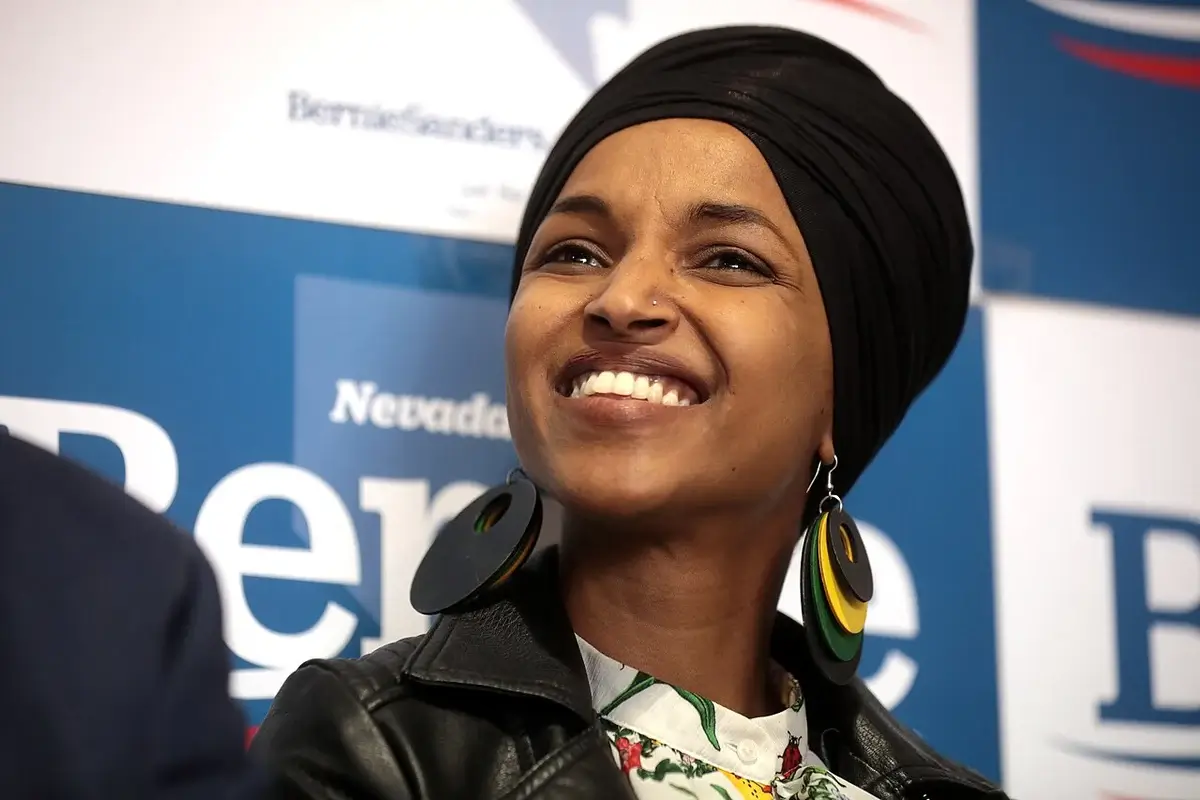
Trump opened by attacking her country of birth in sweeping terms. “Somalia, it’s a beautiful place. It’s got no government, it’s got no military, it’s got no anything,” he said. “It’s got one thing that’s really strong — crime. It’s got a lot of crime. They have no police. All they do is run around shooting each other. It’s filthy, dirty, disgusting, dirty. It’s a horrible place.”
He then pivoted to Omar herself, mocking her invocation of constitutional rights. “Ilhan Omar comes here from Somalia, and she tells us how to run the United States of America,” he said. “She says, ‘The Constitution gives me certain rights, gives me certain rights, and I demand that I be given these rights.’ Get the hell out. What a phony.”
Trump escalated further by reviving a long-debunked smear about Omar’s personal life, claiming she had “married her brother.” There has never been any verified evidence supporting this claim, which has circulated in right-wing media for years. Trump’s repetition of it from a presidential podium gave the lie new official weight.
Omar responded sharply on X, calling the remarks “this unhinged rant” and pointing to Trump’s own legal record — 34 felony convictions, a civil verdict for sexual abuse, and longstanding allegations connected to Jeffrey Epstein. “I still don’t know how anyone would willingly humiliate themselves like this,” she wrote, “but here we are.”
This is not new territory. The “go back where you came from” framing Trump deployed against Omar echoes his 2019 attacks on the four Democratic congresswomen of color known as the Squad — language that the U.S. House formally condemned as racist at the time. Telling an American citizen and elected official to “get the hell out” of the country because of her ancestry remains, by any honest description, a racist demand.
Mocking Transgender Athletes From the Podium
Trump also performed what he called his impression of a transgender weightlifter — grunting and groaning onstage in front of an audience of seniors. He acknowledged that First Lady Melania Trump had asked him not to do the bit. “She hates it when I do the thing on weightlifting, she says it’s so unpresidential,” Trump said.
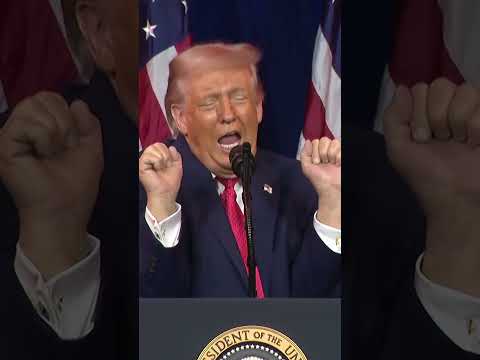
He segued from the impression directly into talk about dancing to “Y.M.C.A.” by the Village People, calling it “what is sometimes referred to as the gay national anthem” and claiming, falsely, that his use of the song had pushed it to number one for months.
The song peaked at number two on the Billboard Hot 100 in 1979 and has never reached number one in the United States. The song’s writer, Victor Willis, has publicly objected to political and homophobic framings of the track.
Reporters in the room counted Trump using the made-up word “mutilization” — apparently meaning “mutilation” — at least four or five times in reference to gender-affirming care for minors.
The dehumanizing impressions and the Village People riff arrived back-to-back, with no apparent recognition that the targets — trans people and the gay community — are real people whose lives are made measurably more dangerous by the rhetoric of the most powerful man in the country.
Defending the Iran War as Gas Prices Climb
A significant portion of the speech defended Trump’s ongoing military campaign against Iran, the operation Resist Hate has tracked from the beginning as Operation Epic Fury. With gas prices rising and the Strait of Hormuz closed by Iran in retaliation, Trump told the crowd Americans would simply have to absorb the cost.

He insisted the U.S. would “never allow Iran to have a nuclear weapon” and predicted gas prices would come “tumbling down” once the war ended — without offering a timeline or a definition of what ending the war would look like. Polling on the war has trended sharply against him, and Republicans heading into the midterms are openly nervous about gas prices and inflation.
Trump told Congress earlier in the week that the Iran war had been “terminated,” a claim contradicted by ongoing strikes, the active naval blockade of Iranian ports, and the continued closure of the Strait of Hormuz.
A Self-Described “Weave”
Throughout the 94 minutes, Trump repeatedly defended his style of jumping from topic to topic — what he calls “the weave.” “Someday I won’t come back, and they’ll say, ‘all right, he shot,’” he said, an apparent reference to himself as a possible assassination target. “That’s the weave. I call it the weave because you get a lot of stories into one little sentence.”
He complained about the microphone, telling staff: “Turn the mic up please. I’m screaming my ass off because the mic is no good.” He mocked Centers for Medicare and Medicaid Services Administrator Mehmet Oz on stage, calling Oz’s briefings on Medicare “the most boring trip I’ve ever made” and dismissing it as “medical crap.” He referred to GLP-1 weight loss drugs as “the fat shot.”
He repeatedly made jokes at the expense of his elderly audience, telling them, “I don’t happen to be a senior. I’m much younger than you. Look at you old guys.” He revived the false claim that he won the 2016 popular vote, asserting opponents “cheat like hell.” He called NATO “a paper tiger” and said of allies, “You’re fired.”
He joked about the security risks of being out in public a week after the WHCA dinner shooting: “They want me to be in a secure place. I said, ‘What’s more secure than The Villages?’”
Why This Speech Matters
The Villages speech was not an aberration. It was a 94-minute distillation of how Trump uses the presidency: a sitting U.S. president telling a naturalized American congresswoman to leave the country because of her birthplace, smearing her with a years-old fabrication, mocking transgender people with crude impressions, and defending an unpopular war that ordinary Americans are paying for at the pump.
For the people Trump targeted — Somali Americans, Muslim Americans, transgender people, members of Congress doing their jobs — the rhetoric does not stay rhetoric. It travels. It shows up in harassment, in threats, in policy. Telling Ilhan Omar to “get the hell out” is not a policy position. It is a green light.
Shortly after the President attacked Omar in a speech, she was attacked during a town hall in Minnesota.
The speech also revealed something about the moment. Trump returned to a public stage one week after the country’s most prominent press dinner was attacked, and rather than meeting the moment with restraint, he used the platform to attack a Black Muslim woman in Congress, mock vulnerable communities, and dig in on a war his own voters are turning against.
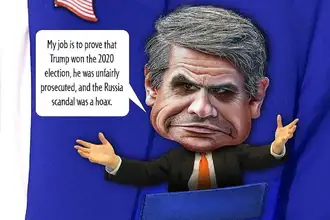


A presidency increasingly operating on grievance and spectacle is not a presidency capable of governing through a crisis — and the country is now in several at once.
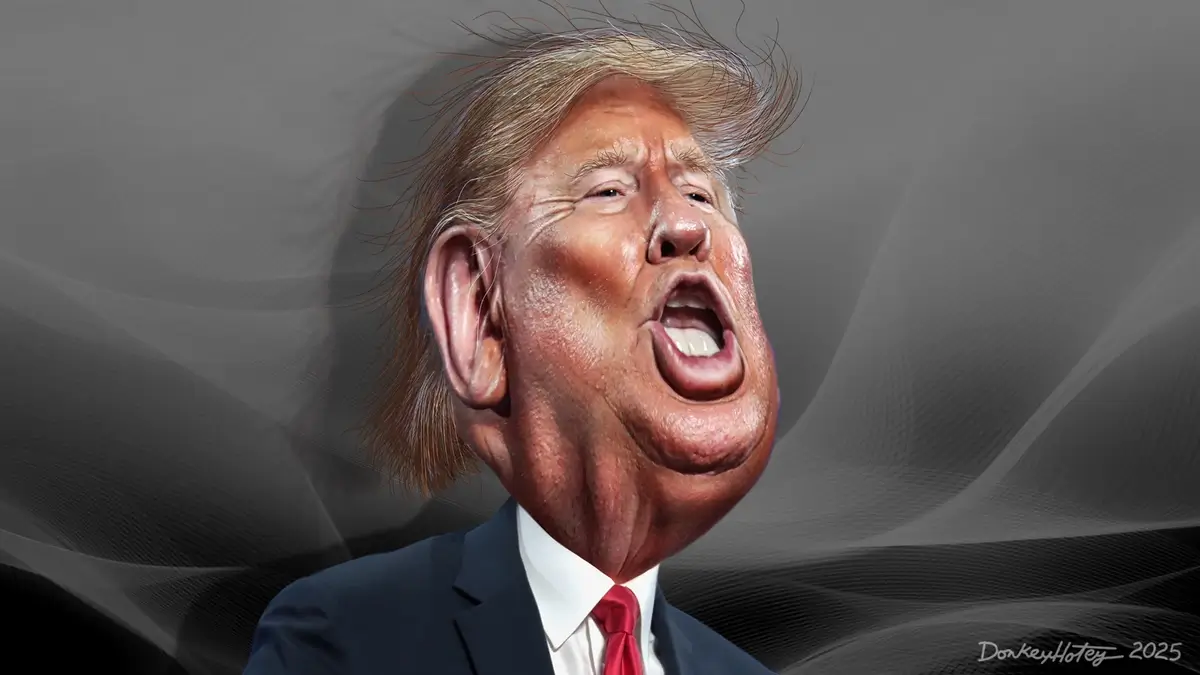
Caricature of Donald Trump is the work of talented artist, DonkeyHotey. You can view all of his work on Flickr.