


This article first appeared on Otherwords.org.
The re-election of Donald Trump reignited a simmering feud between the progressive and centrist wings of the Democratic Party. While centrists have cautioned against alienating “moderate” voters with economic populism, progressives have urged the party to rally around universal health care, raising wages, and other Progressive measures.
If recent elections are any indication, moderate voters seem plenty receptive to progressive appeals.
Voter Support for Universal Health Care and Wealth Tax
Newly minted Rep. Analilia Mejia recently won a special election for New Jersey’s 11th district in the House of Representatives. Mejia replaces moderate Democrat Mikie Sherill, who vacated her seat in the affluent, suburban district after winning the state’s gubernatorial election.
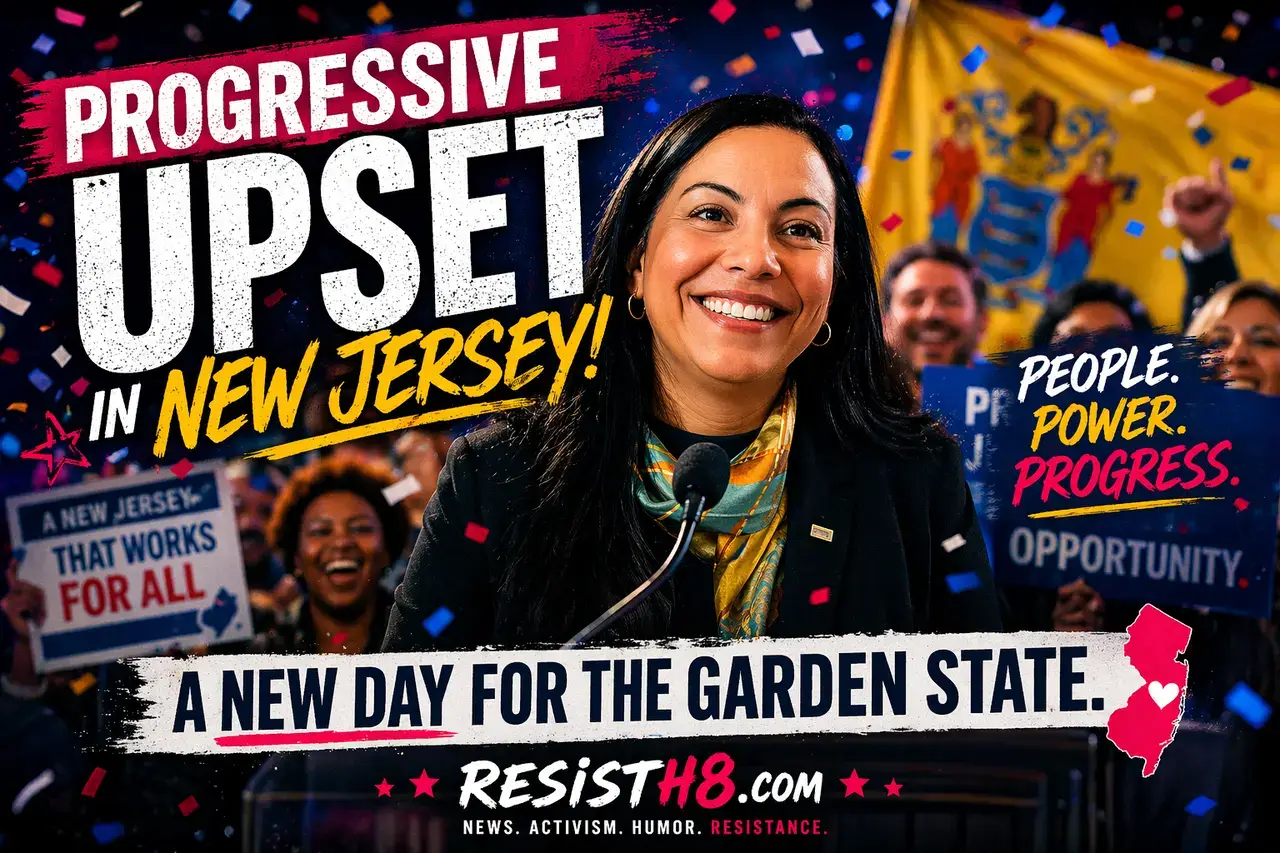
Mejia gave a fiery inaugural address on April 20 calling on her colleagues to “Stand up, defend, and restore not only our democracy, but also a just economy that actually works for working people.”
Mejia has built a political career championing economic populism. Not only did she serve as Senator Bernie Sanders’ 2020 campaign political director, but was also co-executive director of the Center for Popular Democracy and director of the New Jersey Working Families Alliance.
Poll after poll shows majorities of the public back taxing corporations and the very rich, prefer a Medicare for All healthcare system to our patchwork private insurance system, and are deeply concerned about climate change. Mejia says that makes those issues good politics as well as policy.
I talked to Mejia in the run-up to the 2022 midterms. “The policies that really motivate people, that work for working families,” she told me then, “are also popular ideas.”
She’s right. This year, Mejia won her suburban district handily, beating out Republicans and more centrist or conservative Democrats. Her populist, morally unambiguous platform included a demand to abolish Immigration and Customs Enforcement (ICE) and a denunciation of Israel’s genocide in Gaza.
In November 2026, Mejia will run for the same congressional seat, facing Republican candidate Joe Hathaway, a man who labeled her a “radical socialist.”
But there’s nothing radical about popular programs that address affordability.
Why Centrist Approaches Are Losing Ground
Pundits have claimed for years that tacking to the center is a surefire way to win political power. When Vice President Kamala Harris ran for president on a centrist campaign in 2024, many explained her loss to Donald Trump as the result of her identity rather than her politics.
But centrism means preserving the status quo — and the status quo is a failure for most Americans. Sharp analysts such as Tressie McMillan Cottom identified the real reason Harris lost, saying her “promise was that nothing much would change about the country but the race and gender of the one in charge.”
At a time when some members of her Harris’s party are giving in to a white supremacist resurgence by backing away from people of color in positions of power, Mejia leans into her racial and ethnic identity to connect with voters of all backgrounds. “I am the daughter of a Dominican factory worker and a Columbian seamstress who knew struggle,” she said during her inaugural speech.
The Future of Economic Populism in Elections
Indeed, candidates like Mejia — and progressive populist politicians such as Rep. Delia Ramirez (D-IL), Rep. Summer Lee (D-PA), and New York Mayor Zohran Mamdani — have proven that demographic diversity is not a liability for candidates who embrace justice-driven platforms and take principled stands on issues.

“The ideas that we support are popular ideas, are transformative ideas, and if we get together and raise our voices, we can and must win,” Mejia told me in 2022. “Everything depends on it.”
She added, “Democracy is not a spectator sport. You have to jump in and participate.” And that’s precisely what she did.
This article was republished under a Creative Commons Attribution-No Derivative 3.0 license.