
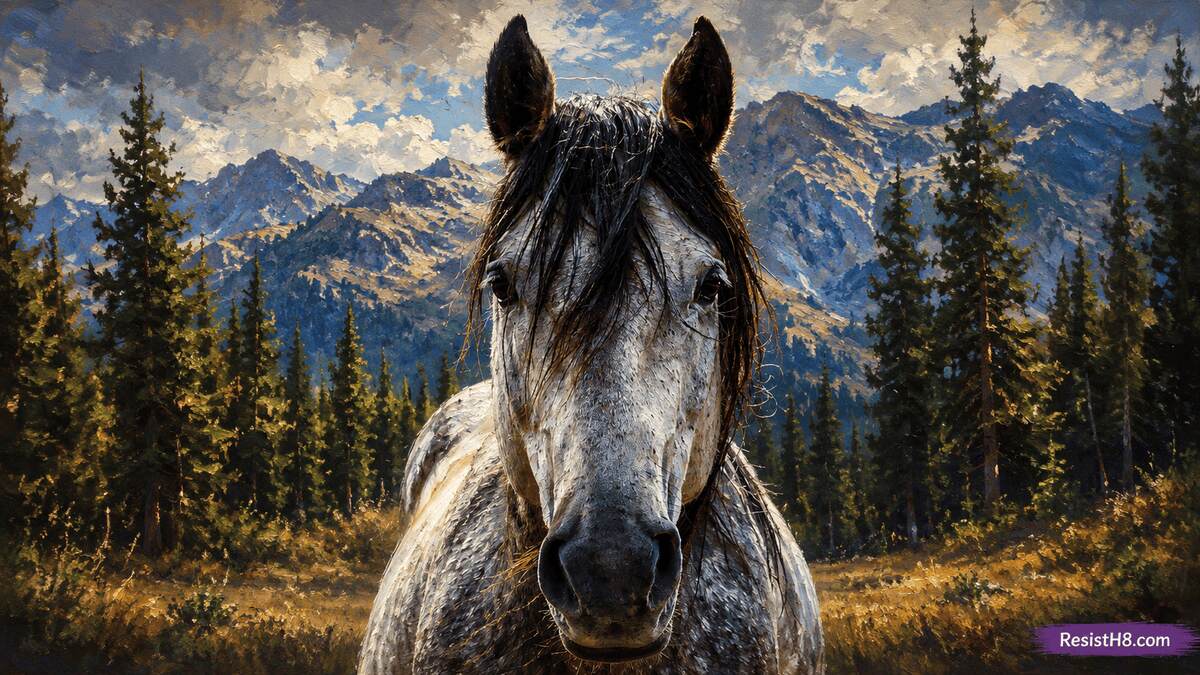

A helicopter flew low over the Piceance Basin in northwestern Colorado on the first Sunday of August, kicking up dust and driving wild horses across parched ground into a set of temporary corrals. By 11 a.m., the operation stopped — the thermometer was climbing toward 100 degrees, and federal welfare rules require a halt at 95. Before it did, 96 horses had been captured, including 43 mares, 35 stallions and 18 foals.
That was day one. The goal for that stretch of public land alone is to remove more than 900 animals.
This is the part most people never see, and it's happening right now across the American West. But the roundup isn't the end of the story. It's the beginning of one that gets considerably darker.
Where the roundups are happening
The Bureau of Land Management's 2026 gather schedule targets 14,830 wild horses and burros for removal from public lands this fiscal year. Nevada carries the heaviest load — it's home to most of the country's wild horses — with operations at the Antelope/Triple B, Caliente, Pancake and Spring Mountain complexes.
In March, the BLM resumed large-scale gathers near Elko, Ely, Caliente and outside Las Vegas after last fall's record government shutdown limited removals to emergency cases.
Colorado is the other flashpoint. The BLM wants to shrink the state's mustang population from roughly 1,727 to about 600 across four herd management areas.
In the Piceance Basin — nearly 200,000 acres shared with oil and gas operators and cattle ranchers — the target is to go from 1,145 horses down to no more than 235.
Six horses have already died in the Colorado operation. One died in transport. A colt was found dead in a holding pen. Four were euthanized for preexisting conditions including blindness and limb deformities.
The contracts for this summer's Colorado helicopter work run to roughly $900,000, part of more than $4 million awarded to two Utah livestock contractors this year.
Why the government says it's necessary
The official reason is overpopulation. The BLM's 2026 population report claims about 85,466 wild horses and burros on the range against an "appropriate management level" of as few as 15,374.
The agency says removals protect rangeland and habitat for sage grouse, mule deer and pronghorn.
Advocates say that not true. Livestock grazing continues across most herd management areas, eating up the same forage. Fertility control — the humane, proven alternative — receives less than 4% of the program's budget, even after Congress repeatedly told the agency to expand it.
American Wild Horse Conservation has delivered more than 10,000 fertility control treatments in five years, more than double what the federal government managed.
Then there's the money. About 58,000 wild horses are in government feedlots and pastures at a cost of roughly $100 million a year — most of the program's $142 million budget. The agency has a powerful financial incentive to get horses out of its care. Any way it can.
What's actually happening to them
On August 20, The New York Times published an investigation by Dave Phillips titled "Under Trump, Protected Wild Horses Are Going to Slaughter." It laid out a pipeline that works like this:
A captured horse gets listed for adoption online. If nobody takes it after three one-week listings — or if it's over 10 years old — federal law lets the BLM declare it unadoptable and put it up for sale.
That single word change matters enormously. An adopted horse keeps its federal protections. A sold horse loses them immediately.
The buyer signs a contract promising not to slaughter the horse or knowingly sell it to someone who will. Then the buyer sells it to a middleman — who signed nothing, and is bound by nothing.
The middleman sells it to a kill buyer. The horse goes on a truck to Canada.
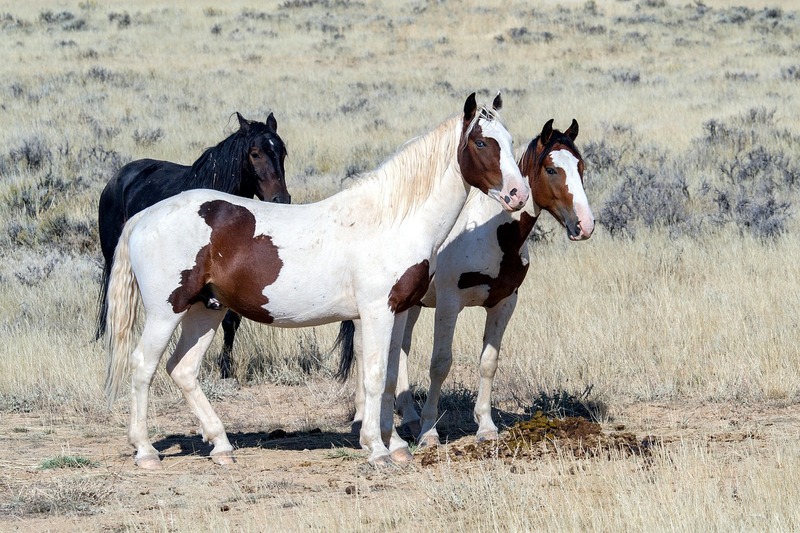
Sales roughly doubled to about 3,700 horses in 2025, some going for as little as $25 apiece. The Times traced roughly 500 of them to an Ohio livestock trader named Brandon Jones, who received a bulk sales contract with taxpayer-subsidized delivery.
Patricia Miller of American Wild Horse Conservation told the paper the agency is using sales to push "young, healthy wild horses into the slaughter pipeline."
The numbers back that up. Skydog Sanctuary, whose year-long investigation supplied key evidence for the Times piece, documented 6,331 wild horses sold in 19 months — against a historic average of about 1,200 a year.
More than 55% were between one and four years old, the most adoptable animals in the entire system. Skydog says it has tracked more than 300 of them to kill pens and filed eight formal complaints with the BLM.
Founder Clare Staples wrote to Interior Secretary Doug Burgum calling the program "federal complicity."
The BLM's response, issued August 24, was that the agency "does not sell or send wild horses or burros to slaughter" and that violations are taken seriously. Snopes, reviewing the claim, noted the Times presented strong circumstantial evidence but no ownership documents or photos of the transfers, and left the claim unrated pending more evidence.
It also noted this problem predates Trump — federal watchdogs documented BLM horses reaching slaughterhouses in 2008 and again in 2015, when one buyer admitted most of the 1,700 horses he'd purchased went to slaughter.
So the loophole is old. What's new is the volume — and what the administration is asking Congress to do next.
The protections Trump wants removed
Since 1971, the Wild Free-Roaming Horses and Burros Act has protected these animals as living symbols of the West.
The law technically permits killing and unrestricted sale of excess animals, but Congress has blocked it every year with appropriations riders — budget language prohibiting the use of federal funds to destroy healthy horses or sell them into slaughter.
Trump's FY2026 budget omitted that language entirely and proposed cutting the program by 25%. His FY2027 request does the same, dropping funding from $142 million to $106.8 million while leaving out the slaughter ban.
Both proposals mirror Project 2025, which explicitly calls on Congress to let the BLM "humanely dispose" of protected wild horses.
Congress has held the line so far. The House passed its FY2026 Interior bill in January with the euthanasia ban and slaughter protections intact, plus $11 million dedicated to fertility control — backed by a record 83 House members and 17 senators.
A bipartisan group including Reps. Dina Titus, Jamie Raskin, Brian Fitzpatrick and David Schweikert has pushed to keep that language.
But the Senate's FY2027 bill hasn't been released. Sixty-four thousand animals in government holding are waiting on that vote, whether or not anyone tells them so.
What you can do
Advocates are asking Congress to order a GAO audit of the BLM's sale program and to keep the protective riders in the final FY2027 bill. You can sign the petition here, and call your representatives directly — the Capitol switchboard is 202-224-3121.
Ask them to support the wild horse protections in the Interior appropriations bill and to demand a full accounting of where every sold horse ended up.
They can't speak for themselves. That was always the point of the 1971 law — that we'd speak for them.