

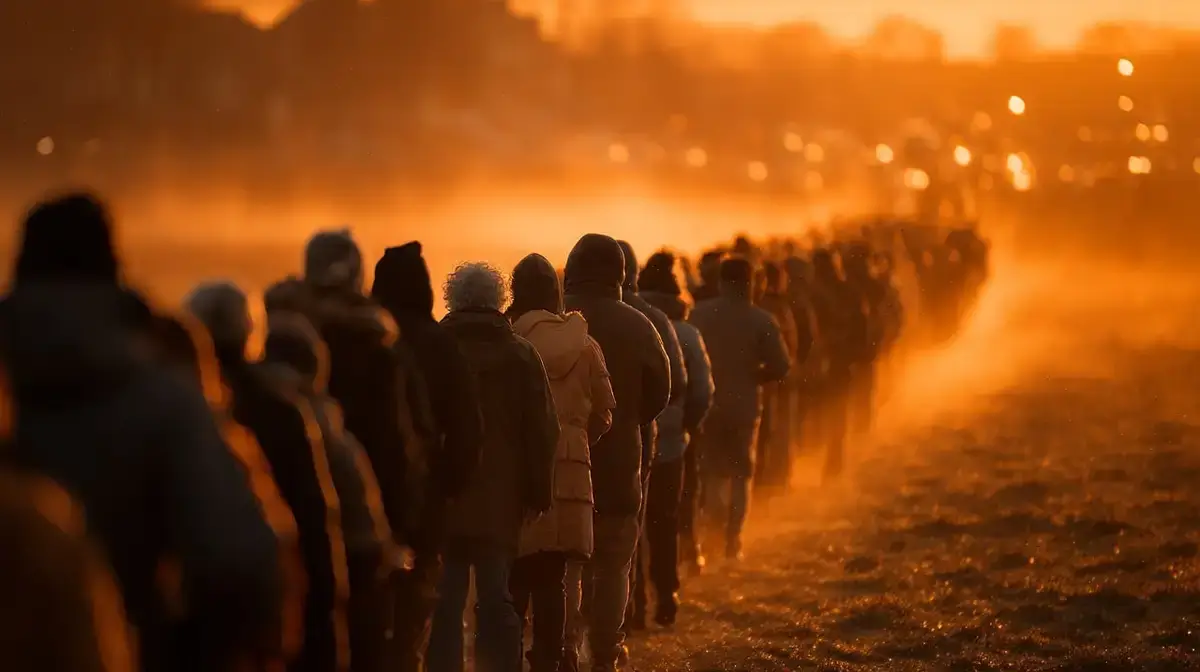
Three times in the last fifteen months, Americans have flooded the streets under the same two words. Three times, the crowd got bigger. Now the people who assembled that crowd are asking it to march to the polls.
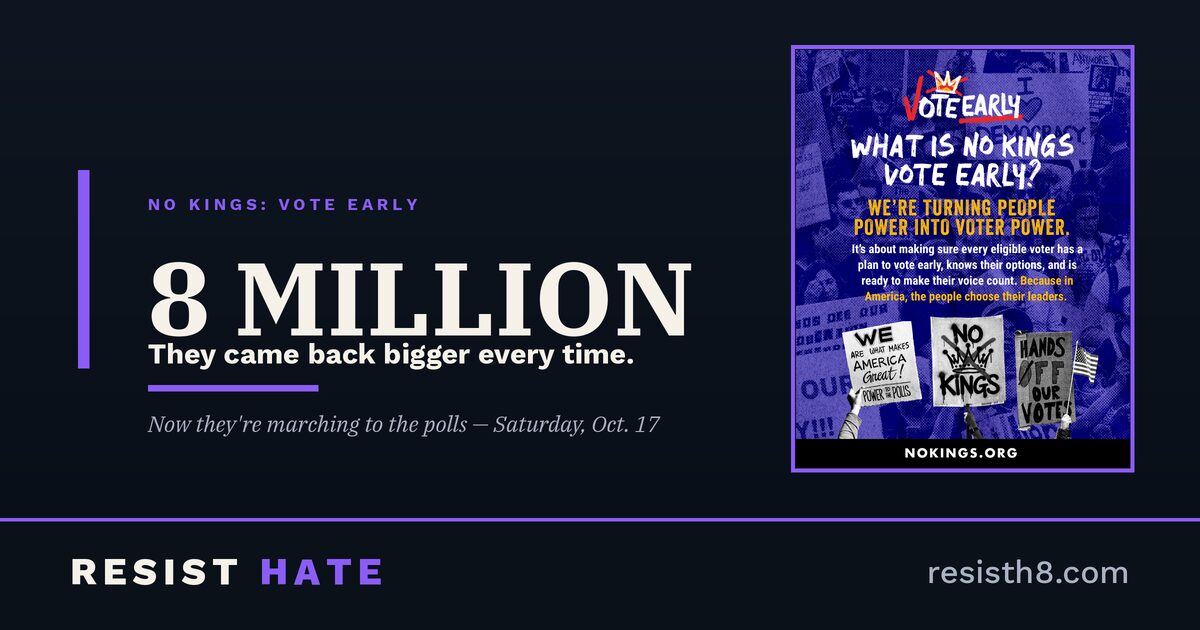
The No Kings Coalition announced Tuesday, September 8, that its fourth national day of action will be No Kings: Vote Early, on Saturday, October 17 — seventeen days before the November 3 midterms.
Organizers say events are already planned in roughly 160 cities across 38 states, and that number is expected to climb sharply in the coming weeks.
This one’s going to look different, and that's the point.
From 5 Million to 8 Million
Pay attention. Especially if you feel mentally and emotionally exhausted.
The first No Kings Day took place on June 14, 2025, the day of Donald Trump's military birthday parade. About five million people turned out at more than 2,100 locations.
Four months later, on October 18, 2025, they came back bigger. Nearly seven million people demonstrated as federal agents surged into Democratic-led cities.
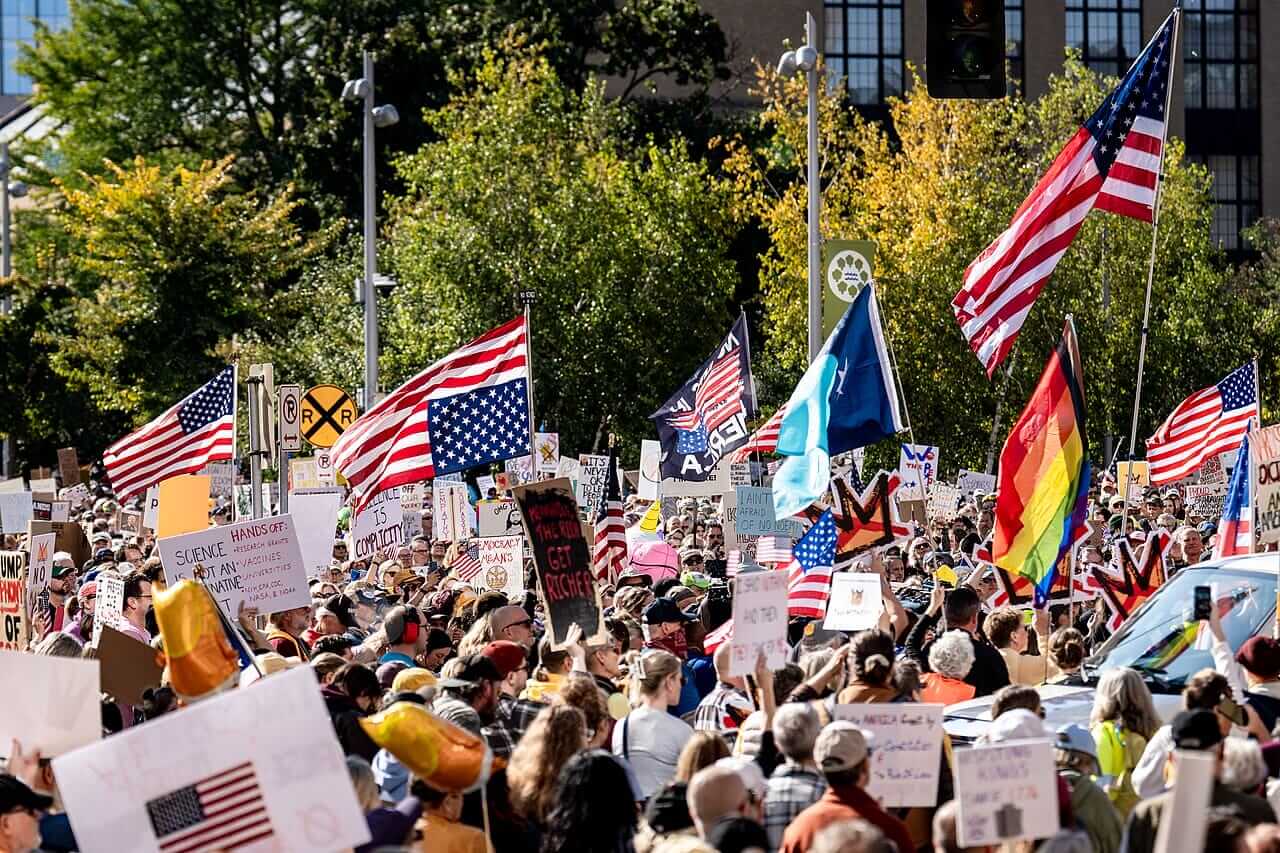
Then came March 28, 2026 — after ICE agents shot and killed two American citizens in the Twin Cities and Trump launched an illegal war against Iran.
Organizers counted more than eight million people at over 3,300 events in all 50 states and a dozen countries.
Nearly half the events were in red or battleground states. Two hundred thousand people filled the Minnesota Capitol grounds in St. Paul, miles from where federal agents shot and killed Renee Good and Alex Pretti.
It’s widely counted as the largest single-day protest in American history. The only real counter to that would be Earth Day 1970, which had a larger headcount, but that was mostly people attending teach-ins rather than protesting.
Five million. Seven million. Eight million. The Right wants people to believe that the No Kings anti-Trump movement is fading, but the numbers speak for themselves. The movement is gaining steam and growing.
Change in Strategy
Indivisible co-founder Ezra Levin explained the shift in messaging to USA TODAY: “The time for sending a message is over.” In the coalition's own announcement, Indivisible framed October 17 as “translating that protest power into a massive wave of voter turnout.”
So instead of one giant march, expect thousands of small ones. Public Citizen co-president Lisa Gilbert described block parties, neighborhood gatherings, fairs, barbecues, and marches that end at an early voting site.
In Indianapolis, organizers have scheduled a rally at the City/County Building followed by a march to the polls.
In Frisco, Texas, a local Indivisible group is showing up in superhero costumes to make the point that voting is a superpower.
Because election rules vary wildly by state, the events will too.
Some people will cast a ballot that day.
Others will register, check their registration status, look up their county's rules, or help a neighbor figure out theirs.
The coalition — which includes the ACLU, the American Federation of Teachers, Black Voters Matter, Voto Latino, MoveOn, Public Citizen, SEIU, National Nurses United, the postal workers' union, and Indivisible — is building the event map at nokings.org.
Voting Early Matters This Time
Voting early isn’t a scheduling preference in 2026. It's a defense.
On March 31, the president signed an executive order titled “Ensuring Citizen Verification and Integrity in Federal Elections.”
It directs federal agencies to compile citizenship lists and give them to states, it orders the Postal Service to build a roster of “approved” mail voters, and instructs USPS to refuse to deliver ballots from anyone not on that federally created list.
The Brennan Center notes the obvious constitutional problem: the president has no authority to run elections. Only states and Congress do.
Courts have been holding the line, barely.
On September 4, U.S. District Judge Indira Talwani blocked the new USPS mail-ballot rule, finding that dropping it on election officials fewer than 70 days before November made disenfranchisement “practically inevitable” — and that the record contained no evidence of mail voting fraud to justify it.
The administration is appealing to the Supreme Court.
That's one front. There are others.
The Institute for Policy Studies counts mid-decade redistricting that redrew maps outside the normal cycle, the Louisiana v. Callais ruling narrowing challenges to racial gerrymandering, the SAVE America Act's proof-of-citizenship mandate sitting in the Senate, and 22 federal courts that have already rejected efforts to vacuum up unredacted state voter rolls.
Asked in August whether he might declare a national security emergency to impose voting restrictions if the Senate stalls, the president said stranger things have happened.
Every one of those moves is designed to make you feel like it isn't worth the trouble. Exhaustion is not a side effect of the strategy. Exhaustion is the strategy.
What to Do
If you’ve been doom-scrolling since March and wondering whether eight million people in the street accomplished anything, here is the honest answer: a protest is a photograph, and a vote is a record.
October 17 is the coalition's attempt to convert one into the other.
Three things you can do before the leaves turn:
- Check your registration now, not in October. Purges are real and they happen quietly.
- Find out your state's early voting window and your county's rules. In-person early voting, drop boxes, and mail deadlines all differ, and several are being litigated right now.
- Bring one person with you. The whole model of this movement is that the person next to you showed up because someone asked.
Eight million people already know how to find each other. That was the hard part. Voting is the easy part — and it's the part they're trying so hard to stop you from doing.