

There is no committee. No vote. No signature of a witness. No psychiatric evaluation, no cooling-off period, no requirement that anyone else in the room agree. The President has the sole authority to launch nuclear weapons.
If the President of the United States decides to use nuclear weapons, the only question the system asks is whether the person giving the order is actually the president.
Once that's confirmed, the war machine does what it was built to do.
This is not a conspiracy theory or a worst-case scenario. It is the published position of the Congressional Research Service, which states that the president has sole authority to authorize the use of nuclear weapons, that this authority comes from the constitutional role of Commander in Chief, and that senior military leaders are required to transmit and carry out the order.
Those Two Times
The United States is the only country that has launched nuclear weapons.
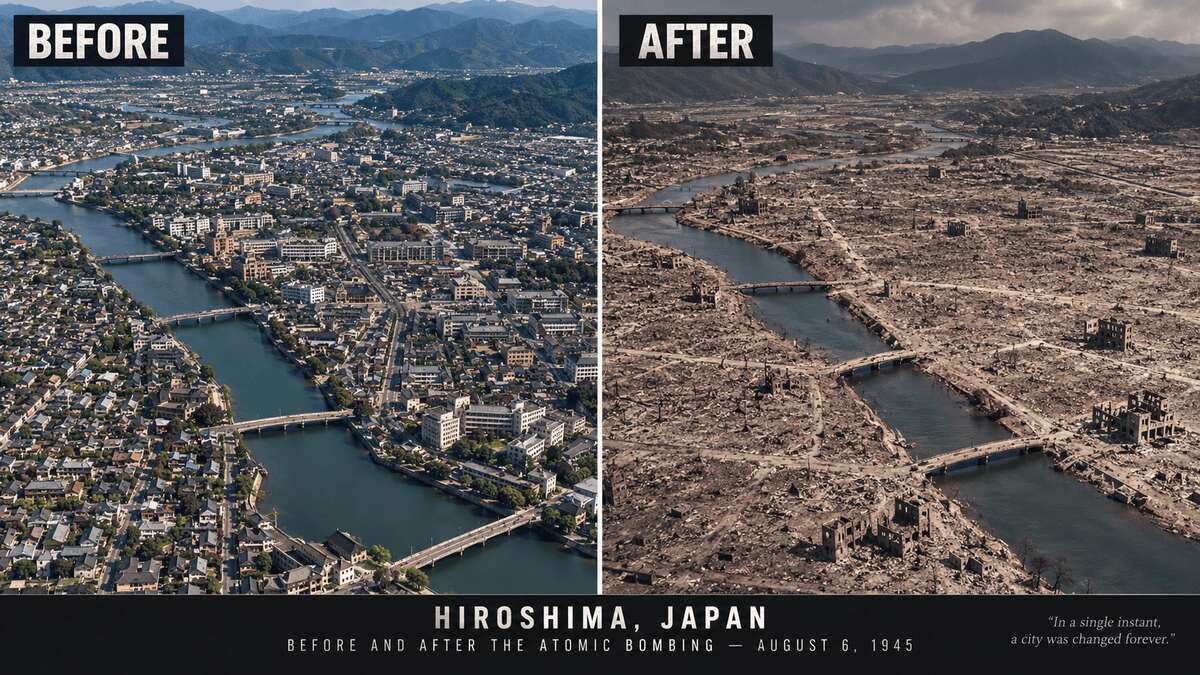
On August 6, 1945, a uranium bomb called Little Boy detonated roughly 1,800 feet above Hiroshima with the force of about 15,000 tons of TNT.
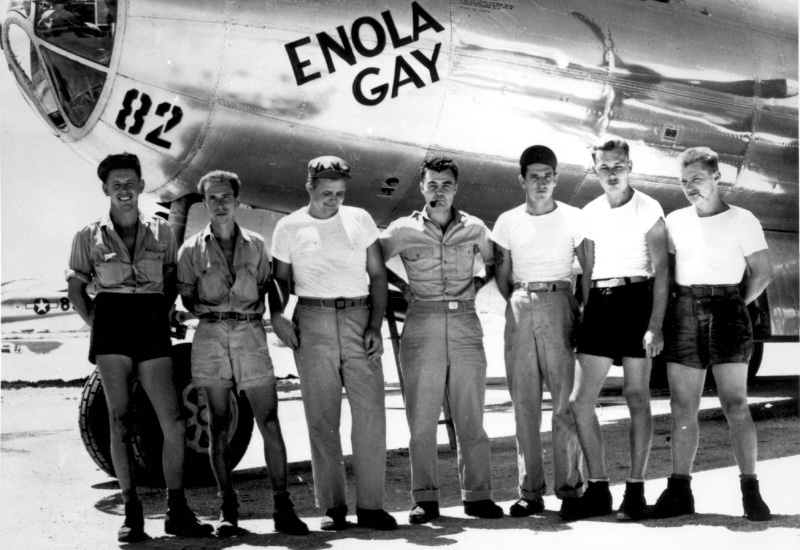
Fun Fact: The plane that carried Little Boy to drop it over Hiroshima was a military plane called the Enola Gay, named after someone’s mother. Secretary of Defense, Pete Hegseth ordered anything related to woke ideology like LGBTQ+ or DEI. When it came out that a photo of the first plane to carry a nuclear bomb was scheduled for deletion, it became clear that someone had searched the database for “gay.”
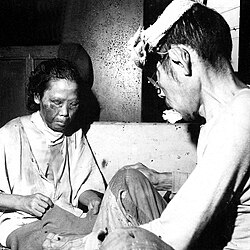
Three days later, a plutonium bomb called Fat Man exploded over Nagasaki. The Nuclear Museum estimates that between 90,000 and 166,000 people died in Hiroshima in the following four months, and 60,000 to 80,000 in Nagasaki. Roughly nine in ten of the dead were civilians.
Survivors, called hibakusha, spent the rest of their lives carrying the radiation with them.
A Russian military official once said, referring to the aftermath of a nuclear holocaust: “The living will envy the dead.”
According to the U.S. Constitution, the president (Commander-in-Chief) is the only person who has the authority to launch nuclear weapons. No one else is involved. That being said, the Framers sure had high hopes for society. They thought we would always elect honest presidents with values, principles, integrity, intellect, and competence. Oops.
Again, the Constitution grants the authority to launch nuclear weapons only to the president. There’s something most Americans don’t know about both times the U.S. used nuclear weapons: Harry Truman did not launch the nuclear bombs.
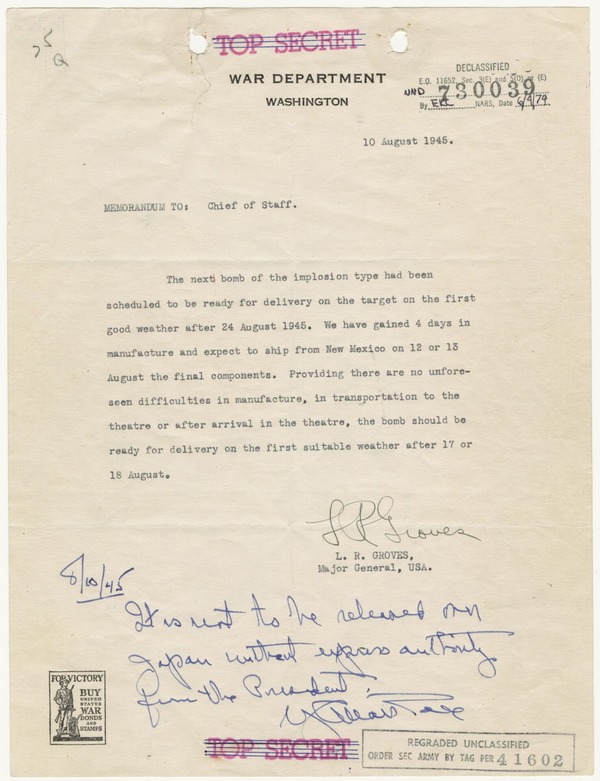
The formal strike order was drafted by General Leslie Groves on July 24, 1945, and approved by Secretary of War Henry Stimson and Chief of Staff George Marshall.
Historian Alex Wellerstein, writing in the Bulletin of the Atomic Scientists, notes that it’s unclear if Truman ever saw it.
The order authorized additional bombs on the target list as fast as they could be built. Nagasaki was already covered.
The National Security Archive has the turning point on August 10, 1945, the day after Nagasaki, when Truman learned a third bomb was being scheduled and told his cabinet that the thought of wiping out another 100,000 people was too horrible. He didn’t like the idea of killing, as he said, “all those kids.”A note went out that no further bomb would be released without express presidential authority.
Sole authority originated as a brake to stop the launch of nuclear weapons.
It has since become an accelerator.
The Sequence
Modern nuclear command is engineered for speed, because it was designed around the assumption that Soviet missiles could arrive in under 30 minutes.
The satchel. A military aide shadows the president everywhere with a briefcase officially called the Presidential Emergency Satchel and universally known as “the football.” Inside is a menu of preplanned strike options, communications gear, and instructions for emergency broadcast.
The conference. The president is patched into a call with the defense secretary, the chairman of the Joint Chiefs, and the head of Strategic Command, who lays out the options. Analysts including the late Bruce Blair, writing for the Arms Control Association, have estimated the president may have as little as six minutes to choose.
The biscuit. The president carries a laminated card with identity codes. He reads them to a duty officer at the National Military Command Center in the Pentagon, who confirms the codes match. That confirmation is the check. It verifies identity. It doesn’t evaluate judgment, sobriety, motive, or state of mind.


The message. The order is converted into an encrypted Emergency Action Message containing the authentication codes, the strike option, timing, and the codes that unlock the weapons. It goes out to missile silos, submarines, and bomber crews.
The launch. Land-based missiles can fly within roughly five minutes of the order. Submarine missiles take closer to fifteen. Two officers turn keys, but their job is to confirm the message is genuine, not to second-guess it.
What the Safeguards Do
Every safeguard in this system guards against the wrong things: an imposter, a hacker, a rogue officer, an accident. None of them guards against a president with dementia, psycopathy, or an axe to grind. Nor do they guard against a president in the middle of a temper tantrum or one who has lost their freaking mind.
The one real argument for a brake is legality. At the November 2017 Senate Foreign Relations Committee hearing — the first Congress had held on launch authority since 1976 — retired General Robert Kehler testified that troops are obligated to follow legal orders and refuse illegal ones. Asked directly whether the head of Strategic Command could refuse a presidential order, Kehler said yes, then added that it would lead to a very difficult conversation.
Days later, then-Strategic Command chief General John Hyten told a security forum in Halifax that if an order were illegal, he would tell the president so and offer legal alternatives instead.
A general who refuses can be fired and replaced. The CRS notes that objections are far likelier to produce consultation and revised targeting than an actual refusal.
People Tried to Create a Brake
Twice, officials have improvised one.
During Watergate, Defense Secretary James Schlesinger was reportedly so alarmed by Richard Nixon's condition that he told commanders to check with him or Henry Kissinger before executing a nuclear order, an episode Senator Ed Markey and Rep. Ted Lieu recounted in their 2024 letter to President Biden.
On January 8, 2021, two days after the Capitol attack, General Mark Milley took a call from Speaker Nancy Pelosi about the president's launch authority, then gathered senior officers at the National Military Command Center to walk through the procedures.
Testifying later, Milley said he told Pelosi the president is the “sole launch authority,” that he “does not launch alone,” and that he himself was not qualified to assess anyone's mental health.
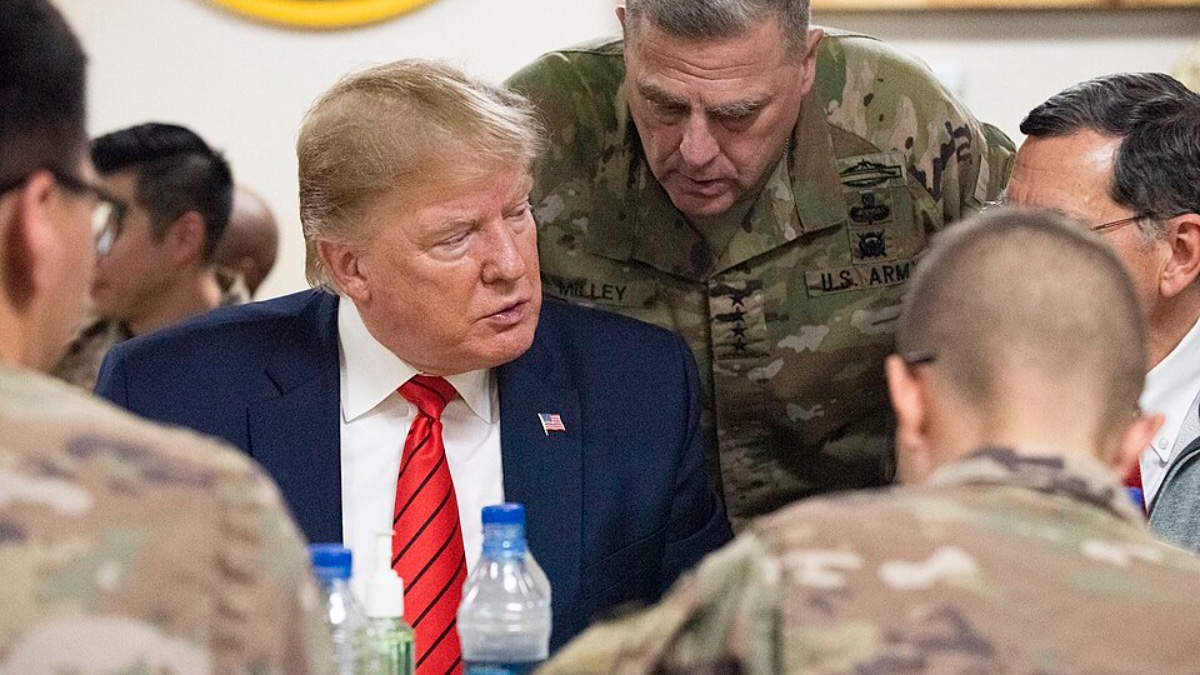
Neither of the men had legal standing to stop anything. Both of them were relying on personal influence.
What’s on the Table
A 2022 study in Nature Food, led by Rutgers climate scientists, modeled six nuclear war scenarios. In a full U.S.-Russia exchange, soot from burning cities would collapse global crop production by roughly 90 percent within three to four years.
More than five billion people would starve — the majority of everyone alive, most of them thousands of miles from any target.
Congress has options it refuses to use. The Restricting First Use of Nuclear Weapons Act, reintroduced by Markey and Lieu, would bar spending on a first strike absent a congressional declaration.
Rep. Scott Peters' Nuclear First-Strike Security Act asks only that the defense secretary concur. Rep. Dina Titus has the Restrain Act. None has moved.
Eighty-one years ago, a president looked at photographs from Hiroshima and decided one man should have to authorize a launch before that ever happened again. We kept the man. We lost the brakes.