

Researchers warned about extremism in the military after January 6. Here's what the data shows, why extremist groups go after active members and veterans, and how the Trump administration walked away from the problem.
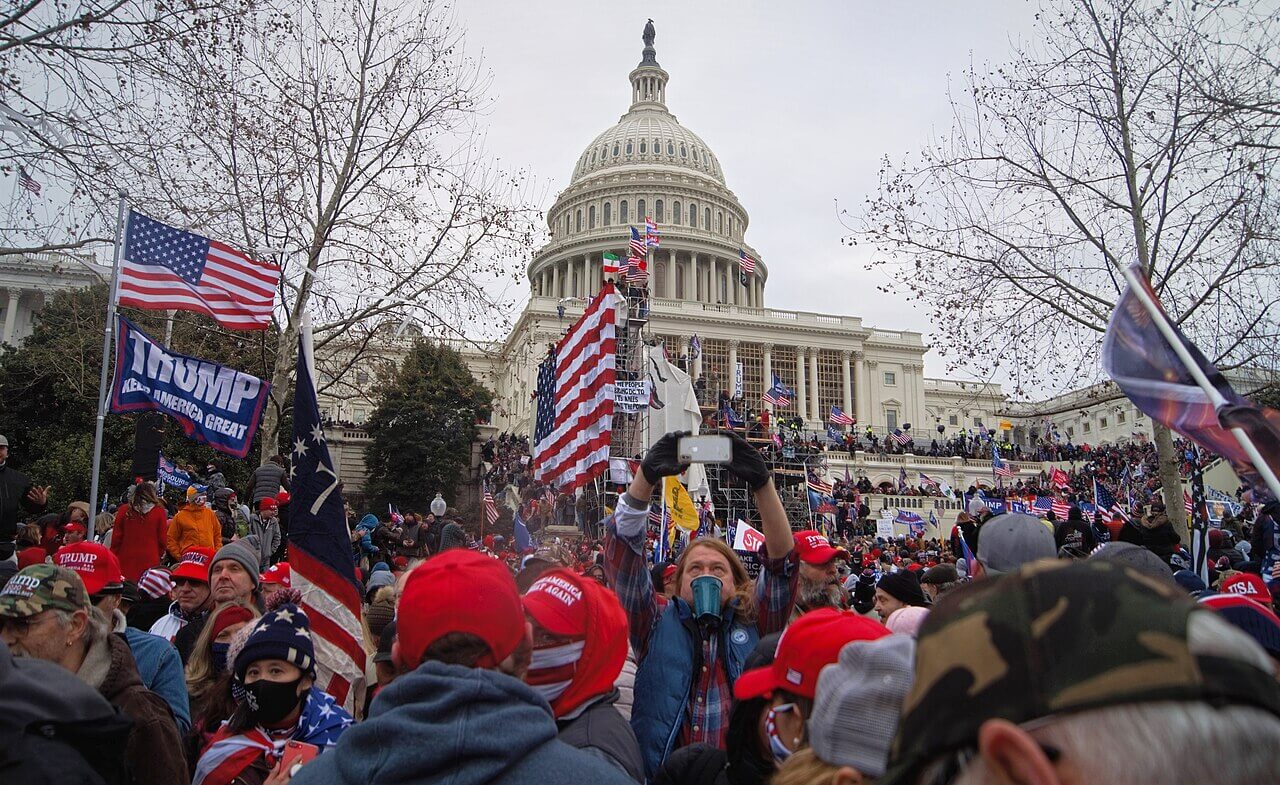
On January 6, 2021, the whole country watched a mob break into the U.S. Capitol. People who study extremism noticed something in the footage: men in tactical gear moving up the Capitol steps in a military-style "stack" formation.
They were right to worry. At least 222 of the people charged over that day had served in the military, according to researchers at the University of Maryland.
That's about 1 in 6 defendants, in a country where roughly 8% of adults have served.
Experts sounded the alarm. Most Americans hit snooze instead of waking up and paying attention.
More than five years later, extremism in the military is still a real problem. The difference is that the people in charge have stopped trying to measure it. Here's what the research shows, why extremist groups want soldiers and veterans, and what it would take to protect them.
What "military radicalization" means
Radicalization is the slow process of someone adopting extreme beliefs that justify breaking the law or using violence to get what they want.
Extremism in the military is a result of radicalization happening to people who serve or have served.
Troops are trained to use weapons, follow a plan, and move as a unit. Those skills protect the country when they're used against its enemies. They become terrifying when someone decides the enemy is the government or a group in their own community.
What the numbers show
The best long-term data comes from the National Consortium for the Study of Terrorism and Responses to Terrorism (START) at the University of Maryland. It tracks people who committed crimes driven by extremist beliefs.
From 1990 through April 2024, START counted at least 721 people with U.S. military backgrounds who committed extremist crimes. The pace keeps picking up:
- 1990 to 2010: about 7 people a year
- 2011 on: about 40 a year
- 2018 to 2023: about 75 a year
January 6 explains part of that jump, but not all of it. Even without the Capitol cases, the yearly number more than tripled.

A few more findings from the same data:
- 83% were no longer in the military when they were arrested.
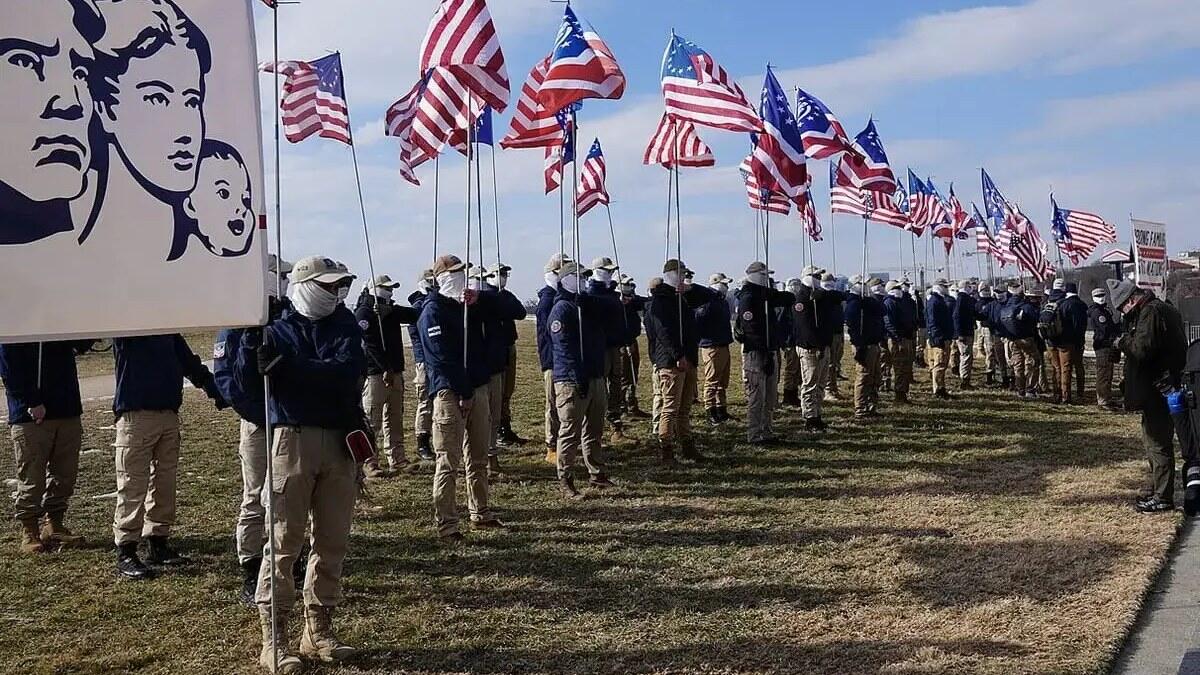
- About half held anti-government or militia views, including members of the Oath Keepers and Three Percenters.
- More than 30% held white supremacist or white nationalist views.
- Nearly 7% were inspired by or tied to foreign jihadist groups like ISIS or al-Qaeda.
An Associated Press investigation found that more than 480 people with military backgrounds were accused of extremist crimes from 2017 through 2023 alone.
Most veterans aren't extremists
A 2023 RAND survey of about 1,000 veterans found no sign that veterans as a group support extremism more than other Americans. Only 1% of veterans backed white supremacist groups, compared with 7% of the general public.
The same survey also found that nearly 18% of veterans supported political violence and almost 29% agreed with the racist "Great Replacement" conspiracy theory.
That's about the same as the rest of the country, which is a warning sign all on its own.
START's researchers found that people with military backgrounds aren't more likely to turn to violent extremism than other Americans.
But the ones who do are 2.41 times more likely to plot a mass-casualty attack than extremists who never served.
From 1990 to 2022, 170 people with military backgrounds plotted 144 attacks meant to kill or injure four or more people.
They made up about a quarter of all mass-casualty plotters in START's data. Nearly 3 out of 4 were tied to far-right movements.
A Pentagon-ordered study by the Institute for Defense Analyses (IDA) had a similar outcome in 2023. It found fewer than 100 confirmed cases a year among troops.
It also found signs that former service members take part at slightly higher rates, and that the number may be growing.
The AP later found the study leaned on outdated January 6 numbers that undercounted veterans.
What troops say they've seen
In a 2019 Military Times reader poll, 36% of active-duty troops who answered said they had seen signs of white nationalism or racism in the ranks. That was up from 22% the year before. More than half of troops of color said the same.
It was a poll of readers who chose to answer, not a scientific survey. Members of Congress leaned on it anyway, because the Pentagon wasn't collecting its own numbers.

The Pentagon's inspector general later reported that the services investigated 183 cases of extremism in the military in a single year.
78 of them involved service members calling for the overthrow of the U.S. government.
Why extremist groups want soldiers and veterans
Extremist groups don't have a lot of members who are veterans by accident. They go looking for them.
Veterans bring weapons training, planning skills, and credibility. A militia with a few former Marines looks serious to new recruits.
Stewart Rhodes, an Army veteran, created the Oath Keepers around recruiting former troops, police, and first responders.
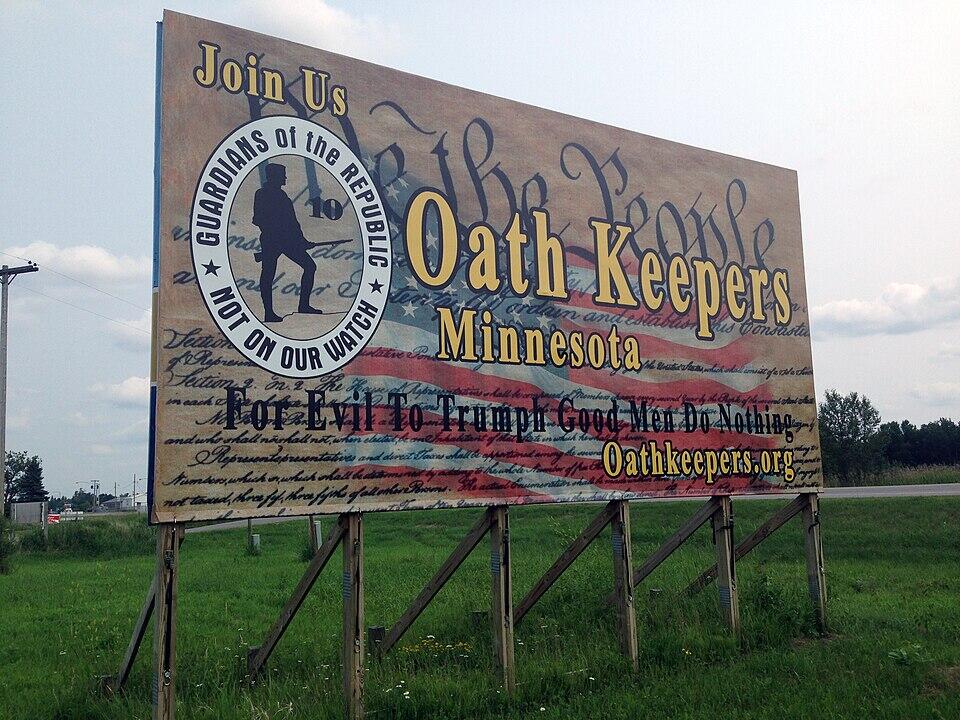
When the Oath Keepers' membership files leaked, the Anti-Defamation League identified 117 people it believed were currently serving in the military.
It estimated that about 1 in 10 people in the database had served at some point. (The ADL noted that being on the list doesn't prove someone was an active member.)
The IDA study explained the pull. Extremist groups target people as they leave the service, and those groups can remind veterans of the brotherhood and purpose they had in uniform.
Think about what leaving looks like. One day you have a mission, a rank, and people who would die for you.
The next day you're a civilian trying to explain your job skills to a hiring manager who doesn't get it.
If a group shows up offering structure, a mission, and a new band of brothers, some people will say yes. That's especially true for people who are hurting.
The pain that goes untreated
Many service Members come home with trauma. About 7 in 100 veterans will have PTSD at some point in their lives, according to the VA's National Center for PTSD.
For all adults, it's 6 in 100. For veterans who served during the wars in Iraq and Afghanistan, it's 29 in 100.
PTSD doesn't turn anyone into an extremist. Most people living with it will never hurt anyone. But untreated trauma, loneliness, anger, and a lost sense of purpose are exactly the cracks recruiters look for.
That's why the Trump administration's cuts hit so hard.

In early 2025, the Department of Veterans Affairs planned to cut about 80,000 jobs. After veterans and lawmakers pushed back, the VA dropped the mass layoffs in July 2025.
It still cut nearly 30,000 positions through a hiring freeze, early retirements, and people quitting.
The damage reached far past the VA. Veterans make up about 30% of the federal workforce, so when DOGE went after federal workers, veterans took the hit.
Between September 2024 and December 2025, the number of veterans working for the federal government fell by nearly 10%, or about 62,000 people. That's the fewest veterans in federal jobs in more than 15 years.
We ask people to risk their lives for this country. Then we cut the jobs and the care that help them rebuild those lives. It's shameful.
We make the same mistake with people leaving prison. The U.S. releases people with little education, job training, or support, and many end up back behind bars. Norway built its prisons around rehabilitation instead of punishment, and far fewer people there reoffend.
Leaving the military shouldn't feel like walking out a gate with nowhere to go.
Cases that show the danger
Oklahoma City, 1995
Timothy McVeigh, a decorated Gulf War veteran driven by anti-government rage, bombed the federal building in Oklahoma City.
The attack killed 168 people, including 19 children. It's still the deadliest act of homegrown terrorism in U.S. history.
The Capitol, January 6, 2021
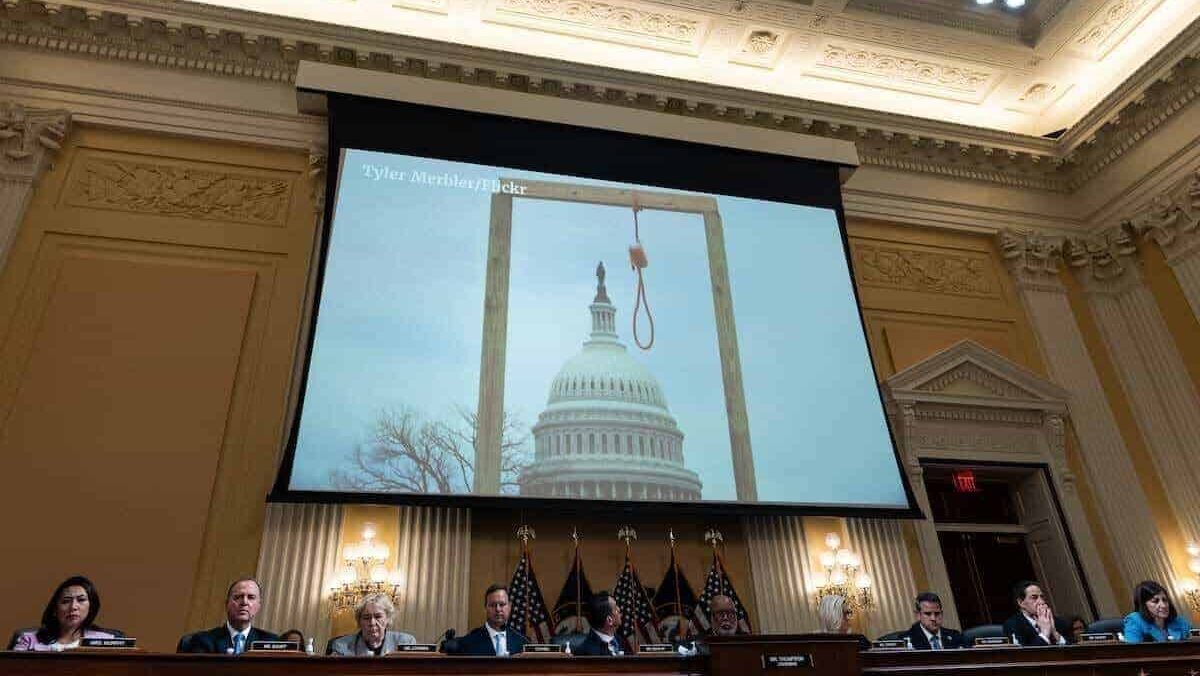
At least 222 people with military backgrounds were charged. Most of them, 198, were no longer serving. The rest included active-duty Marines, National Guard members, and reservists.
About two-thirds didn't belong to any organized group. The rest were tied to anti-government, white supremacist, or conspiracy movements, including 27 Proud Boys and 21 Oath Keepers.
(You can search their cases in our January 6 defendant records we collected before the DOJ deleted them from its website.)
Ashli Babbitt, an Air Force veteran, was among them. A Capitol Police officer shot and killed her as she climbed through a broken window toward the Speaker's Lobby. Members of Congress were being evacuated on the other side.
New Orleans and Las Vegas, January 1, 2025
Early on New Year's Day, Shamsud-Din Jabbar, a 42-year-old Army veteran who had deployed to Afghanistan, drove a pickup truck into a crowd on Bourbon Street.
He killed 14 people before police shot and killed him. Jabbar had pledged support to ISIS, and the FBI investigated it as terrorism.
Hours later, Matthew Livelsberger, an active-duty Green Beret, shot himself inside a Tesla Cybertruck packed with fireworks and fuel outside the Trump International Hotel in Las Vegas.
The blast injured seven people. His notes called it a wake-up call about the country's problems and described the weight of the friends he'd lost and the lives he'd taken.
The FBI found no ties to terrorist groups. Investigators described a heavily decorated combat veteran who was likely struggling with PTSD.
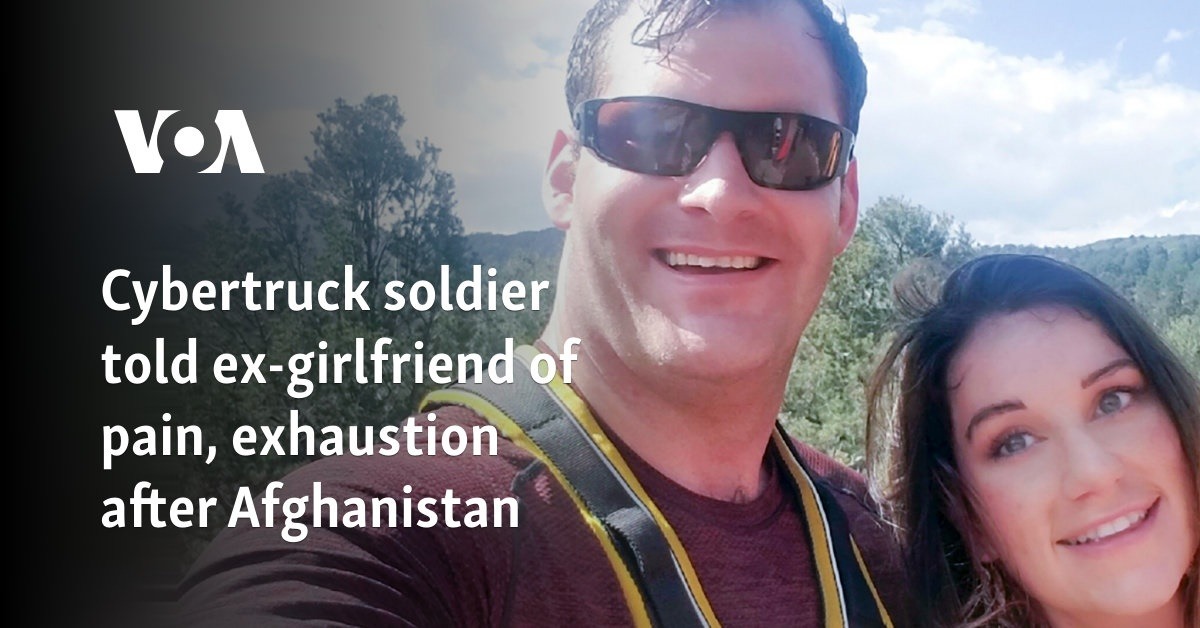
The two men had very different stories. One was radicalized by a foreign terror group. The other was a soldier in crisis. Both show that trauma, isolation, and radical ideas don't stop at the military base gate.
Phones, feeds, and Fox
Much of today's radicalization happens on a phone. The IDA researchers found that social media can be a pathway to extremism.
Lonely or angry people get a steady feed of posts telling them who to hate, fear, or blame for their problems.
TV plays a part, too. In March 2023, the veterans group VoteVets ran ads asking the Pentagon to stop airing Fox News on military bases.
The ads came after the Dominion Voting Systems lawsuit showed Fox hosts privately doubted the 2020 election-fraud claims they were pushing on air.
Fox later paid Dominion $787.5 million to settle.
There was a belief that Fox News was on military base televisions 24/7. Snopes found no sign that Fox is the official default channel on bases.
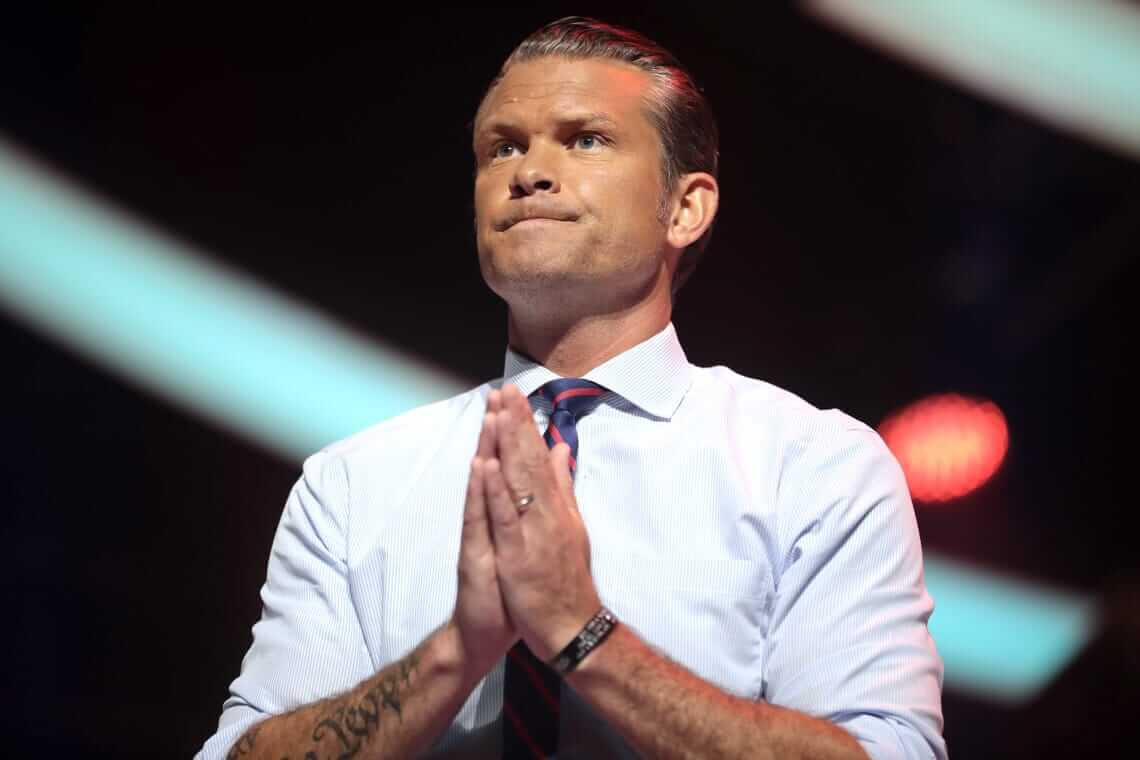
The network doesn't need exposure on bases anymore, though. One of its former hosts now runs the Pentagon.
What changed under Trump and Hegseth
After January 6, Defense Secretary Lloyd Austin ordered a military-wide stand-down to talk about the topic of extremism in the military. In December 2021, the Pentagon updated its rules so troops could be disciplined for liking or sharing extremist content online.
The second Trump administration reversed course fast.
The pardons. On his first day back in office, Trump pardoned about 1,500 people charged over January 6 and cut the sentences of 14 more.
Nine of those 14 had military backgrounds, including Oath Keepers founder Stewart Rhodes, who had been serving 18 years for seditious conspiracy.
Honors for Babbitt. The administration paid Ashli Babbitt's family nearly $5 million to settle their wrongful death lawsuit.
In August 2025, the Air Force reversed its 2021 decision and offered her military funeral honors.
A defense secretary who was flagged himself. In January 2021, a security officer in the D.C. National Guard flagged Pete Hegseth as a possible "insider threat" over a "Deus Vult" tattoo on his arm.
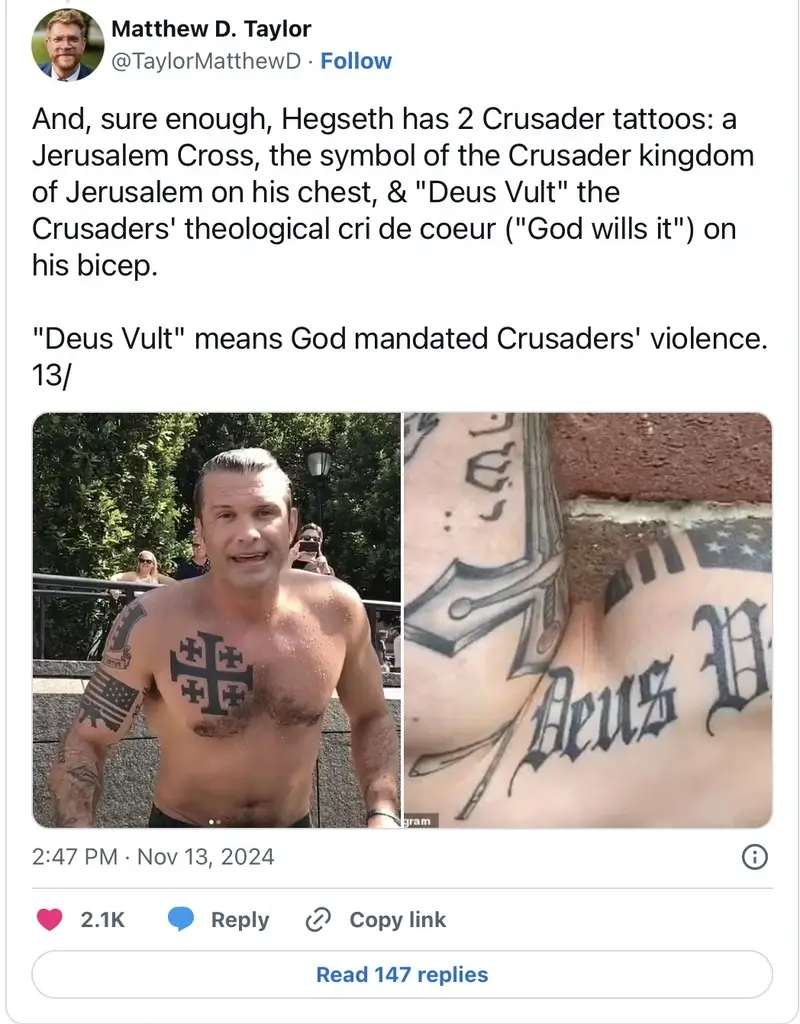
The Crusades-era phrase has been picked up by white supremacist groups. Hegseth says he was pulled from guarding Joe Biden's inauguration over what he calls a Christian tattoo.
At his confirmation hearing, he argued that the focus on extremism had made the ranks feel political.
The review that got dropped. In February 2025, the Pentagon's inspector general canceled a review of how the services train troops to spot and stop extremism in the military.
The watchdog said the project didn't line up with Trump's executive orders. A spokesperson explained that rules against "supremacist, extremist, and criminal gang" activity "fall under the DEI umbrella."
Hegseth has kept going from there. We've covered how he damaged the U.S. military and weakened national security, his ties to Christian nationalists, and how the Pentagon secretly hired military influencers to cheer him on.
What would actually help
None of this is a mystery. Researchers have been giving the Pentagon the same to-do list for years.
- Count the cases. The IDA study found troops at every level were confused about what's actually banned, and the services don't track cases the same way. You can't fix what you refuse to count.
- Bring back the training. Troops need to know what extremism in the military looks like and what the rules are, before a recruiter finds them.
- Focus on the exit. Most people radicalize after they leave. The months after discharge need real support: jobs, mentors, community, and straight talk about how extremist groups recruit.
- Fund veterans' mental health care. That means rehiring VA staff, not shrinking the agency by tens of thousands of workers.
- Stop rewarding political violence. Pardons and funeral honors for January 6 rioters tell every recruiter, and every angry young veteran that if they attack the government in Trump's name, they won'the held accountable.
Extremism in the military: The bottom line
The vast majority of people who serve this country will never join an extremist group. Many of them are the first to report one.
But a small number of people, trained, hurting, and hunted by groups that want to use them, can do enormous damage. They deserve better than a government that pardons the men who recruited them and cuts the care that might have helped them first.
Follow the pardons in our Pardon Tracker, and see how researchers explain the movement's pull in MAGA Psychology: What Researchers Learned About the Movement.
FAQs
Click on a question to view the response.
What is extremism in the military?
It's when service members or veterans take on extreme beliefs that justify breaking the law or using violence for political, racial, religious, or social goals. It includes joining or helping extremist groups, planning attacks, or calling for the overthrow of the government.
Are veterans more likely to be extremists?
No. A 2023 RAND survey found veterans support extremist groups at rates similar to or lower than other Americans. But when veterans do radicalize, research from the University of Maryland shows they're 2.41 times more likely to plot mass-casualty attacks.
How many January 6 rioters had military backgrounds?
At least 222 people with military backgrounds were charged over January 6, about 1 in 6 of the people charged at the time of the count. Most of them were veterans who had already left the service.
Why do extremist groups recruit veterans?
Veterans bring weapons training, planning skills, and credibility. Groups also target people leaving the military, when many are searching for a new mission and a sense of belonging.
What is the Pentagon doing about extremism now?
Much less than before. In 2025, the Pentagon's inspector general canceled a review of anti-extremism training, and Defense Secretary Pete Hegseth has argued the focus on extremism made the military feel political.