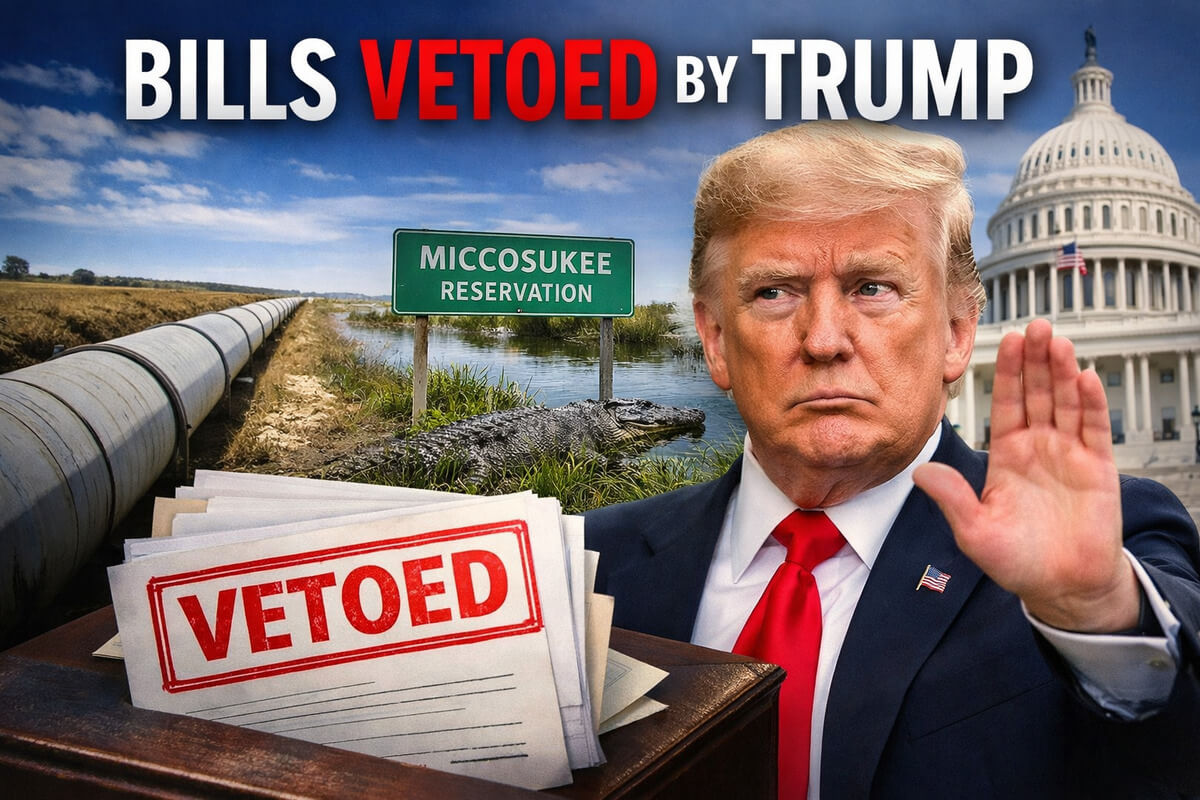

Donald Trump went almost a full year into his second term without vetoing a single bill. When he finally did, on Tuesday, he picked two of the least controversial bills in Congress.
One would help finish a drinking water pipeline for rural Colorado. The other would give the Miccosukee Tribe of Florida more control over a small village in the Everglades. Both passed Congress with bipartisan support and drew no real opposition, until Trump killed them.
What the two bills have in common isn't policy. It's who backed them. Each one was tied to people who had recently crossed Trump.
Veto No. 1: Clean Water For 50,000 Coloradans
The Finish the Arkansas Valley Conduit Act was sponsored by Republican Rep. Lauren Boebert, one of Trump's loudest allies. Republican Rep. Jeff Hurd co-sponsored it, and Colorado's two Democratic senators, Michael Bennet and John Hickenlooper, carried a version in the Senate.

The Arkansas Valley Conduit is a pipeline meant to bring clean drinking water to about 50,000 people in southeastern Colorado. It was first proposed back in the Kennedy administration. It never got built, largely because small local communities couldn't afford their share of the cost. A 2009 law cut that local share to 35%.
This year's bill didn't pay for new construction. It lowered the interest those communities owe and gave them more time to pay the federal government back. Hurd said the bill didn't authorize any new construction spending or expand the government's original commitment. It just changed the repayment terms.
It passed the House by voice vote in July and cleared the Senate unanimously this month.
Trump's veto message told a different story. He claimed the bill would force federal taxpayers to cover even more of the cost of a local project and complained that it had dragged on too long. "Enough is enough," he wrote.
Bennet and Hickenlooper said the bill costs taxpayers nothing. They also pointed out that it would have helped rural communities that voted overwhelmingly for Trump.
The Epstein Connection

Trump's veto message never mentioned Boebert. It didn't have to.
In November, Boebert was one of just four House Republicans who joined Democrats early on to force the release of the Jeffrey Epstein files. Trump fought that effort before reversing course. His administration even brought Boebert into the White House Situation Room to try to change her mind. She didn't budge.
A few weeks later, her water bill was dead.
Boebert stopped just short of calling it payback. She said she "sincerely hope[s] this veto has nothing to do with political retaliation" for demanding accountability. She also posted: "This isn't over."
Colorado's Democrats didn't hold back. Bennet called it "a revenge tour." Hickenlooper accused Trump of punishing rural communities by leaving them without clean drinking water, and urged Congress to override the veto.
When reporters asked whether the vetoes were punishment, the White House didn't answer.

Veto No. 2: A Tribe That Sued Over "Alligator Alcatraz"
The second bill, the Miccosukee Reserved Area Amendments Act, would have added a small village called Osceola Camp to the section of the Everglades the Miccosukee Tribe controls. It also would have required the Interior Department to protect homes in the village from flooding.
This wasn't a partisan bill. It was sponsored by Republican Rep. Carlos Gimenez, whom Trump has endorsed, and backed by Florida's two Republican senators, Rick Scott and Ashley Moody, along with Democratic Rep. Darren Soto.
So what's the problem? The Miccosukee Tribe was among the groups that sued the Trump administration over Alligator Alcatraz, the immigration detention camp built in the Everglades.
Trump barely hid it. In his veto letter, he accused the tribe of trying to block immigration policies he says voters supported. He also argued that Osceola Camp was set up without proper authorization in the first place.
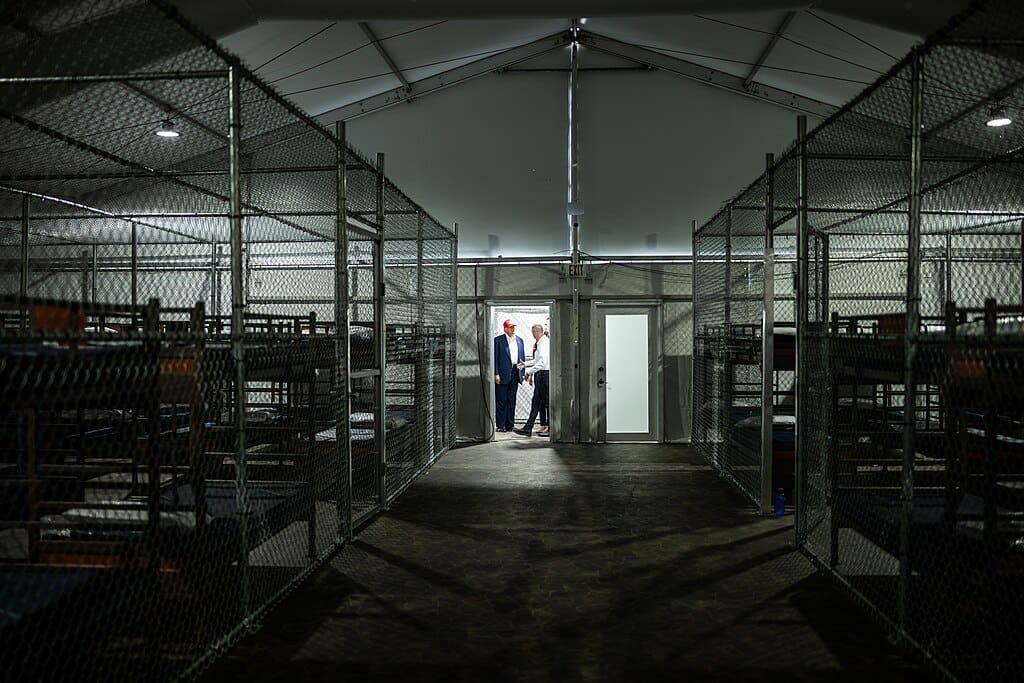
Soto called the veto revenge for the tribe's opposition to the detention center. He said it was "sad, petty, and a violation of tribal sovereignty."
Can Congress Override the Vetoes?
It can, but it's a long shot. Overriding a veto takes a two-thirds vote in both the House and the Senate.
On paper, the support is there. Both bills passed without opposition. But many Republicans are up for reelection in 2026 and will be counting on Trump's backing. It's unclear whether enough of them will be willing to cross him.



That's the real test. Lawmakers from both parties already voted for these bills. Now they have to decide whether clean water for 50,000 people and a tribe's right to protect its homes matter more than staying on Trump's good side.
The Message Behind the Vetoes
A president has every right to veto a bill. But using that power to punish a congresswoman for backing the Epstein files release, or a tribe for going to court, sends a clear warning to anyone else thinking about crossing Trump.
And the people who pay the price aren't Boebert or tribal leaders. They're the families in southeastern Colorado still waiting on safe drinking water, and the Miccosukee families whose homes sit in a flood zone.