
On Friday, Donald Trump's Board of Peace released the full text of a 15-point roadmap for finishing what it calls the implementation of the president's comprehensive peace plan for Gaza.
Trump announced the deal on Truth Social the night before in all caps, calling it a historic agreement for the complete disarmament of Hamas and every other armed group in the Strip.
Then the actual document came out. And the gap between the press release and the paperwork is where the whole story is.
What the Roadmap Actually Says
The full text is short — 15 numbered points covering security, international forces, Israeli withdrawal, and reconstruction.
The core of it works like this:
- Israel is supposed to finish its outstanding obligations from the Sharm el-Sheikh protocol "without delay," meaning it stops military operations. Hamas and the other factions stop theirs.
- Within 14 days of everyone signing off, negotiators are supposed to produce an actual timetable. That deadline can be extended.
- Once the timetable exists, the National Committee for the Administration of Gaza — a Palestinian technocratic body known as NCAG — enters Gaza and starts running things.
- Police weapons go first, transferred to NCAG authority. Then heavy weapons, weapons depots, production sites, and tunnels get decommissioned in stages.
- Weapons cannot be handed to Israel or to any non-Palestinian party. At the end of the process, only NCAG holds arms in Gaza.
- Israeli forces withdraw in phases on a timetable that has not been written yet.
- An International Stabilization Force sits between Israeli forces and NCAG-controlled areas, trains Palestinian police, and protects aid deliveries.
Every phase is conditional on a verification body certifying that the previous phase was completed.
U.S. and Board officials told reporters the framework is built on the assumption that neither side trusts the other — which is at least honest.
The Part Trump Didn't Put in All Caps
Israel has not agreed to this.
Netanyahu's office said Israel cannot accept the disarmament proposal that Hamas approved.
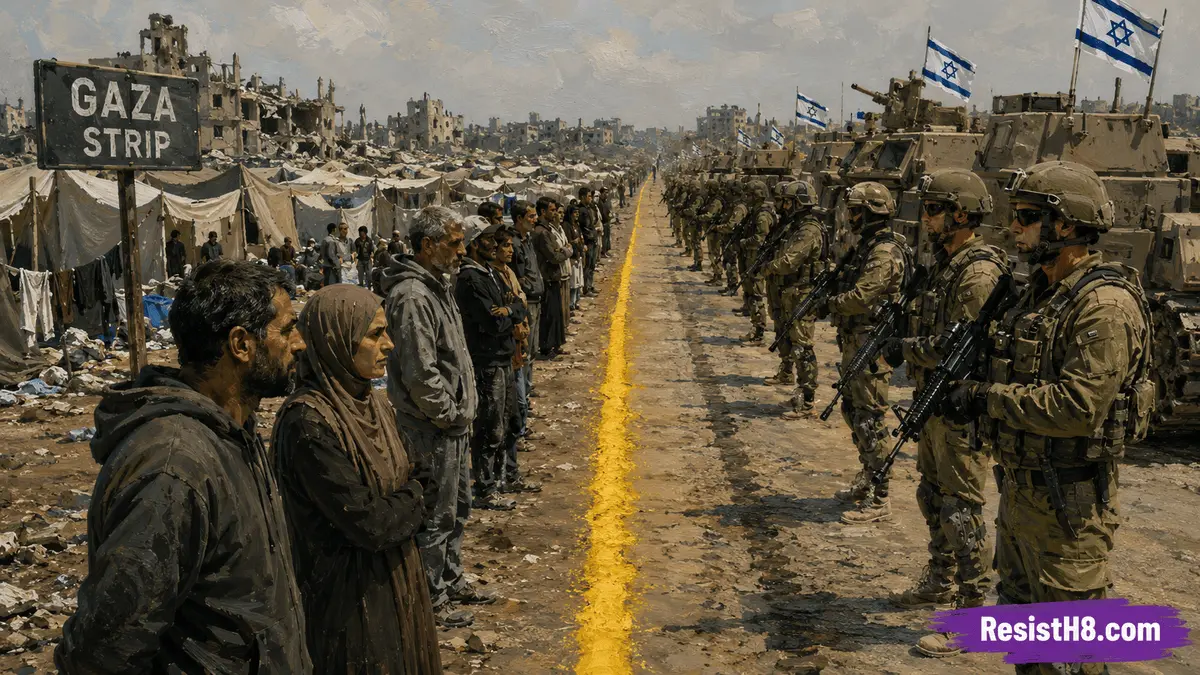
An Israeli official said Israel is demanding all weapons removed from Gaza entirely and the Strip fully demilitarized before any process starts — and that Israeli forces will not pull back, not even to the original Yellow Line, until that happens.
On Friday, Trump told reporters at a cabinet meeting that Israel is "very happy" about the deal and that the U.S. has an understanding with Israel.
Netanyahu himself still hasn't said a word publicly.
That silence isn't hard to read. Netanyahu faces an election in October, and he may need right-wing coalition partners who have rejected previous Gaza deals.
An Israeli source told Reuters that Gaza didn't even come up when Netanyahu met Trump in Washington on Tuesday.
Hamas has its own condition, and it's the mirror image.

Ghazi Hamad, a Hamas official involved in the talks, told Reuters the group will hand over weapons only after Israel fulfills its first-phase obligations — ending attacks, pulling back to October positions, and letting more aid in.
He said negotiators insisted Israel must abide by the agreement first.
So the disarmament deal announced as a done thing is really a document that both parties have conditioned on the other going first.
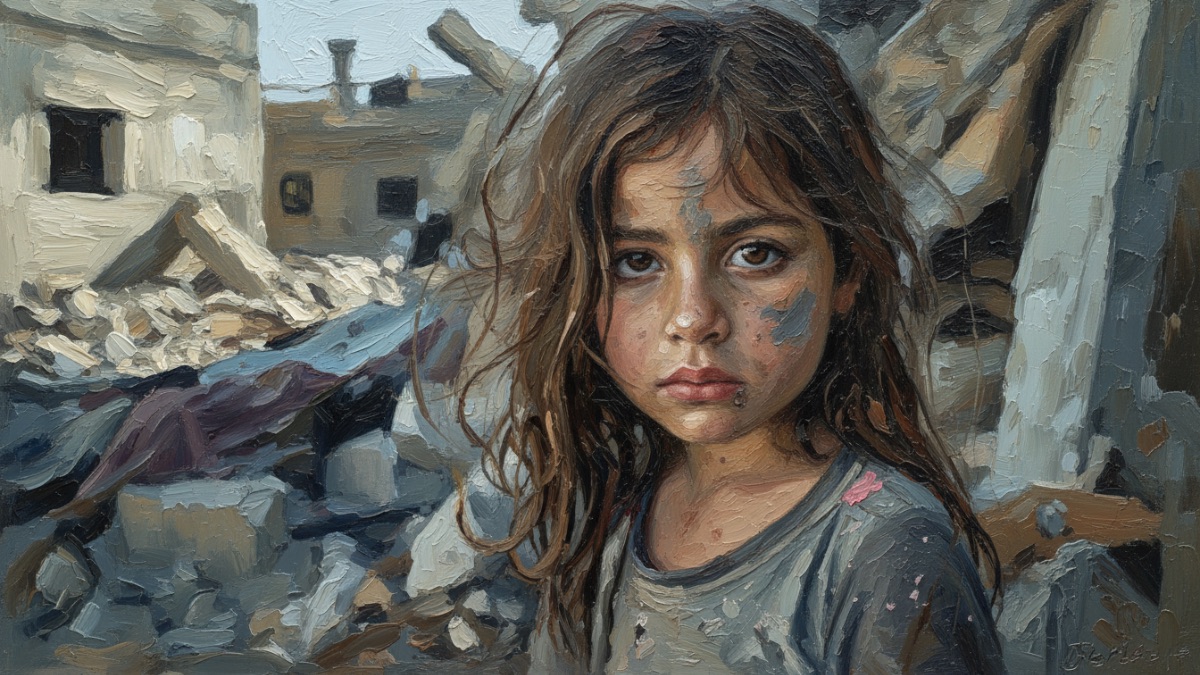
Within hours of the announcement, Gaza medical authorities reported Palestinians wounded in an Israeli airstrike.
Nine Months of "Ceasefire"
It matters what this roadmap is being layered on top of.
The ceasefire took effect on October 10, 2025. Since then, according to Gaza's Ministry of Health as compiled by the Israeli rights group Gisha, 1,180 people have been killed and 3,810 injured in Israeli attacks through July 22.
UN human rights monitors counted 57 people killed in a single week in July, six of them children.



The total death toll since October 2023 stands at 73,246 Palestinians killed and more than 173,000 injured.
The UN humanitarian office describes conditions across Gaza as dire, with ongoing military activity, tightening movement restrictions, and funding shortfalls that are forcing aid partners to cut services.
People remain confined to less than half of the territory.
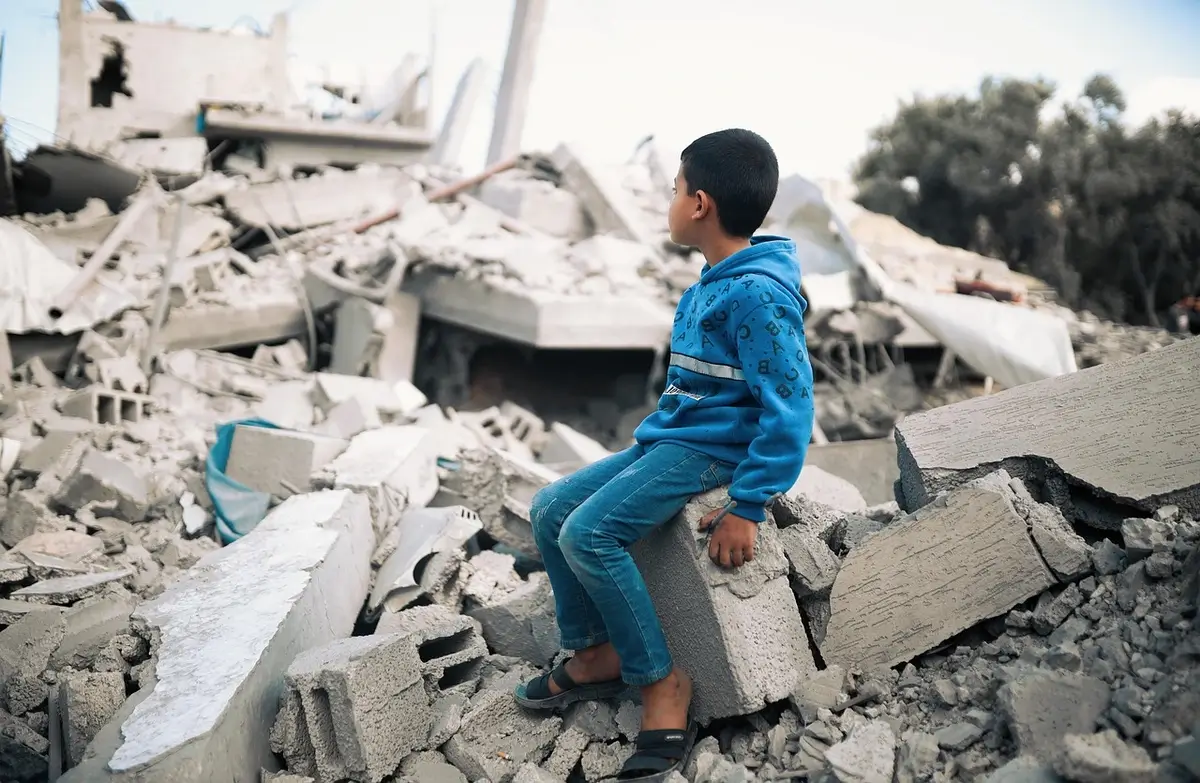
Families are living in makeshift tents through a brutal summer, next to the rubble of the buildings they used to live in.
There have been real improvements — more aid crossing in, food prices down sharply from their 2025 peaks, medical supplies moving again.
But "better than famine" is not the same as livable, and nine months of a ceasefire that has killed over a thousand people is not the same as peace.
Who's Actually at the Table
The Board of Peace is chaired by Trump. Its founding executive members include Jared Kushner, Steve Witkoff, Marco Rubio, Tony Blair, and World Bank president Ajay Banga.
Up to 35 states have signed on, though no other G7 country has joined, and the UK has held back over concerns about the board's remit.
There is no Palestinian Authority representative on the board.
Human rights experts have said from the beginning that an American president chairing a body that governs foreign territory looks like a colonial arrangement, and Palestinian civil society groups have pressed the World Bank to withdraw from the reconstruction fund on the grounds that it legitimizes a framework built without Palestinian consent.
The roadmap gestures at this. It says implementation should create "appropriate conditions" for a credible path toward Palestinian self-determination and statehood.
That's the sum total of what 2.3 million people are promised about their own political future: conditions, appropriate ones, eventually.
What to Watch
The 14-day clock is the thing to track.
If both sides sign off, negotiators have two weeks to produce the implementation timetable — the document that would actually say when Israeli troops leave and when weapons come in.
Everything else is contingent on that.
Until then, what exists is a well-drafted framework that one party has publicly rejected, that the other party has conditioned on the first party moving first, and that was announced as finished before either of those things was true.
The people living in the tents don't get a vote on any of it.