
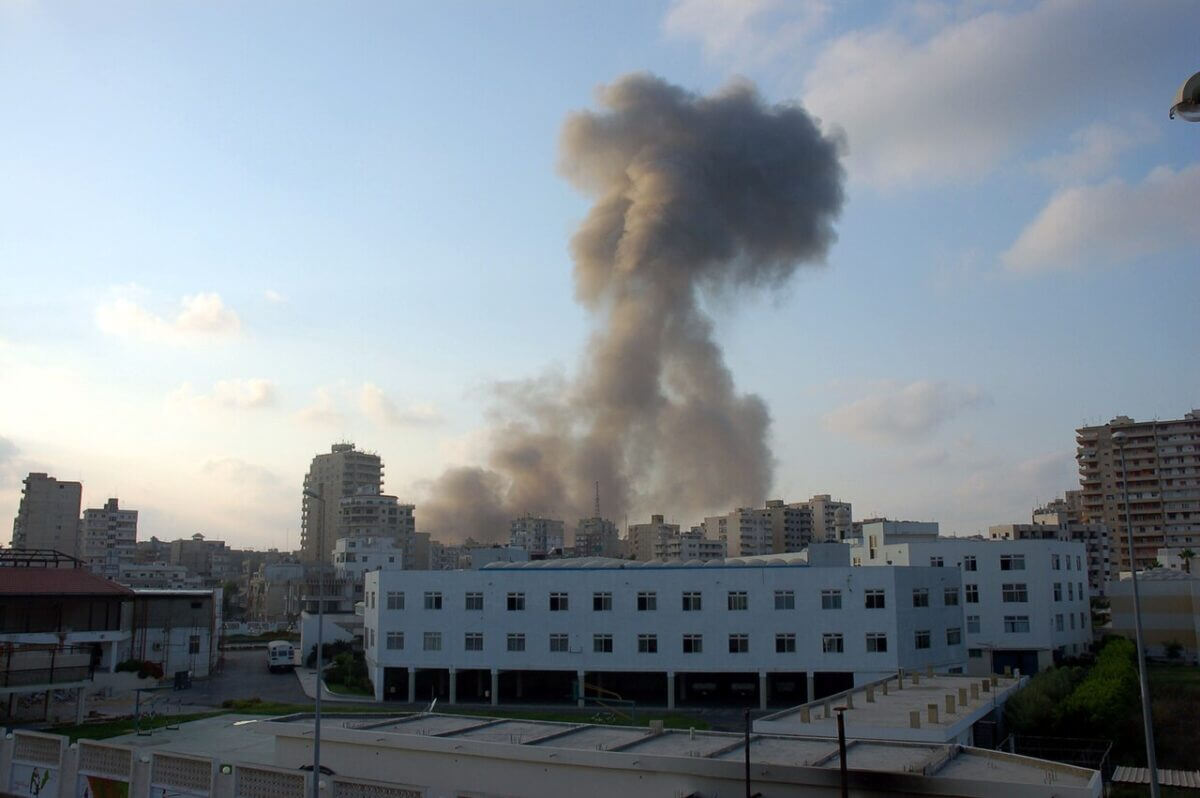

Seven-year-old Aline Saeed showed up to her father’s funeral in Lebanon wrapped in bloodied bandages. She had barely survived the Israeli airstrike that destroyed her family’s home in the village of Srifa just days earlier. She came to say goodbye. Instead, another Israeli strike hit the mourners — and this time, it killed her baby sister.
Taleen Saeed had not yet turned two years old. She was born in 2024, during the previous round of fighting between Hezbollah and Israel. Her maternal grandfather put it simply: she was born in one war and died in the next.
A Family Hit Twice in Four Days
The first strike hit the Saeed family home in Srifa on April 8 — which happened to be the first day of the U.S.-Iran ceasefire. Many Lebanese families believed the truce would extend to their country. They were wrong.
That single day saw more than 350 people killed across Lebanon in Israeli bombardments, making it one of the deadliest days in the country’s recent history.
The Saeed family buried four relatives after that first attack. On Sunday, April 12, they gathered in the southern port city of Tyre to lay Aline’s father to rest. Women around the coffin screamed in anguish as prayers were spoken. Then the bombs fell again.
Nasser Saeed, the girls’ 64-year-old grandfather — himself a survivor of both strikes — carried his granddaughter Taleen’s body afterward, wrapped in green cloth. Her bundle was impossibly small compared to the others.
“Are We Not People?”
Nasser Saeed spoke to reporters from the hospital where Aline’s mother, Ghinwa, was still being treated for her own injuries. His words cut through the diplomatic language that so often sanitizes what’s happening in Lebanon.
“What humanity are they talking about?” he asked.
“This is humanity? This isn’t humanity. This is a war crime. Where are the human rights? If a child — a child! — is wounded in Israel, the whole world jumps up. Are we not people? Are we not humans? We’re like them!”
He’s asking a question that deserves an honest answer. And the silence from world leaders is the answer most Lebanese families are getting.
The Numbers Keep Climbing
Since March 2, when the current conflict between Israel and Hezbollah began, Lebanon’s Health Ministry reports that Israeli attacks have killed more than 2,000 people and wounded over 6,500.
At least 165 of the dead are children. More than 1.2 million Lebanese have been displaced from their homes.
The bombardment has been relentless. Nearly 100 people were killed on the Saturday before the Saeed family funeral. Hospitals across southern Lebanon are overwhelmed.
Dr. Abbas Attiyeh, who leads emergency operations at Tyre’s Jabal Amel Hospital, told reporters that recent bombardments have been among the heaviest in years and that a disproportionate number of patients arriving at his hospital have been children.
It Didn’t Stop at the Funeral
The same Sunday that Taleen was killed at her father’s funeral, Israeli forces rammed a tank into United Nations peacekeeping vehicles — not once, but twice — in southern Lebanon.
The incidents blocked a road used to access UN positions in the region. UNIFIL condemned the actions as violations of international law.
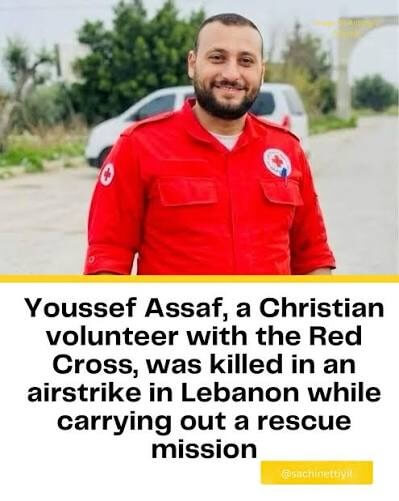
Also on Sunday, an Israeli drone struck a clearly marked Lebanese Red Cross ambulance in the town of Beit Yahoun, killing paramedic Hassan Bedawi and wounding another emergency worker.

The Lebanese Red Cross confirmed that the vehicle had coordinated safe passage through UNIFIL — meaning Israel knew where the ambulance was and what it was doing. Lebanon’s Health Ministry called the strike a violation of international humanitarian law.
This is not an isolated case. At least 54 health workers have been killed in Israeli attacks during the current invasion, according to Lebanese government figures.
Amnesty International has investigated multiple attacks on medical facilities and ambulances and found no evidence they were being used for military purposes.
A Ceasefire That isn’t
The U.S.-Iran ceasefire that took effect on April 8 was supposed to bring some relief. Iran has pushed for Lebanon to be included in ceasefire negotiations with the United States.
Israel has rejected that framing, insisting on pursuing a separate diplomatic track with Lebanese officials. The result is that the ceasefire exists in name — while the killing continues on the ground.
The latest round of U.S.-Iran talks concluded on Sunday without a breakthrough. Meanwhile, Israeli Prime Minister Benjamin Netanyahu visited troops stationed in occupied southern Lebanon on April 12, the same day baby Taleen’s body was carried through the streets of Tyre.

What We’re Watching
The Saeed family’s tragedy is not unique. It is a pattern — families struck once, then struck again at the funerals of the people killed in the first attack. Hospitals bombed. Ambulances targeted. Peacekeepers rammed. Children killed in numbers that should stop anyone in their tracks.
Taleen Saeed lived her entire short life under the shadow of war. She never knew anything else. And the world she was born into could not be bothered to protect her.