

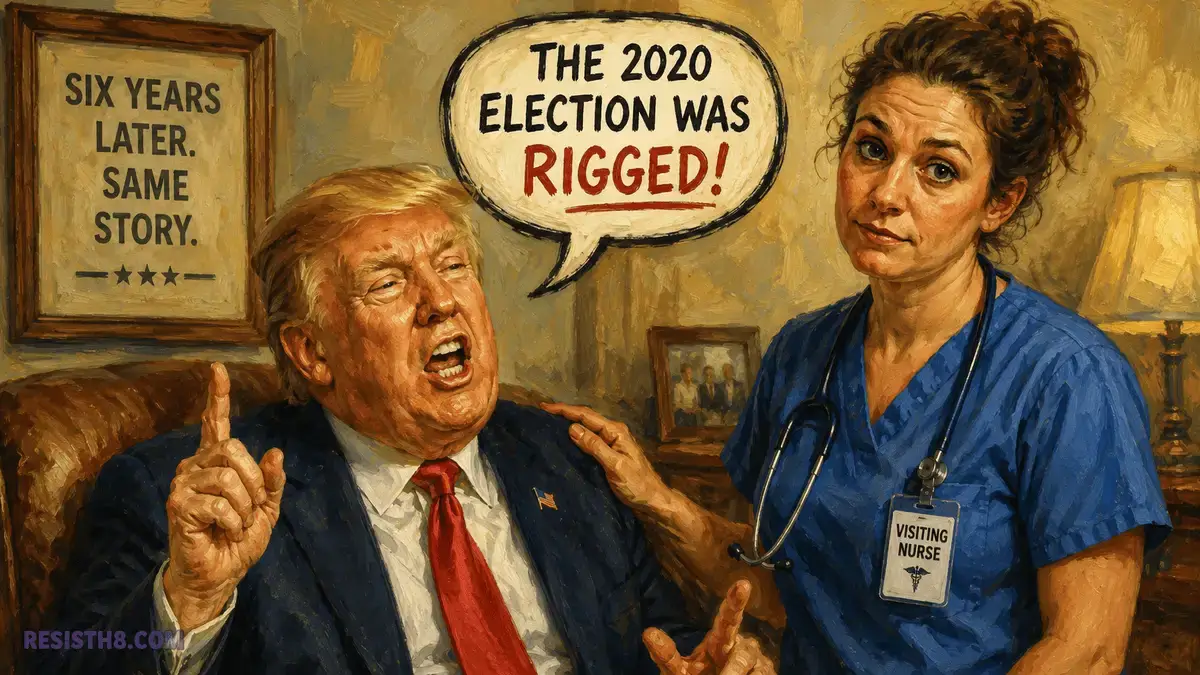

Why is Trump obsessed with the 2020 election after winning in 2024? He’s currently sitting in the White House. Does he believe the claims of election fraud in 2020?
Someone should point out that if he hadn't lost in 2020, he wouldn't be there now presiding over America’s 250th birthday, the U.S. hosting the World Cup, and everything else he seems to enjoy as President in 2026.
He promised "really big news." On July 16, President Trump took the East Room in primetime and announced he had declassified documents that he says prove America's elections are vulnerable, fraudulent, and compromised by China — and he ordered the Justice Department to to prosecute everyone involved.
We fact-checked the speech itself here.
This piece asks the harder questions beyond “Why is Trump obsessed with the 2020 election?”: after six years, does he actually believe any of this?
And if he does, what is a country supposed to do about it?
Six Years, Zero Proof
Start with the only question that has a settled answer. No claim of outcome-changing fraud in 2020 has ever been proven.
Not one. More than 60 lawsuits were dismissed or rejected by judges appointed by presidents of both parties.
Georgia hand-counted nearly five million ballots.
Arizona Republicans hired their own auditors, the Cyber Ninjas, who ended up confirming Biden's win.
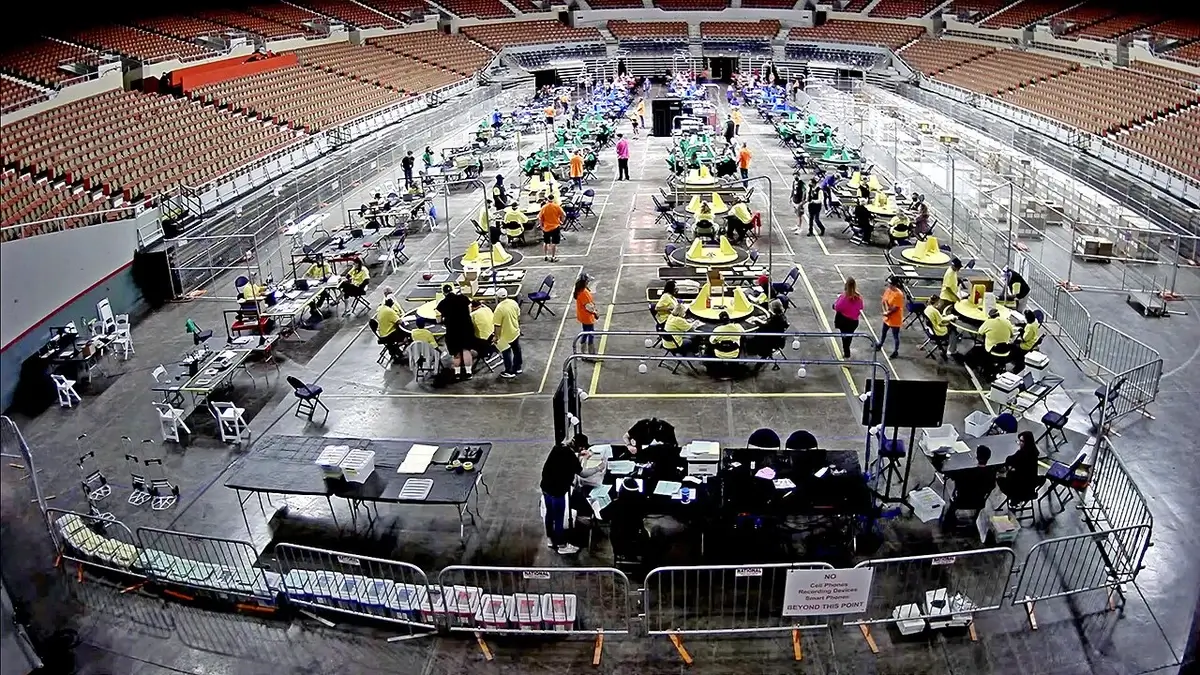
Trump's own attorney general, Bill Barr, said the Justice Department found no fraud that could have changed the result. In fact, Barr said the claims of widespread fraud were “bullshit” during a press conference.
Statistical claims of rigged machines and dead voters collapsed under peer review.
The courts did prove something, though — just not what Trump wanted.
Fox News paid Dominion $787.5 million rather than defend the fraud claims at trial. Newsmax paid $67 million.
Rudy Giuliani was ordered to pay $148 million to Ruby Freeman and Shaye Moss, two Fulton County election workers whose lives were shredded by a lie about a suitcase of ballots.
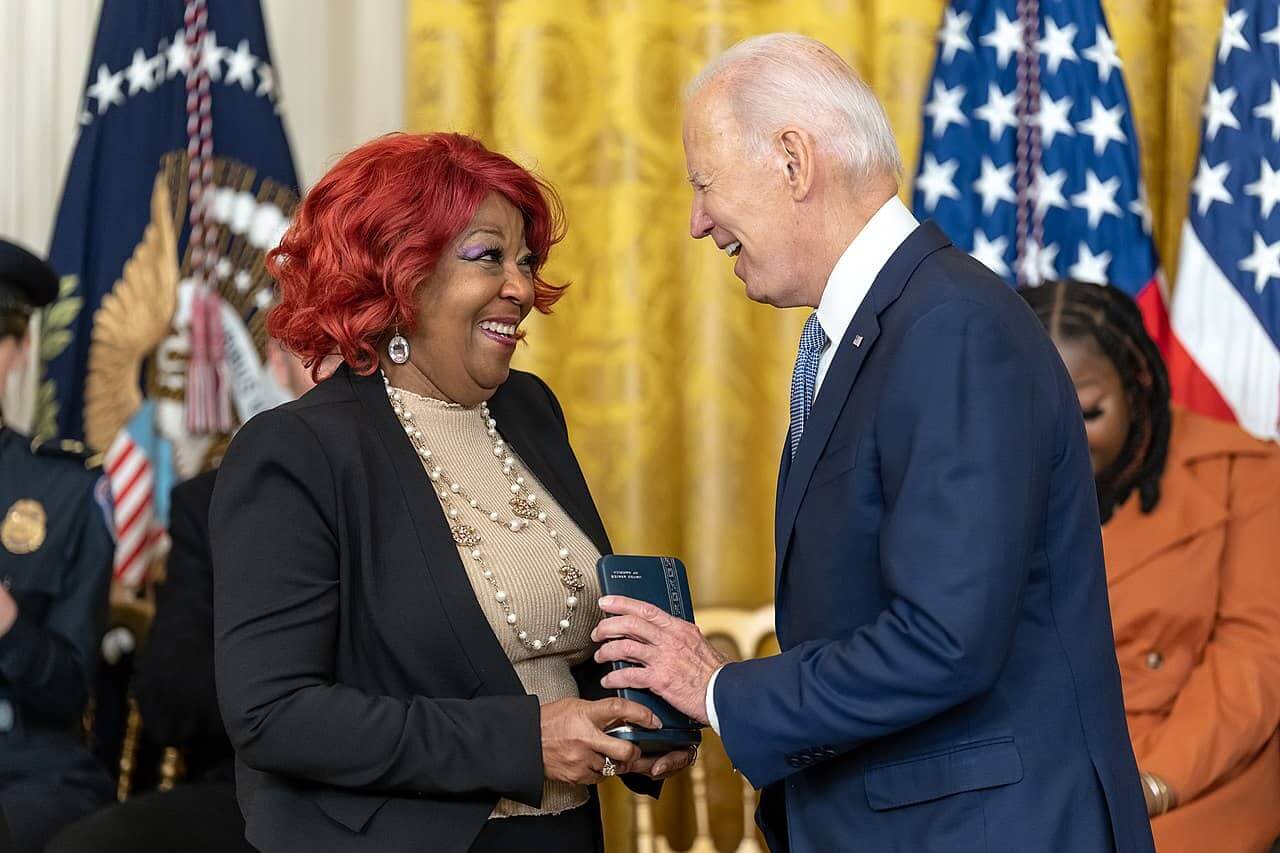
He was disbarred in New York and D.C. Freeman and Moss are the human ledger of this obsession: two Black women who counted votes for their neighbors and got death threats for it.
When the machinery of the Big Lie finally met the rules of evidence, it lost every time — and paid.
Even Thursday's "bombshells" deflated on contact. The declassified files largely recycle known, already-assessed vulnerabilities, and John Solomon — the conservative journalist who helped the White House release them — admitted afterward that the intelligence community has "zero evidence that a foreign power flipped a vote."

A 2021 intelligence assessment found China's activity was social media messaging, not election infrastructure.
Sen. Mark Warner, who sees the underlying intelligence, called the China claims "totally bogus."
The administration's own document dump even included an FBI record closing a marquee fraud investigation because it found no crime.
Does Trump Actually Believe the 2020 Election Lies?
Here's where honesty requires humility: nobody can see inside his head. But the public record cuts hard in one direction. Gen. Mark Milley testified that in late 2020 Trump told him, "Yeah, we lost, we need to let that issue go to the next guy."
Aide Alyssa Farah Griffin recalled a moment when she believed he knew.
His own advisers told him on election night that the fraud theories were nonsense, and he chose Giuliani over all of them.
Barr eventually concluded Trump "knew well he had lost" — and noted his total lack of curiosity about the actual facts, which is not how someone who’s just confused behaves.
The one forum built to answer this question never got to.
Jack Smith's indictment alleged Trump knowingly spread lies; the case was dismissed after the 2024 election under DOJ's policy against prosecuting a sitting president — on procedure, not merits.
Georgia's charges were later dropped too. No jury will ever rule on what he knew.
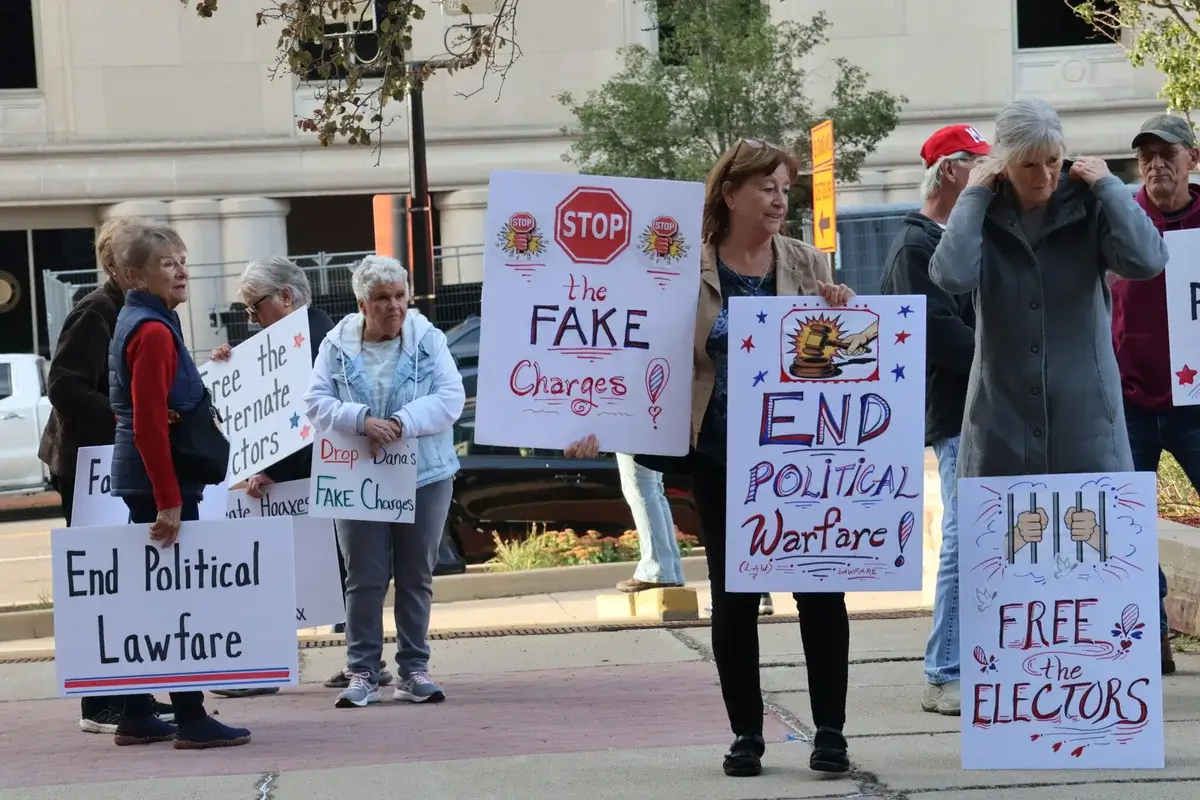
Obsessed With the 2020 Election: Delusion, Decline, or Something More Useful to Him?
Barr told the January 6 committee that after the loss Trump became "detached from reality."
That's a former attorney general's plain-English judgment, not a diagnosis — and the distinction matters.
Psychiatry's Goldwater Rule exists because no professional can diagnose a person they haven't examined, and neither can a newsroom.
What we can report: Trump turned 80 in June as the oldest president in American history.
In April, senators entered a statement from 36 physicians and cognitive specialists into the Congressional Record raising fitness concerns.
From The Hill’s reporting on the letter:
‘These doctors warned of President Trump’s “rapidly worsening, reality-untethered, increasingly dangerous decline.” They called him “mentally unfit” and said he must be removed “with the greatest urgency,” citing his “grandiose and delusional beliefs,” “reckless threats of violence,” “seemingly compulsive, manic-like late-night communications,” and “fixation on perceived enemies.” Citing his access to nuclear codes, they called for use of the 25th Amendment.”
YouGov finds about half of Americans, including a majority of independents, now believe he's in cognitive decline.
The White House physician says he's in excellent health, and the White House rejects all of it.
But you don't need a diagnosis to explain a belief this durable, because the belief works.
It raised hundreds of millions of dollars.
It purged the doubters and promoted the loyalists.
Psychologists call the underlying mechanism motivated reasoning — people rarely fact-check a story their identity depends on — and Trump has repeated the story so long that, for him and millions of supporters, repetition has done the rest.
Sincere, strategic, or both: the damage is identical either way. That's the uncomfortable answer to "does he believe it?"
It changes the diagnosis, not the harm.
Follow the Through-Line to November
Because here's the tell: every remedy he proposes for 2020 lands on 2026.
His March 31 executive order would have DHS build federal voter lists and let the Postal Service refuse to deliver mail ballots to anyone not on them — an authority no president has, since the Constitution gives election administration to states and Congress.
A federal judge struck down its core as unconstitutional in June; an appeals panel revived the USPS rule on July 17, with millions of mail ballots hanging on the outcome.
Meanwhile DOJ is sending federal monitors into Michigan's August primary over the state's objections, threatening election officials with prosecution, and opening fraud probes in California after Trump amplified a losing candidate's cheating claim.
With Democrats favored to take the House, the 2020 story does double duty: if Republicans win, the crackdown worked; if they lose, the election was rigged.
Heads he wins, tails you cheated.
So What Does a Country Do?
The Constitution's tools are blunt.
The 25th Amendment lets a vice president and a Cabinet majority sideline a president — people Trump hand-picked for loyalty, so file that under fiction.
Impeachment has been tried twice.
What's actually holding are the boring guardrails: federal judges, including Republican appointees, striking down election power grabs; secretaries of state refusing "baseless accusations"; voting rights groups suing and winning; election workers like Freeman and Moss telling the truth under oath.
They held in 2020. Whether they hold in 2026 depends on the last guardrail — the one that requires no Senate supermajority, just your ballot, cast early enough that no postmaster general can lose it.
A president at war with reality is a crisis. A country that stops showing up to contradict him is a bigger one.