
The U.S. is at war with Iran. Iran's favorite way to move money is through the Tether crypto firm, a company tied to Trump's commerce secretary.
The United States has spent decades trying to lock Iran out of the world's banks. A new Senate report says Iran found a back door, and it looks like it's digital.
The report, released September 28 by Sen. Richard Blumenthal (D-Conn.), says Iran leans heavily on Tether to get around U.S. sanctions. The Tether crypto firm is the company behind USDT, the world's biggest "stablecoin." It also has deep financial ties to the family of Commerce Secretary Howard Lutnick.
What’s the deal with the Tether crypto firm?
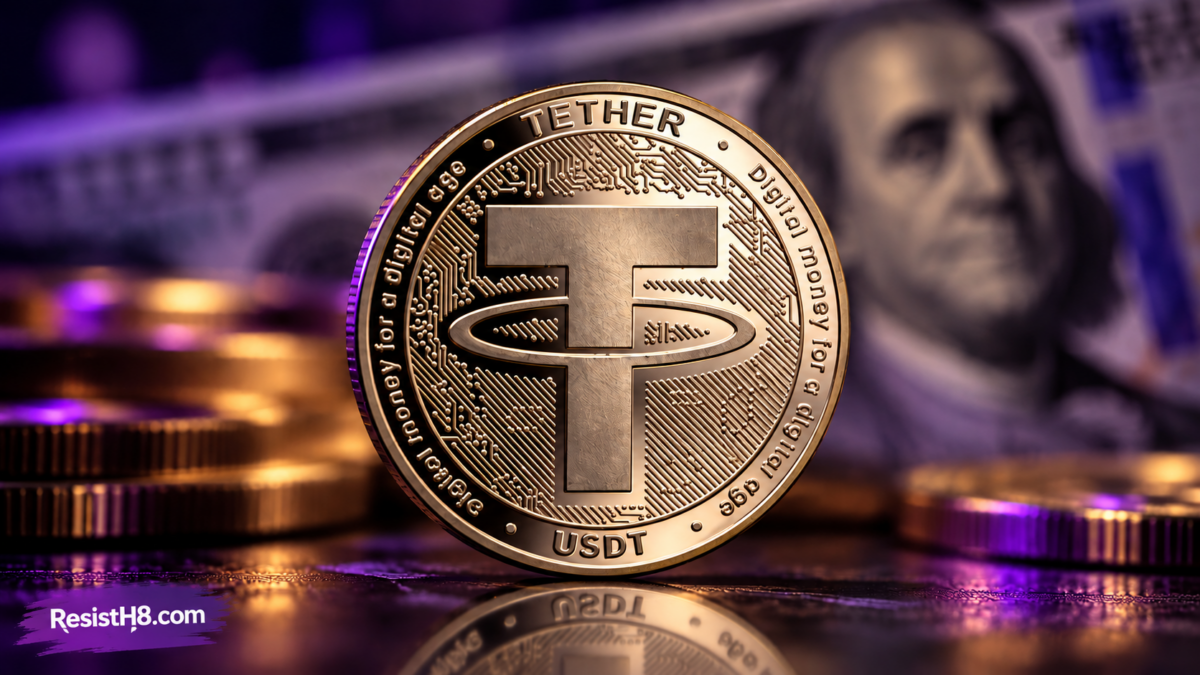
A stablecoin is a type of cryptocurrency created to always be worth $1. Tether says every USDT token is backed by real money it keeps in reserve, mostly U.S. Treasury bills.
That makes USDT handy for anyone who can't use a normal bank. You can buy it in places like the United Arab Emirates or Turkey, send it anywhere in seconds, and trade it back for cash. It also holds its value far better than Iran's collapsing currency, the rial.
Tether started in California in 2014 but now calls El Salvador home. The Senate report says the firm’s move to El Salvador was probably an effort to dodge U.S. legal duties.
Yet the company is still deeply tied to America's money system. It owns about $114.9 billion in U.S. Treasuries, more than Israel or the United Arab Emirates. That makes it one of the biggest holders of U.S. government debt.
It also has a troubled track record. The report on Iran sanctions, shadow banking, and the country’s use of Tether says USDT stablecoin’s role in North Korean arms sales and cartel drug trafficking is well documented.
In 2021, a federal regulator fined Tether $41 million for claiming every USDT was fully backed by U.S. dollars when it often wasn't.
The regulator found the crypto company had enough money in its accounts to back all its coins on only 27.6% of the days it studied between 2016 and 2018.
Inside the report
Blumenthal's team on the Senate Permanent Subcommittee on Investigations studied 846 crypto wallets that the U.S. or Israel had sanctioned or targeted for seizure over ties to Iran and its allies. 84% of them dealt only, or almost only, in USDT.
Here's some of what they found:

- Iran's central bank used it. The bank used USDT to prop up the rial and help sell oil. Two of its wallets took in nearly $50 million in just two months of 2025. When the Treasury Department sanctioned two other central bank wallets in April 2026, they held $344.2 million in Tether’s crypto firm.
- Oil smugglers used it. Two sanctioned Iranian oil smugglers moved more than $603 million in USDT from 2021 to 2025. Their network connected to Hezbollah and Yemen's Houthis.
- Drone buyers may have used it. In January 2026, a wallet funded by an Iran-linked broker sent $64,000 in USDT to a Chinese company that sells "drone supplies." That sounds small, but the kind of chips found in Shahed drones cost just $1 to $3 each. The report admits it can't prove what was purchased.
Iranian drones have killed American service members in attacks on U.S. bases, the report notes.
Tether was slow to act, the report says
The firm has a built-in way to freeze any USDT wallet. The report says it often didn't use it.
- Tether calls its compliance with U.S. sanctions "voluntary."
- In June 2023, Israel flagged 39 wallets tied to a Hezbollah money launderer. Tether froze five and waited until March 2024 to freeze the rest. Meanwhile, $34.6 million moved out.
- Gaza Now, sanctioned in 2024 for supporting Hamas, kept raising USDT in 2025 through wallets it posted openly on Telegram. Tether didn't freeze them.
- In December 2025, Babak Zanjani, Iran's most famous money launderer, posted central bank wallet addresses on X. As of September 2026, Tether still hadn't blocked them.
The firm confirmed it got Blumenthal's June letter asking for answers, but it still hasn't responded.
The Lutnick connection
Cantor Fitzgerald, the Wall Street firm Lutnick ran for more than 30 years, has earned fees managing Tether's reserves since 2021. Lutnick has said he negotiated that deal himself.
In 2024, Cantor bought a $600 million bond that gives it a 5% stake in the Tether crypto firm. Bloomberg reported that stake could someday be worth as much as $25 billion.
Ethics rules required Lutnick to give up his Cantor stake when he joined the Cabinet. In October 2025, he sold it to trusts for his four children. Around the same time, one of those trusts took out a loan from Tether. A Cantor spokesman wouldn't say whether the loan helped pay for the purchase.
The sale was supposed to end a conflict of interest. Washington University law professor Kathleen Clark put it bluntly: "in reality it creates a new one."
The Commerce Department says Lutnick has fully followed his ethics agreement.
Friends in high places
Lutnick isn't Tether's only link to Trump world.
- In August 2025, Tether hired Bo Hines weeks after he left his job as the White House's top crypto staffer.
- The GENIUS Act, the crypto law Trump signed in July 2025, gives Tether a three-year grace period before it has to follow U.S. rules.
- The administration has shut down crypto enforcement teams at the Justice Department and the SEC.
- Binance, a giant crypto exchange that keeps showing up in Iran's money trail, is one of Tether's direct partners. In October 2025, Trump pardoned Binance founder Changpeng Zhao, who had pleaded guilty to a money laundering charge.
In a letter to Treasury Secretary Scott Bessent, Blumenthal said crypto cases under Trump have been dropped, settled cheaply, or reversed. "I fear this lenient self-dealing includes Tether," he wrote.



Tether's side
Tether rejects the report. The company says it helped freeze nearly $550 million in Iran-linked USDT this year, including more than $344 million tied to Iran's central bank in April. It also says it works with more than 340 law enforcement agencies.
CEO Paolo Ardoino said USDT "is not a haven for sanctioned actors, terrorist organizations or criminal networks."
Democratic staff wrote the report, not the full Senate, and it calls its findings preliminary. It also doesn't estimate how much of all USDT activity is criminal.
The people caught in the middle
Ordinary Iranians use USDT too, to protect their savings from sky-high inflation or move money to and from family. The report says Iranian crypto exchanges mix those savings in with the regime's dirty money.
That's the cruel part. The same tool that helps a family in Tehran hold on to what little they have also helps their government pay for drones. In Blumenthal's words, it helps the regime "commit human rights abuses," too. We've covered the war's human cost in our Iran war hub.
Blumenthal has asked Treasury and the Justice Department to investigate Tether. Both are run by Trump appointees. And Tether's main Wall Street partner is run by the commerce secretary's kids.
Whether this administration will look hard at a company so close to its own Cabinet is another question.