
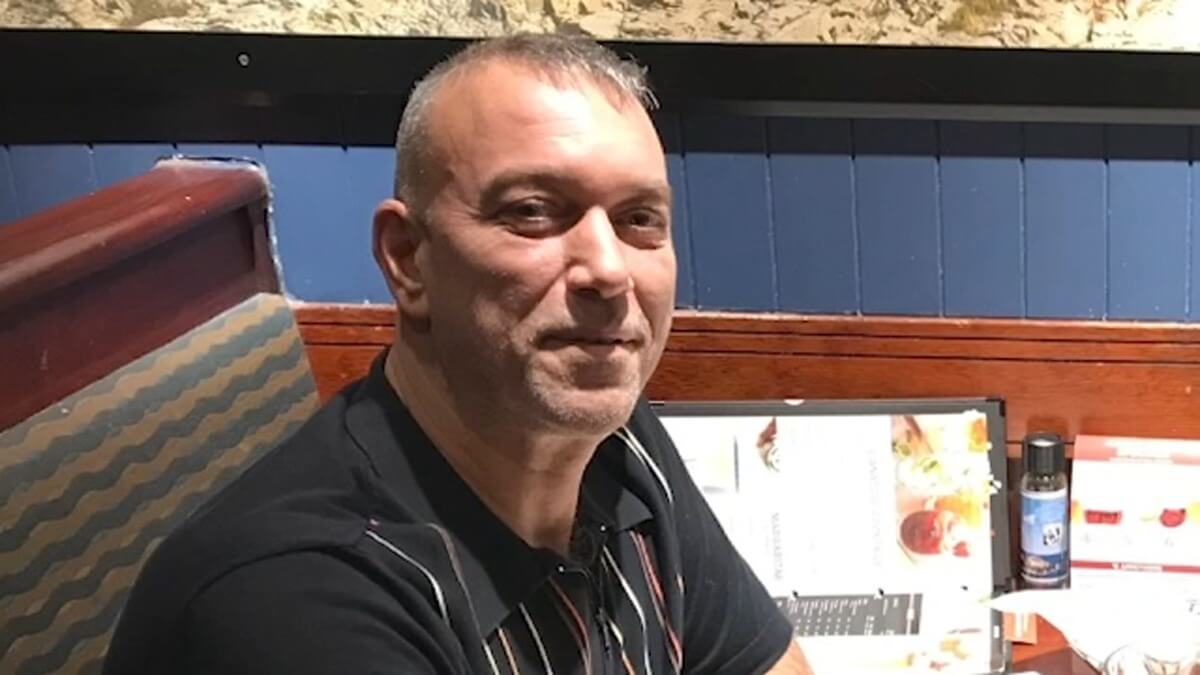

Nenko Stanev Gantchev did what immigrants are told to do. He married a U.S. citizen, applied for a green card and showed up to his interview. Federal agents were waiting for him.
Eighty-two days later, he was dead.
Gantchev, 56, died in ICE custody on Dec. 15 at the North Lake Processing Center in Baldwin, Michigan. It's a private detention center run by GEO Group, one of the biggest for-profit prison companies in the country. His family says he was sick for months and didn't get the care he needed. They still don't know exactly how he died.
A Life Lived In Chicago
Gantchev came to the U.S. from Bulgaria in 1995 on a student exchange visa. He made Chicago his home for 30 years. He got a work permit, bought property and ran his own trucking company, J&D Boys, since 2008.
“This year has seen more than 30 deaths in ICE custody, making 2025 the deadliest year on record for immigrants detained by U.S. authorities.”
He married his wife, a U.S. citizen, in 2017. Friends describe him as funny, gentle and the kind of person who showed up when you needed help. His wife asked reporters not to use her name because she fears retaliation from the federal government. Think about that. An American citizen is afraid of her own government for talking about her husband's death.
She told ABC7 Chicago that after 30 years of hard work and paying taxes, ICE "treated him like an animal."
Arrested While Following the Rules
On Sept. 23, Gantchev went to the USCIS office in Chicago for an interview on his marriage-based green card application. His wife says ICE agents seemed to be waiting for him when he arrived. The arrest happened during the Trump administration's "Operation Midway Blitz" crackdown in the Chicago area.
After a day at the Broadview ICE facility, he was sent to North Lake. ICE uses that facility for people arrested around Chicago because Illinois law bans private prisons and local jails from holding immigrants for ICE. So ICE simply ships people across state lines to a GEO-run facility that can hold up to 1,800 people.
ICE says Gantchev became a permanent resident in 2005, that USCIS denied that status in 2009, and that an immigration judge ordered him removed in 2023. That old order is what agents used to arrest him.
He fought to get out. An immigration judge denied him bond in October, and he appealed. That appeal was still pending when he died.
In November, a federal judge in Chicago ordered hundreds of people arrested in the blitz released on bond, including Gantchev. The judge found their warrantless arrests may have violated a court agreement called the Castañon Nava consent decree. Federal officials even noted in court records that releasing him wasn't a high risk to public safety.
Then an appeals court blocked that order. Gantchev was left with a terrible choice: agree to leave the country and go back to Bulgaria, or stay locked up and hope for bond. His wife begged him not to leave her. He stayed.
"He Was Not Feeling Well"
Gantchev had type 2 diabetes. His wife and a family friend named Anna say North Lake never gave him a special diet, and the small portions weren't enough to keep his blood sugar stable. Loved ones sent money so he could buy food from the commissary. Over the phone, he told them his health kept getting worse.
On the night of Dec. 15, his wife waited for his usual evening call. It never came. When she searched his name on ICE's online detainee locator, it said he'd been released.
He hadn't been released. The next morning, the Bulgarian Embassy called to tell her he was dead. That day, Dec. 16, was their eighth wedding anniversary.

What ICE Says, and What the Family Doesn't Know
ICE says Gantchev was found "unresponsive on the floor of his cell during routine checks". Staff started CPR and called paramedics, and a doctor pronounced him dead. The agency says his death is "suspected to be from natural causes," but the official cause is still under investigation.
In its public statement, ICE also labeled him a "criminal illegal alien." ABC7 Chicago's I-Team checked. Court records show he was never charged with any serious crime, only traffic violations. Police arrested him for drunk driving in 2008, but reporters couldn't find any record showing whether he was ever charged.
As of Dec. 19, his wife said no one from ICE, GEO Group or the county medical examiner had called her. Anna said the family never got the chance to identify his body, arrange religious rites or give permission for an autopsy. A Chicago funeral director was told an autopsy had already been done.
GEO Group wouldn't answer reporters' questions and sent everything to ICE. A Department of Homeland Security spokesperson called all claims of poor treatment in ICE detention "false."
Lawmakers Demand Answers
Reps. Delia Ramirez (D-Ill.) and Rashida Tlaib (D-Mich.) are calling for an immediate, transparent investigation. They specifically want answers about reports from other detainees that Gantchev asked for medical help and didn't get it in time to save his life.
The lawmakers said they know of "at least 30 deaths at ICE detention centers this year." That makes 2025 the deadliest year for people in ICE custody.
The Michigan Immigrant Rights Center pointed out that Gantchev was the 29th person to die in ICE custody since Trump took office in January, the most in a single calendar year since advocates started counting in 2006. During all four years of the Biden administration, 26 people died.


Twenty-nine deaths in less than a year. Twenty-six in four years. This is the result of detaining more people, in worse conditions, with less oversight.

Why His Wife Is Speaking Out
Gantchev's wife says she's telling his story so other families don't lose someone the same way. Anna said the same. Maybe, she told reporters, enough attention could get someone else released on bond in time to take care of their health.
Nenko Gantchev wanted to become an American citizen. He did the paperwork. He showed up. And he died in a for-profit cell 300 miles from home while his wife waited for a phone call that never came.