
On Friday, May 1, workers united in May Day protests. The streets of more than 500 American cities were filled with teachers, nurses, airport workers, students, and parents who had decided that this year, they were not going to spend the day pretending everything is normal.
They walked off jobs. They walked out of classrooms. They blocked airport roadways and the entrance to the New York Stock Exchange. And they did it under a single, blunt slogan: Workers Over Billionaires.
We know there are bus drivers in New York and teachers in Idaho and nurses in Louisiana who are feeling the impact of a system that has decided … to put billionaires ahead of everyone else.
Becky Pringle, NEA President
The day of action, called May Day Strong, was built around a simple ask of working people: no school, no work, no shopping. Roughly 500 labor groups across the United States organized the widespread economic blackout to mark May Day, also known as International Workers’ Day.
Organizers framed it as a refusal — a refusal to keep the economy humming for the wealthiest Americans while everyone else is left behind.
What People Were Marching For
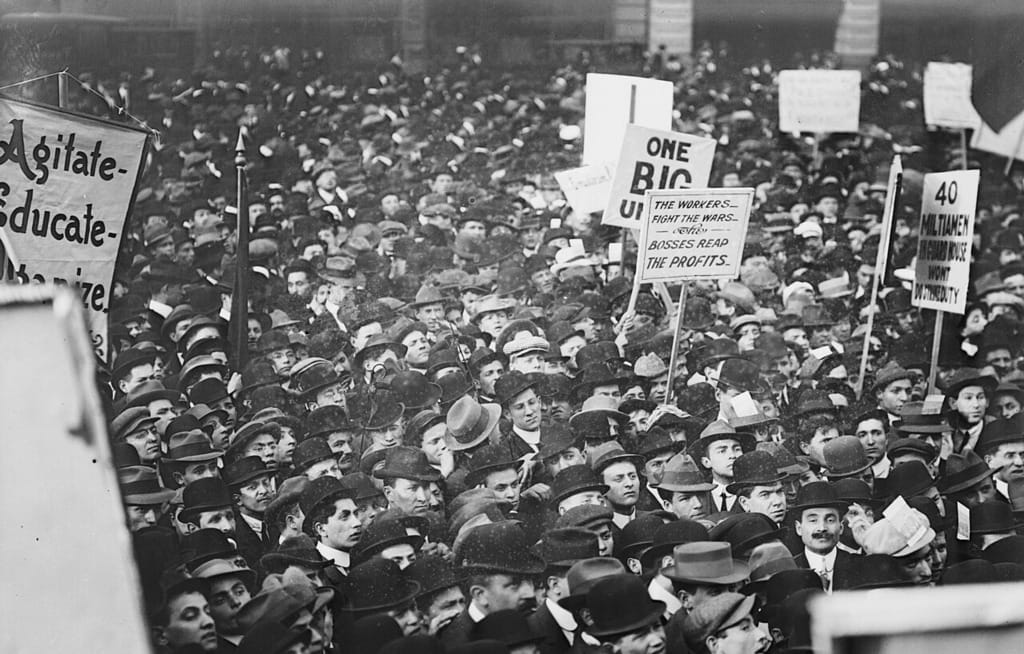
The demands of the day were broad, but specific. Protest groups called for shifting the nation’s tax burden from the working class to the wealthy, abolishing ICE, ending the war in Iran, and limiting corporate influence in elections.
The May Day protest coalition is not a single union or a single party. It is a deliberate alliance of labor, immigrant rights groups, student climate organizers, and education workers, all pointing at the same target: a federal government that has spent the past year openly serving the wealthiest Americans, while gutting programs that everyone else depends on.
The National Education Association — the nation’s largest labor union, with 3 million members — was a key organizer of the May Day protest. NEA President Becky Pringle told NPR that the message this year is that the country should be “focusing on workers over billionaires.”
“We know there are bus drivers in New York and teachers in Idaho and nurses in Louisiana who are feeling the impact of a system that has decided … to put billionaires ahead of everyone else,” she said, while “cutting services like public education that this country has made to our kids and impact our future.”
The Students Walked Out Too
This was not just a labor action. It was a generational one.
The Sunrise Movement, a youth-led climate activist group, said that over 100,000 students would be striking from school on Friday. “Over a dozen schools have cancelled classes because so many students and teachers are expected to miss class,” the organization posted on X.
At Kent State University in Ohio — a campus that carries the memory of four students shot dead by the National Guard at a 1970 anti-war protest — students gathered again. Nica Delgado, 22, a graduate student at Kent State, attended and helped organize a May Day protest on campus, where about 100 students turned out despite the cold, rain and wind.
She said students paid tribute to a previous generation of protesters who rallied against the Vietnam War at Kent State in May 1970. Members of the Ohio National Guard were deployed to the campus in response, killing four students and injuring nine more.
Delgado and her classmates were protesting the school’s recent dismantling of its diversity and inclusion offices — changes made under state law passed after the federal government threatened funding for schools with DEI programs.
Bay Area Airports Brought to a Halt
Some of the day’s sharpest confrontations happened at airports.
May Day protesters disrupted access to the terminals at San Francisco and Oakland airports on Friday, authorities said. An SFO spokesperson said the departures-level roadway at the airport’s international terminal was blocked between 11 a.m. and 1 p.m. Demonstrators called for ICE to end immigration enforcement operations at the airport and for union worker support.

There were a handful of arrests, among those were San Francisco supervisors Connie Chan and Rafael Mandelman, and state Sen. Josh Becker, who linked arms with airport service workers fighting for a fair contract.
At Oakland International Airport, the protest carried a second message. In addition to protesting against ICE, demonstrators also called for an end to weapons shipments out of Oakland’s airport to Israel.

Longshore workers from ILWU Local 6 marched from their union hall to the terminal — a reminder that the labor movement’s history of refusing to load weapons of war is not ancient history.
New York: Marching on Bezos
In New York, the rallies stretched across all five boroughs. At 8:30 a.m. Eastern Time, protesters began marching from Bryant Park in Manhattan towards Amazon founder and billionaire Jeff Bezos’ penthouse.
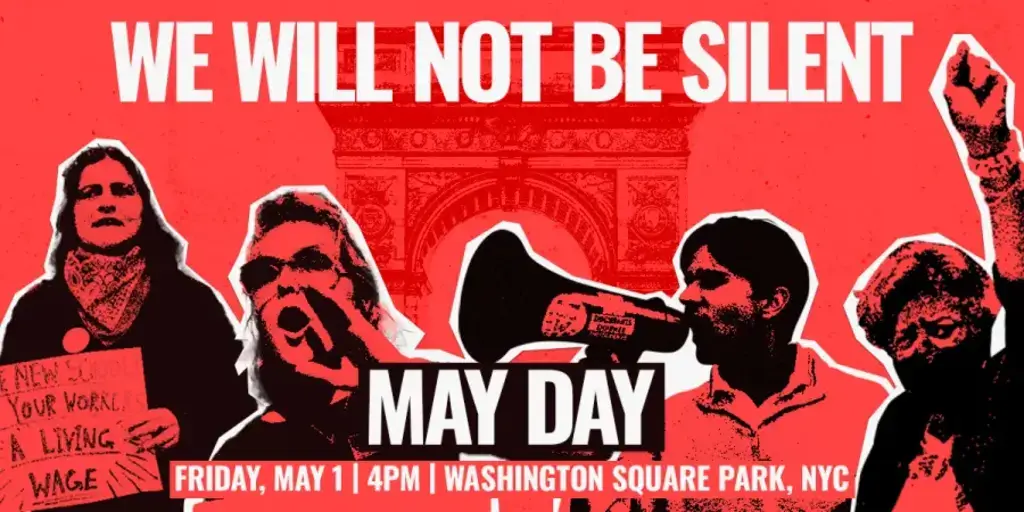
Several protesters were arrested while blocking the entrance to the New York Stock Exchange. Democratic congressional candidate Chuck Park was among those arrested.
Along Fifth Avenue, more than 100 protesters marched to the Midtown offices of Amazon. Matt Multari, an Amazon delivery worker, told ABC7 New York what was driving him into the street. “Since the 80s, it’s been a systematic dismantling of unions, of institutions, whether they were state or otherwise, that provided opportunities for the average person to move up,” he said.
Why Now?
The timing is not an accident. The events were inspired by economic boycotts following violent ICE operations in Minneapolis. The shooting deaths of Renee Good and Alex Pretti sparked a wave of boycotts that grew into Friday’s nationwide action.



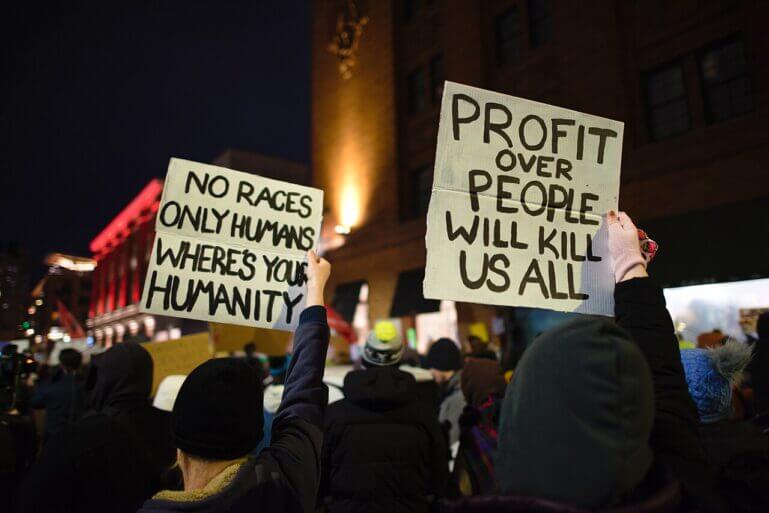
A report from Goldman Sachs published earlier this month found that AI has wiped out an average of 16,000 jobs per month in the past year. Trump also rolled back protections aimed at preventing workplace discrimination, including weakening enforcement of requirements that employers maintain affirmative action standards. He also as cracked down on private sector DEI programs.
Meanwhile, May Day Strong has a broad set of demands, including “tax the rich” and “abolish ICE” — a call that comes as Republicans recently voted on a budgetary measure to fund ICE to the tune of an additional $70 billion.
A Movement That is Growing
The May Day protests in various cities follow anti-Trump protests under the “No Kings” banner that drew 8-9 million people to its third event in March.
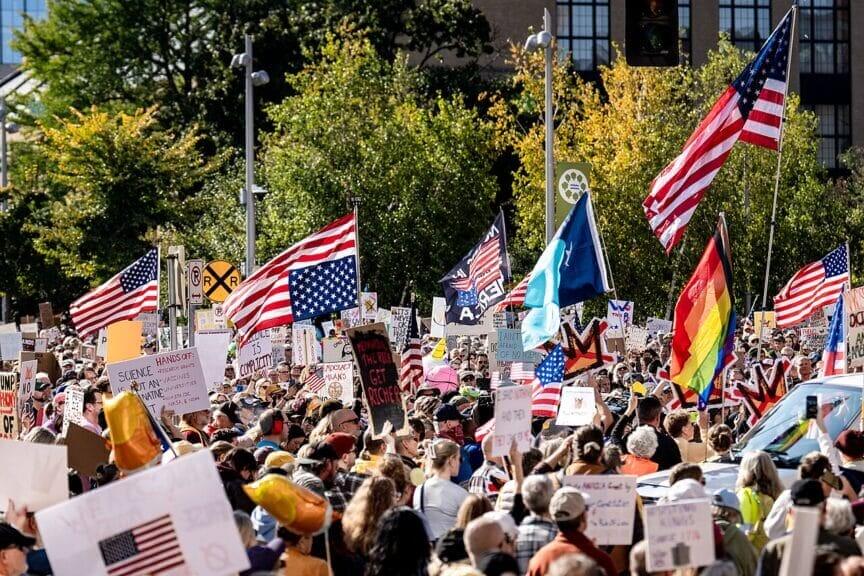
In St. Louis, organizer Shayne Clegg with the Missouri Workers Center told NPR “Workers in this country are fed up. We’re tired. We’re facing a lot of issues from this current authoritarian regime that we are under,” Clegg said. “Billionaires are … getting all of the control. Workers are suffering. We’re having to pay more. We’re not able to afford things to feed our families.”
That is the unifying thread running through every march, every walkout, every blocked roadway on Friday. The country has become a place where a handful of men own more wealth than entire states, where ICE is being handed tens of billions of dollars while public schools are being defunded, and where ordinary work no longer pays for ordinary life.
May Day Strong was the answer working people gave to all of it — together, in public, on the same day, in their own voices.

The eight-hour workday that May Day protests originally fought for did not come from the generosity of employers. It came from workers who were willing to stop. On Friday, millions of Americans remembered how that works.