

The word "Israel" doesn't appear at all in the most important section of HR 4795, Protect Economic and Academic Freedom Act. Yet, if a school boycotts Israel, it loses student financial aid.
You heard that right. If a school chooses not to spend money at Israeli businesses, the federal government will strip its student financial aid program.
On Thursday, the House passed HR 4795 by a vote of 237-169.
33 Democrats crossed over to vote yes.
Only two Republicans — Thomas Massie of Kentucky and Warren Davidson of Ohio — voted no.
The bill strips federal student aid from any college that participates in what it calls a "nonexpressive commercial boycott" of Israel. Pell Grants. Federal student loans. Work-study.
The entire financial pipeline that makes college possible for millions of students who otherwise couldn’t afford it.
What HR 4795 does
Read the text and you’ll see the Protect Economic and Academic Freedom Act has 2 parts to it.
The First Part amends Section 487 of the Higher Education Act — the contract every school signs to receive federal student aid.
HR 4795 adds a new commitment to that contract: the school will not engage in a nonexpressive commercial boycott of a "major strategic partner of the United States."
If a school breaks its commitment, it loses access to federal financial aid programs.
The Second Part of HR 4795 adds a new certification requirement to Title VI of the Higher Education Act, which funds foreign language and international studies programs.
Every year before the deadline, July 31, a participating school has to certify in writing that it allows students and faculty to participate in academic programs in that “major strategic partner” on the same terms as programs anywhere else — and it accepts students and faculty from universities in that “major strategic partner” into its own programs on the same terms.
Let’s simplify that last paragraph using real words in place of “government-speak”: Before July 31 every year, a participating school must certify in writing that it allows students and faculty to participate in programs at a university in Israel on the same terms as programs at a university in any other country — and the school accepts students and faculty from a university in Israel on the same terms as students and faculty from a university in any other country.
If a school misses the July 31 deadline, it loses federal funding.
“It (the country) that shall not be named”
Pause. I need a sanity break.
Forgive me for breaking the fourth wall here but we need to talk.
Don’t worry, your regularly scheduled reporting will resume after this break.
Has anyone else noticed that the federal government has been using terms and phrases in legislation that sound straight out of 1984?
Not the year. The book.
It's tough to explain, but when you hear/read one of these phrases, you feel like it’s in a different language. Like you’re losing your mind while everyone else carries on as if everything is normal.
The piece of legislation this article is focused on includes a few of these “phrases from 1984” in it:
- “a major strategic partner of the Inited States”
- “engage in a nonexpressive commercial boycott”
It’s Israel.
Can’t they just say “ISRAEL?”
I thought Israel was “our special ally?”
I need a drink.
If you’re reading this and you get the point I’m failing to make, say so in the comments. There must be other people out there who also feel overwhelmed by the strange authoritarian/oppressive bills in Congress.
Bills that always seem to involve Israel.
Sorry, I meant, Bills that always seem to involve a “major strategic partner.”
Back to the article.
Major strategic partner" is defined by pointing at Section 4 of Public Law 113-296 — the United States-Israel Strategic Partnership Act of 2014.
Section 4 does only one specific thing: it declares Israel a major strategic partner.
No other country is on the list.
The definition also covers any entity "licensed or regulated by, or organized under the laws of" Israel.
PAUSE.
Are you freaking out as much as I am right now?
So many examples of the terms and phrases I just talked about in the last break.
Forget the words, though. What the hell are we doing, here? Why is our government passing laws for a foreign country that American citizens have to follow?
This is nuts.
I gotta stop breaking character, though. It’s getting harder to move right back into “professional voice.”
Here goes.
That language extends the bill past Israel's borders and into the occupied West Bank, where institutions operating under Israeli law would be covered too.
The International Court of Justice ruled in 2024 that Israeli settlements there violate international law.
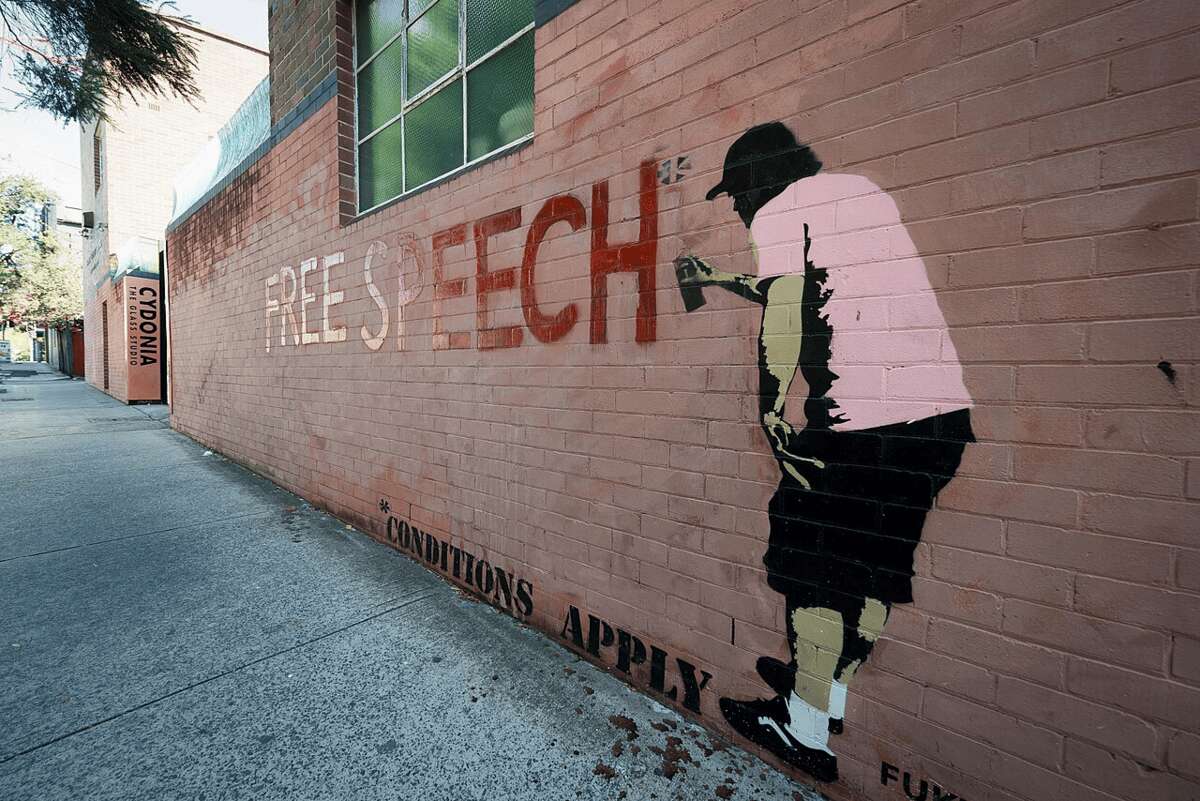
The liberal pro-Israel group J Street, which opposes BDS, came out against the bill partly for that reason, warning it means "infringing on constitutionally protected free speech and academic freedom."
The word that’s doing most of the work
Everything hinges on "nonexpressive."
Boycotts have been protected political speech in this country since NAACP v. Claiborne Hardware in 1982, when the Supreme Court ruled that Black residents of Mississippi had a constitutional right to boycott white-owned businesses.
This new bill's authors get around that with a legal theory borrowed from a 2022 Eighth Circuit ruling that upheld Arkansas's anti-BDS law.
That court decided the act of not doing business with someone is conduct, not speech — so only talking about a boycott is protected, not the boycott itself.
The Supreme Court has declined to review it.
(I really want to pause. Instead, I'll make it quick. Since when is it illegal to boycott something? Is choosing not to shop somewhere a crime now?)
Congress is trying to write that theory into federal law. Lara Friedman of the Foundation for Middle East Peace told Responsible Statecraft the effort goes well beyond Israel —
“It’s an attempt to "erase any First Amendment protection for the right to boycott.”
(!!!!)
Rep. Jerry Nadler, a self-described committed Zionist who calls BDS morally repugnant, voted no anyway.
"The First Amendment right to free speech does not apply only to agreeable speech.” [This bill is] “a direct and gross violation of the First Amendment.”
Watch for traps hiding in fine print
The certification requirement is the chilling effect. A university has to swear every July that it isn't obstructing anything Israel-related.
Friedman warned that outside groups could comb through a campus looking for any missing partnership and then accuse the school of lying on a federal form.
That’s a rule you follow by saying yes to everything and quietly discouraging anything that might look like a no.
Cancel the panel.
Decline the divestment resolution.
Tell the student group the room isn't available.
Nothing in the bill orders any of that, and that's the point — the pressure does what the statute can't legally do itself.
A problem that doesn't exist
Not one American university has adopted BDS.
Rep. Bobby Scott of Virginia said so during markup, and House Education and Workforce Democrats wrote in their committee report that the bill is a solution in search of a problem.
Rep. Morgan Griffith's response was: if the bill doesn't do anything, there's no harm in passing it.
Laws that don't do anything usually don't get 237 votes.
Who voted yes, and why
Supporters of the legislation say this is about conduct, not speech.
Rep. Tim Walberg, who chairs the Education and Workforce Committee, said universities shouldn't use taxpayer-funded programs to discriminate against Israeli students, faculty, or businesses.
Rep. Virginia Foxx, the lead sponsor, said the bill "has true teeth." Her Democratic cosponsor, Rep. Josh Gottheimer, framed it as protecting Jewish students who have faced real threats and real assaults on campus.
(I’m sorry, but how does making it illegal to stop spending money at Israeli businesses protect Jewish students? This is maddening.”
I accidentally dropped that.
I don't have time to pick it up, though. I'm too busy.
Antisemitic harassment on campus is already illegal under Title VI of the Civil Rights Act. HR 4795 doesn't do anything new to protect Jewish students — it's the federal government’s newfound interest in whether universities buy things from Israeli companies.
The 33 Democrats who voted yes included Ritchie Torres, Haley Stevens (obvi), and Jared Moskowitz (super obvi).
Moskowitz was recently named ranking member of the Middle East subcommittee over progressive objections. They chose to vote for this bill at a moment when 62 percent of Americans hold an unfavorable view of the Israeli government, and while their party's donor relationships are under more scrutiny than they've faced in years.
I’m just going to leave this 👇🏼 here and quietly tiptoe away.
🤫
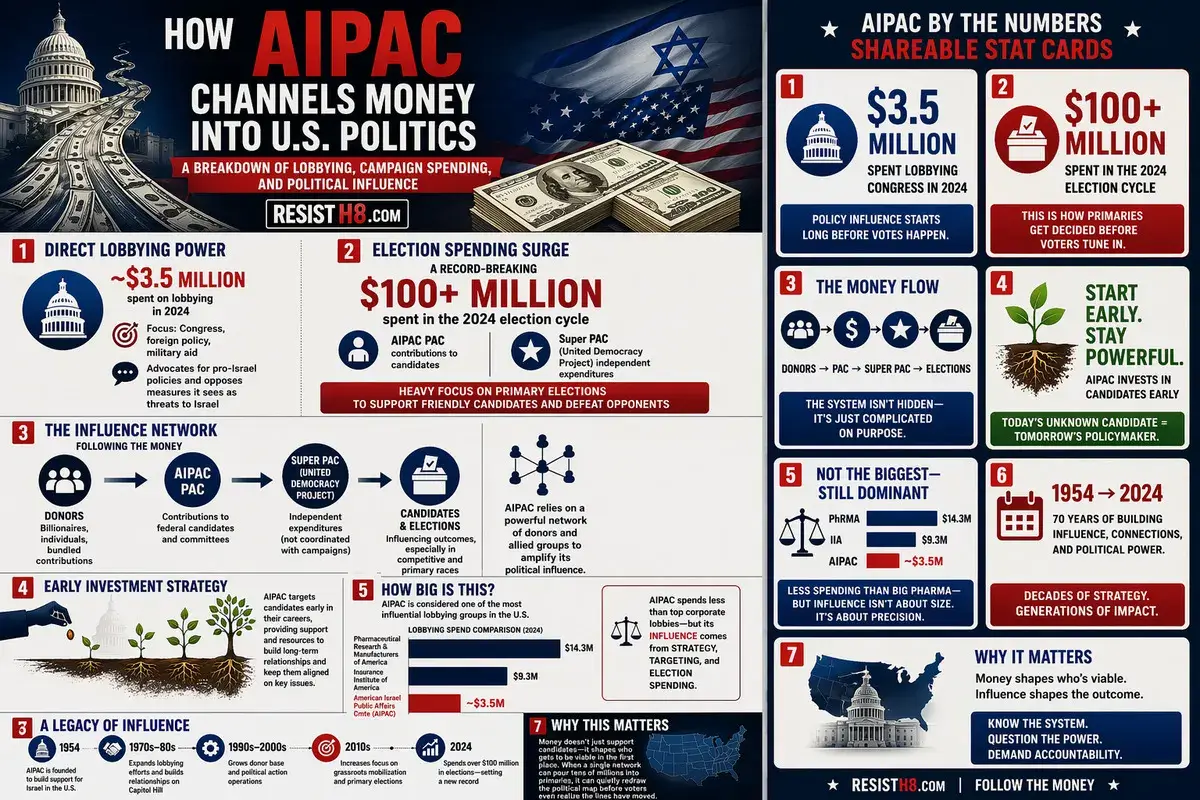
Robert McCaw of the Council on American-Islamic Relations said what all of us were thinking: "Congress should not threaten Pell Grants and student loans" over students' political advocacy. 👏🏼👊🏼✊🏼
Now what
HR 4795 goes to the Senate, where it would need 60 votes to pass, then it would go to Trump's desk for his signature. Will he sign it into law? The odds are unclear.
This legislation isn’t unique in America. 38 states have passed some form of anti-BDS law since 2015.
The Antisemitism Awareness Act, which would write the IHRA definition of antisemitism — including its examples involving criticism of Israel — into federal civil rights enforcement, is still pending after passing the House 320-91 back in 2024.
If Congress is successful and the criticism of Israel is included in the legal definition of antisemitism, slap my ass and call me an antisemite because I'm not going to stop expressing my opinion about a government that JUST BUILT A GALLOWS WITH A VIEWING AREA to make the public execution of Palestinians a form of family entertainment.
And this is how the guy in charge of law enforcement and the Israeli prison system treated International activists who tried to get food to starving children in Gaza:
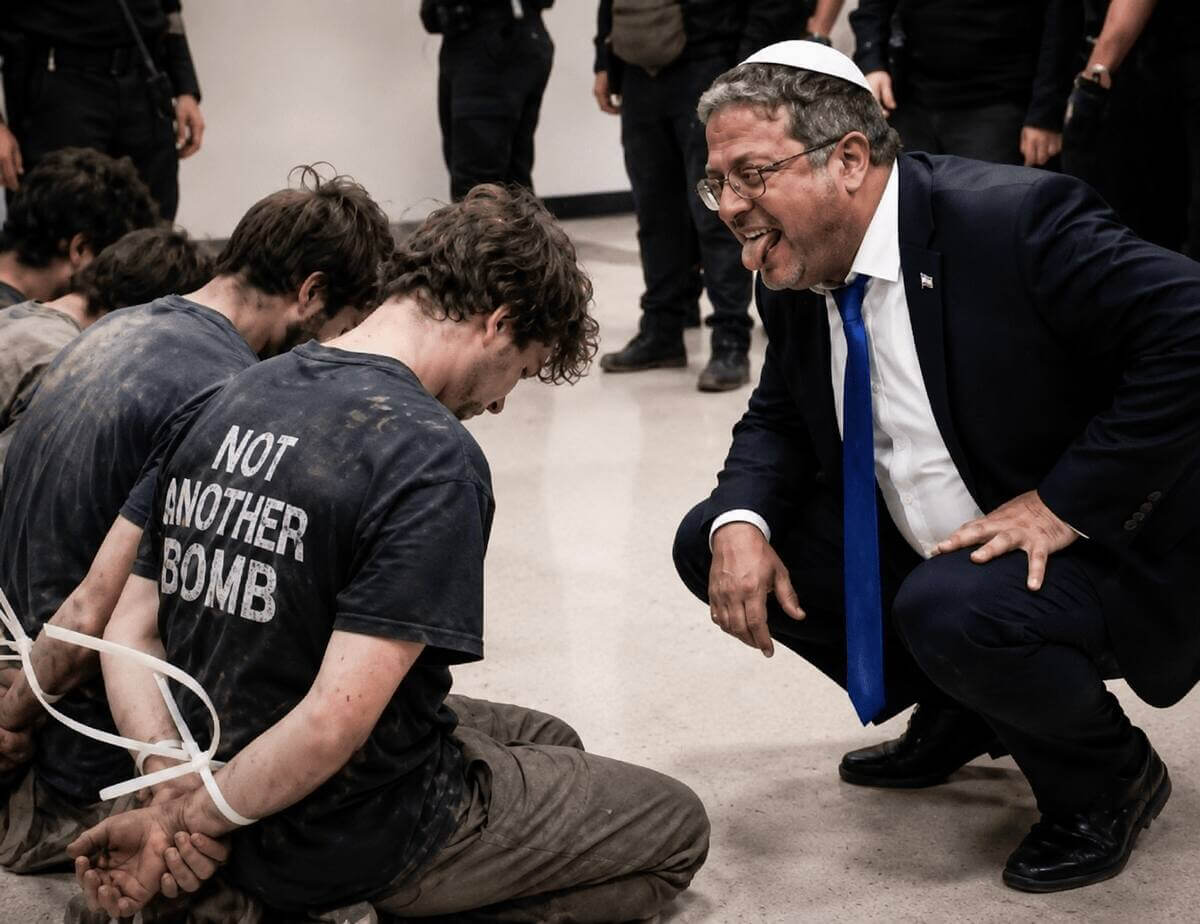
That evil goblin was given a birthday cake to celebrate his birthday while engaging in his favorite activity: tormenting people who have a heart — and a soul. His friends are aware of how black and shriveled his heart is because because the design on his cake was A GALLOWS.
Oh, yeah. He also said this:
Let me conclude this article before my head explodes.
At the end of the day, even if you combine both parts of the Protect Economic and Academic Freedom Act, it doesn't ban anyone from criticizing Israel.
No. It does something even more effective.
The bill makes it too expensive for an institution to engage in a silent protest against genocide, starvation, torture, sexual violence, war crimes, human rights abuses, and a soldier shooting a 4-year-old in the head because he was born inside the wall that surrounds an open-air prison.
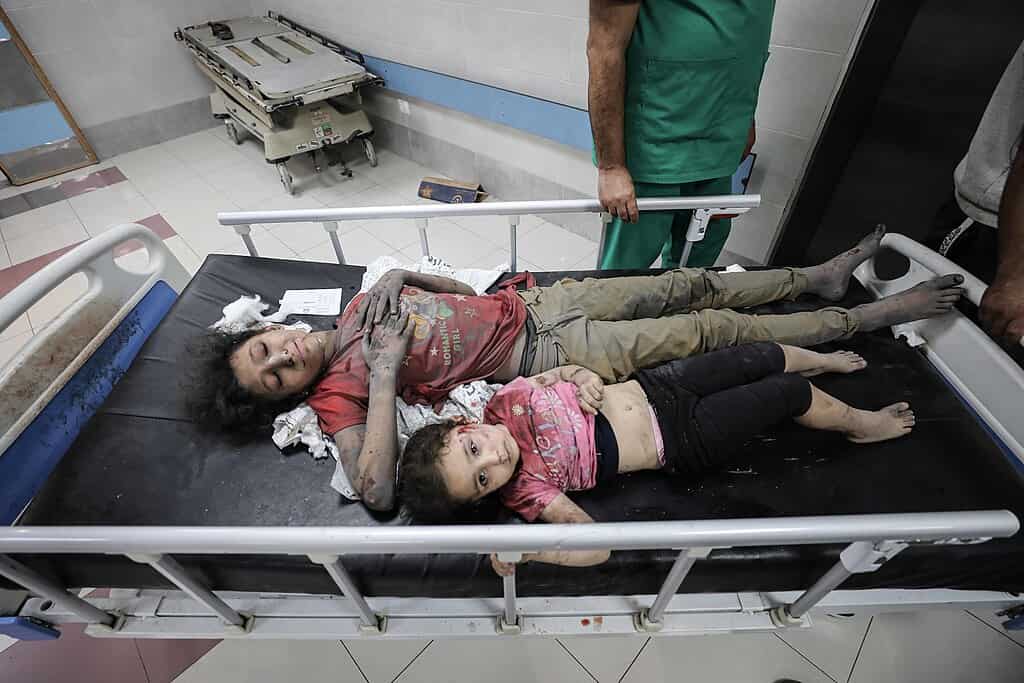
CC BY-SA 3.0
A 19-year-old who joins a divestment campaign in college isn't breaking any law. But the dean of that college has to decide whether that student’s decision puts the school’s financial aid system at risk.
The First Amendment never even considered that scenario.