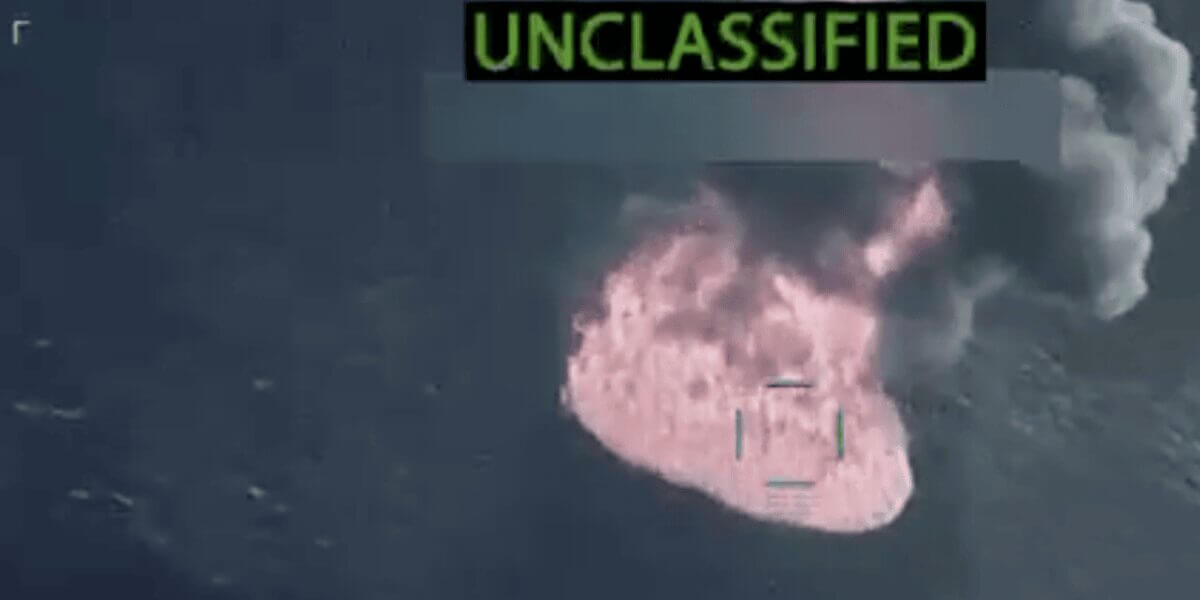

The Trump administration has made a series of startling admissions about the people it is killing in its undeclared war against suspected drug smugglers in the Caribbean Sea and the Pacific Ocean.
Trump officials acknowledged in separate briefings provided to lawmakers and staffers on Thursday that they do not know the identities of the victims of their strikes, and that the War Department cannot meet the evidentiary burden necessary to hold or try survivors of the attacks. Such victims who find themselves in the water are now deemed “unprivileged belligerents,” a murky designation under international humanitarian law.
Since September 2, the U.S. military has been attacking boats in the Caribbean and eastern Pacific Ocean, killing more than 60 civilians. The Trump administration insists the slayings are permissible because the U.S. is engaged in “non-international armed conflict” with “designated terrorist organizations,” or DTOs.
Two government officials told The Intercept that the administration secretly declared a “non-international armed conflict” weeks if not months before the first attack of the campaign.
Trump has justified the attacks, in a War Powers report to Congress, under his Article II constitutional authority as commander in chief of the U.S. military and claimed to be acting pursuant to the United States’ inherent right of self-defense as a matter of international law.
The Justice Department’s Office of Legal Counsel has also produced a classified opinion that provides legal cover for the lethal strikes.
Experts in the laws of war and members of Congress say the strikes are illegal extrajudicial killings because the military is not permitted to deliberately target civilians — even suspected criminals — who do not pose an imminent threat of violence.
The summary executions are a significant departure from standard practice in the long-running U.S. war on drugs, in which law enforcement arrested suspected drug smugglers.