

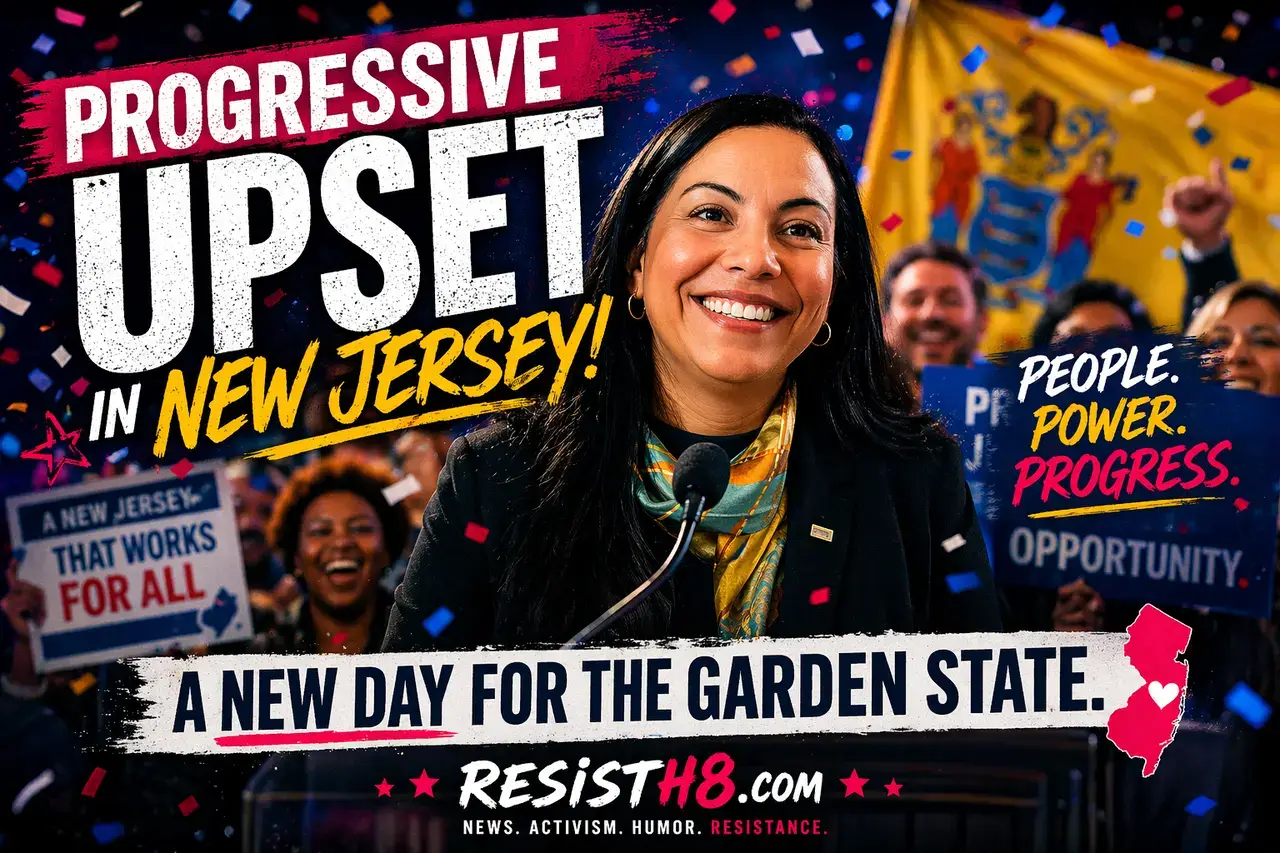

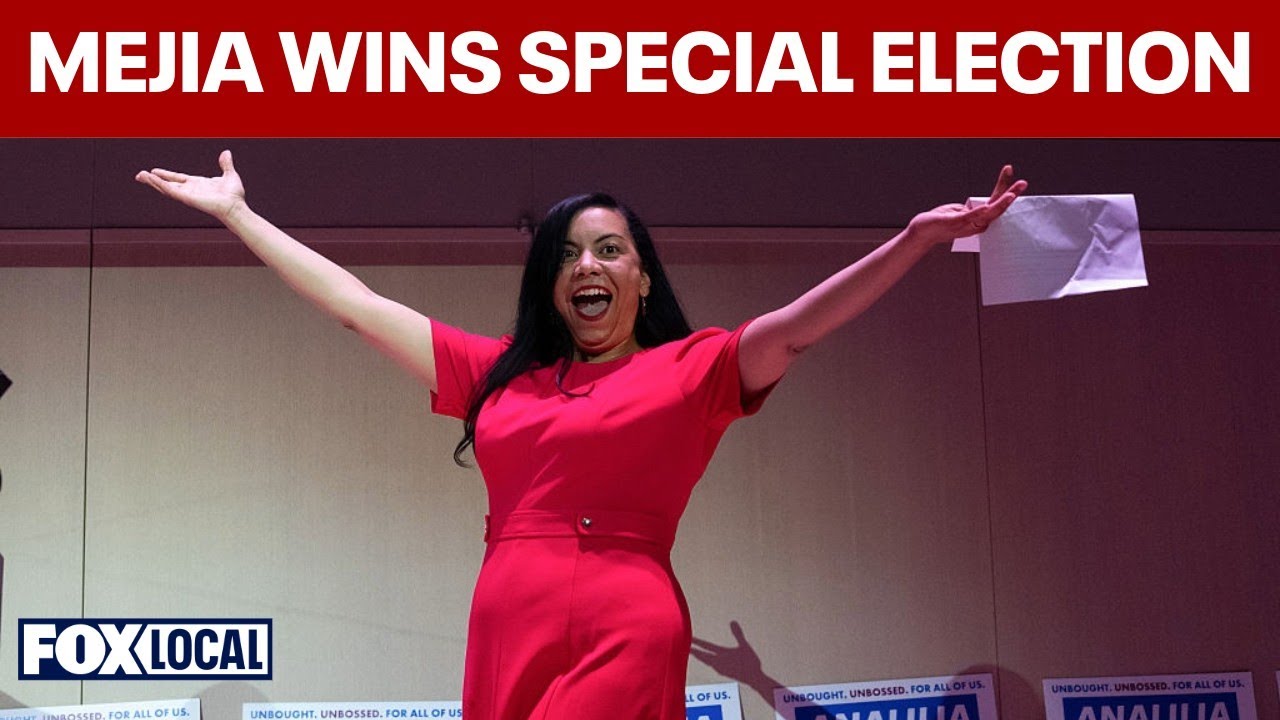
New Jersey handed progressives a major victory Thursday night. Analilia Mejia, a former national political director for Bernie Sanders’ 2020 presidential campaign, defeated Republican Joe Hathaway in the special election for New Jersey’s 11th Congressional District — and she didn’t just win. She dominated.
With nearly all votes counted, Mejia led 60% to 40%, a margin of roughly 25,000 votes. The Associated Press called the race just seven minutes after polls closed, setting off celebrations at the Montclair Art Museum where Mejia’s supporters had gathered.
“In November, when I jumped into this race, the odds were stacked against us,” Mejia told the crowd. “But you know — we did the impossible, and we won.”
What This Means for Congress
The math is simple and significant. With Mejia’s win, Republicans in the House are now operating on a razor-thin majority — 217 Republicans to 214 Democrats, with one independent and three vacant seats.
Speaker “Moses” Mike Johnson can now lose exactly one Republican vote on any party-line legislation and still pass it. Lose two, and the bill fails.
That is not a comfortable position for a party trying to gut social programs and advance Trump’s agenda on immigration and the economy.
Who Is Analilia Mejia?
Mejia isn’t a centrist compromise candidate. She is, plainly, a progressive activist who came up through organizing and movement politics. She served as co-executive director of the Center for Popular Democracy before joining the Sanders campaign.
She was endorsed by Sanders and Rep. Alexandria Ocasio-Cortez, and her platform made no attempt to soften her positions for suburban audiences.
She ran on abolishing ICE, universal healthcare, taxing billionaires, protecting reproductive rights, and standing up to what she has called the Trump administration’s “rising authoritarianism.”
She also publicly stated her view that Israel has committed genocide in Gaza — the only candidate in a primary forum to raise her hand when asked that question directly.
That last position drew sharp attacks. Republican Hathaway called her antisemitic (because of course). A super PAC aligned with AIPAC, the American Israel Public Affairs Committee, poured money into the February primary trying to defeat her — but ended up accidentally boosting her by attacking a rival candidate, former Rep. Tom Malinowski, instead.
Mejia won the Democratic primary in February with less than 30% of the vote in a crowded 11-candidate field, then spent the weeks leading up to Thursday’s race uniting the party behind her.
After Mejia won the primary, Republicans quickly attacked her as a “socialist” (because, again, of course).
“Her far-left politics are way out of step with District 11 values, will make our towns less safe, and voters will reject her record on April 16,” Hathaway said in a statement. Oh, really?
Why the Margin Matters
The 11th District was expected to stay Democratic — it leans heavily blue, with about 65,000 more registered Democrats than Republicans, and Kamala Harris won it by 9 points in 2024.
But a 20-point margin for a self-described progressive, in a district that includes not just liberal enclaves like Montclair and Maplewood but also more conservative suburbs to the west, is a meaningful signal.
NBC News’ Steve Kornacki noted that Mejia carried territory that had long been considered a Republican stronghold — something he described as “unfathomable” for most of modern political history.
Political observers are reading the result as an early indicator of Democratic voter enthusiasm heading into the November 2026 midterms. Backlash politics, in short, appear to be working — and working beyond the expected base.
The Bigger Picture
Mejia replaces Mikie Sherrill, who vacated the seat after winning the New Jersey governorship in 2024. Where Sherrill was a moderate former Navy pilot and federal prosecutor, Mejia represents a distinct shift in the district’s political character — at least for now.
She’ll serve out the remainder of the current term through January 2027, but both she and Hathaway are already slated to face off again in November for a full term. Three minor Democratic challengers will appear on the June primary ballot, but none has emerged as a serious threat.
Mejia’s victory is being celebrated by the progressive wing of the Democratic Party as proof that the left doesn’t need to water down its message to win in the suburbs. Her platform — abolish ICE, tax the rich, healthcare as a right — is exactly the kind of agenda that Democratic Party leadership has often urged candidates to soften.
She didn’t. She won anyway, and by a lot.



For a Trump administration that has spent months ramming through immigration crackdowns, gutting federal agencies, and testing the limits of executive power, that is not welcome news. The House majority just got even harder to hold.