

Pete Hegseth led a prayer at the Pentagon using lines from a Quentin Tarantino movie. His spokesman called critics “fake news.” This is not satire.
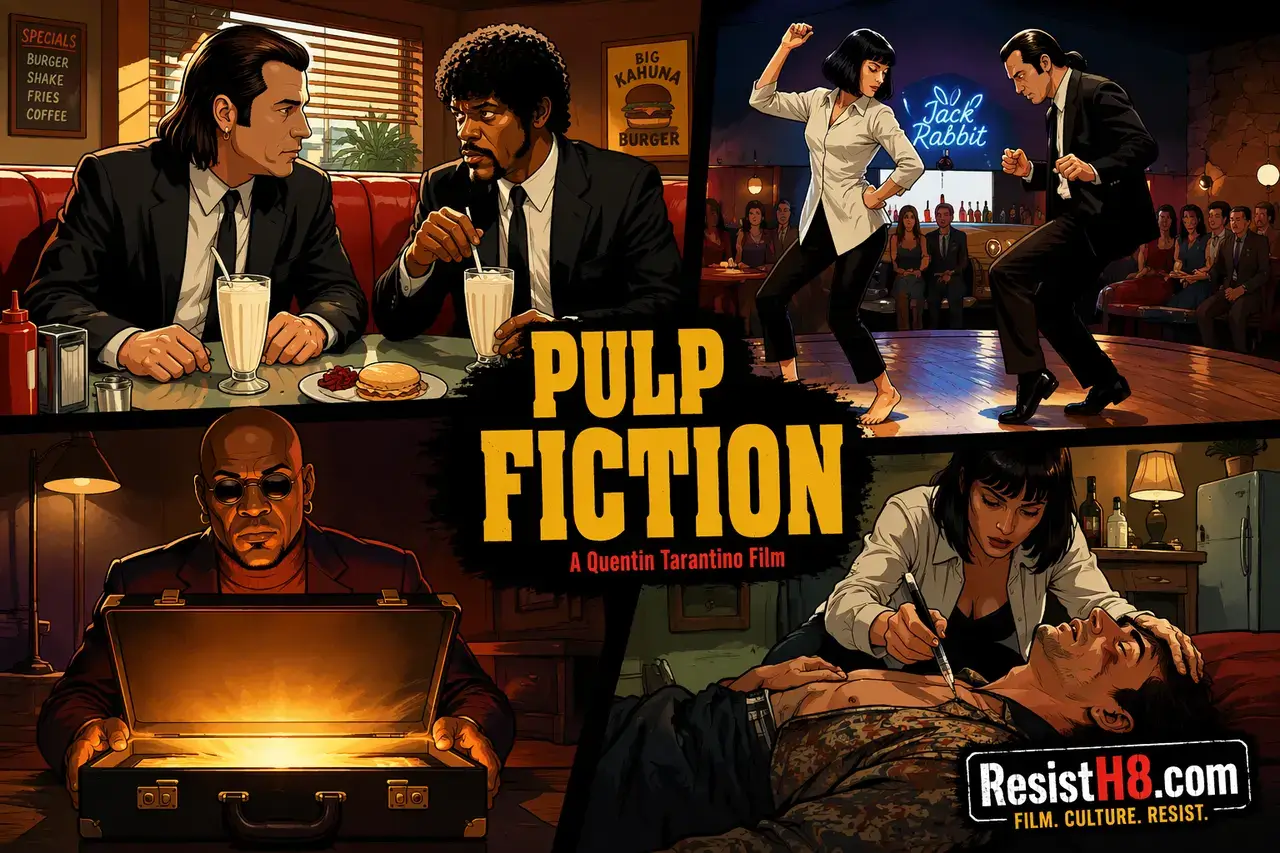
At a Pentagon ceremony on Wednesday, Secretary of Defense Pete Hegseth quoted Pulp Fiction as he led the audience in prayer — and the words he recited weren’t from the Bible. They were lifted almost verbatim from the 1994 Quentin Tarantino film in which Samuel L. Jackson delivers a violent monologue before shooting someone.
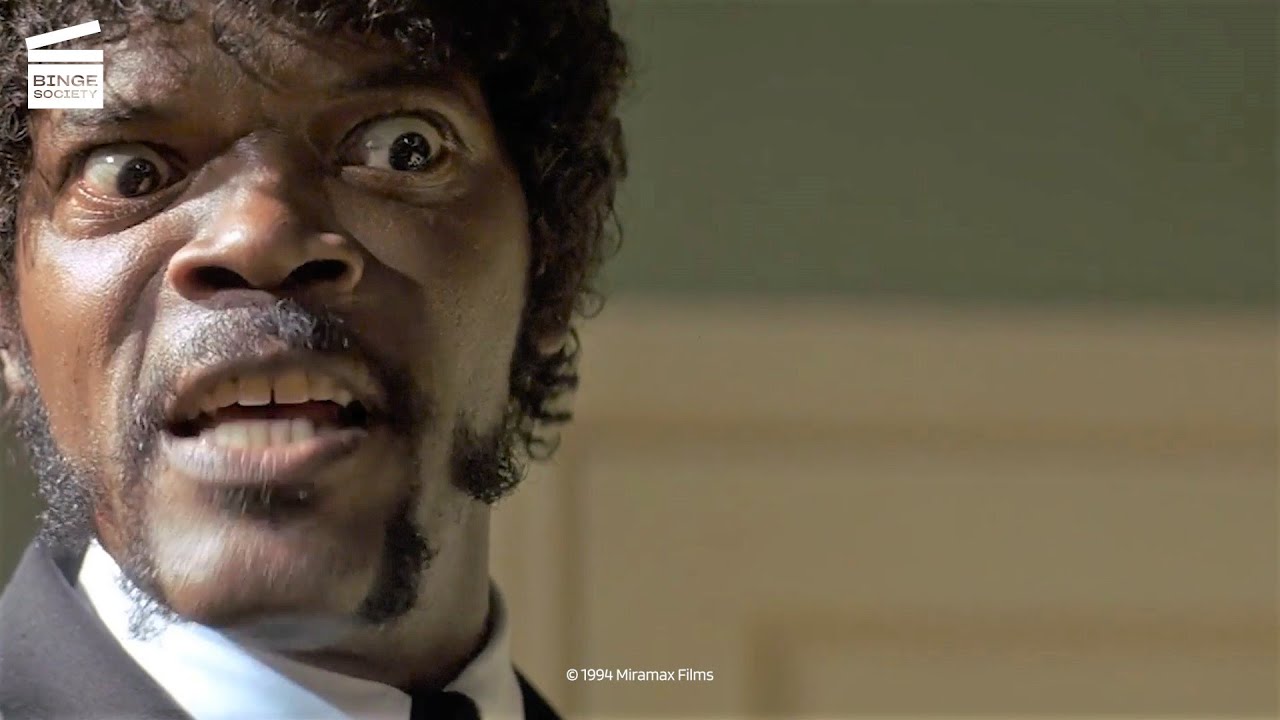
The prayer, which Hegseth called the “CSAR 25:17” — referencing the combat search and rescue mission that recovered a downed U.S. airman in Iran earlier this month — closely mirrored the iconic speech Jackson’s character Jules Winnfield delivers in the film.
Anyone who’s seen the movie would recognize it immediately.
Hegseth framed it as a prayer used by the special operations team, Sandy-1, that carried out the rescue. He described it as a reflection of Ezekiel 25:17 and invited the assembled audience to pray along with him.
The problem? Ezekiel 25:17 in the actual Bible is a single sentence about divine vengeance — nothing like what Hegseth recited.
The extended passage about shepherding the weak through the valley of darkness, striking down with furious anger, and knowing “my name is the law” was written by Tarantino, not the prophets.
It’s one of the most recognizable pieces of movie dialogue in American film history.

A Pentagon Spokesperson Claimed Critics Were “Peddling Fake News”
When the story broke and people began pointing out the obvious, the Pentagon didn’t apologize or acknowledge the mix-up.
Instead, chief spokesman Sean Parnell posted a defense on X, acknowledging the similarities to Pulp Fiction but arguing that both the movie dialogue and Hegseth’s prayer were “reflections” of Ezekiel 25:17.
This is a remarkable claim. The actual King James text of Ezekiel 25:17 reads nothing like either passage. Biblical scholars would not recognize Tarantino’s embellished Hollywood monologue as a “reflection” of that verse in any meaningful theological sense.
The verse inspired Tarantino’s creative reimagination — but that is a far cry from the passage being scripture.
Parnell declared that anyone calling it a misquotation of Ezekiel 25:17 was “peddling fake news and ignorant of reality.” The Trump administration’s media deflection playbook, deployed to cover for the Defense Secretary quoting a movie at a military prayer service.
The Mockery Was Swift and Bipartisan — Well, Sort Of
California Governor Gavin Newsom posted a response on X that paired Hegseth’s words with imagery from the film. Oh, and a “Pete Fiction” meme.
Senator Raphael Warnock of Georgia simply let the video speak for itself. Author Don Winslow called Hegseth “the worst Secretary of Defense in the history of this nation.” Tennis legend Martina Navratilova replied with a single “lol.”
Mary Trump, the president’s niece and a persistent critic of his administration, asked rhetorically who among us hasn’t mistaken Quentin Tarantino’s words for biblical scripture.
Former NBC anchor Chuck Todd offered perhaps the most precise diagnosis, writing that Hegseth had “the worst case of poser complex DC’s ever seen — and that’s saying something.”
Why This is More Than Just a Funny Story
It would be easy to treat this as a late-night comedy punchline — and it is that. SNL doesn’t return until May, so Hegseth will likely escape a cold open this week.
But the story sits inside a larger pattern that Resist Hate has been tracking throughout the Iran war. Hegseth has consistently framed Operation Epic Fury in religious terms, describing the conflict in language that blurs the line between U.S. military operations and a holy war.
He has publicly invoked Christianity as a justification for military force, compared the press to “Pharisees,” and spoken about the Iran campaign in ways that suggest sacred mission rather than strategic policy.
Against that backdrop, this incident is more than embarrassing. It reveals the hollowness at the center of that framing. The “scripture” Hegseth used to bless a military rescue mission was written by a Hollywood screenwriter for a scene about a gangster executing someone in an apartment.
The warfighters Hegseth was honoring deserved better than a prayer pulled from a movie — and the American public deserves a Defense Secretary who knows the difference.


Hegseth came to his position not as a military strategist or policy expert but as a Fox News host. He has faced consistent questions about his fitness for the role — leaked Signal chats sharing classified operational details, reports of chaos within the Pentagon’s civilian leadership, and now this.

Each incident, taken individually, might be dismissed as a gaffe. Taken together, they describe a man performing the role of Defense Secretary more than occupying it.
The Pentagon Chose This Hill
What makes this story stick is not the mistake itself — people mix up sources all the time — it’s the institutional response. The Pentagon had a choice. It could have said the CSAR prayer used by Sandy-1 was inspired by Pulp Fiction, and that Hegseth had unknowingly recited it as scripture.
That would have been embarrassing but human.
Instead, the official spokesperson for the United States Department of Defense went on the record to insist that critics were spreading disinformation, and that Tarantino’s movie dialogue is functionally equivalent to the word of God. That’s the part that isn’t funny.
The men and women of Sandy-1 carried out a real rescue mission under real danger in a real war. They don’t need their bravery laundered through a Miramax film. And the rest of us don’t need a Pentagon press operation that treats basic facts as partisan attacks.
Pete Hegseth blessed a combat rescue in the name of a fictional hitman. His spokesperson said anyone who noticed was lying.
This is where we are.
Resist Hate covers democracy, civil rights, and government accountability. If this reporting matters to you, please share it.