

Five years ago a new data center meant a ribbon cutting and a photo op. Today it means protest signs. More than 100 local communities have passed moratoriums, over 300 state data center bills were filed in the first six weeks of 2026, and campaigns have spent more than $45 million on ads mentioning them this cycle. And with a political battle like this, AI data center myths and misinformation are definitely part of it.
Some of the bad information comes from the industry and Washington. Some of it comes from people who are right to be angry but quote the wrong data. Here are nine AI data center myths, and the honest, factual information correcting them.
Myth 1: Data centers are the reason your electric bill went up.
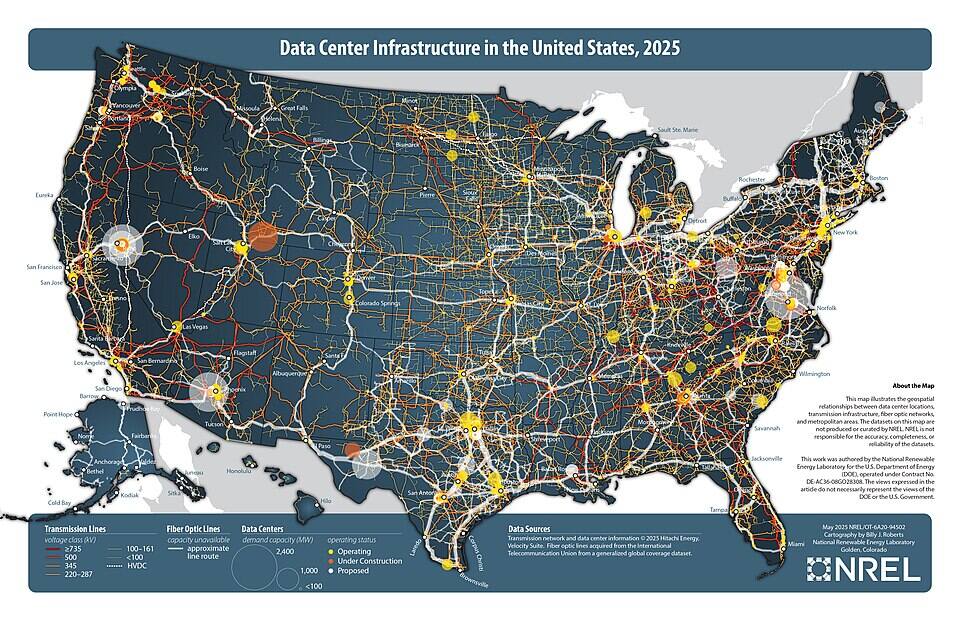
Fact: In some places, largely yes. In others, barely at all. In the PJM grid region, which serves 65 million people across 13 states, power supply costs jumped from $2.2 billion to $14.7 billion in a single year, with data centers driving nearly two-thirds of that increase.
Goldman Sachs projects a 6% bump in electricity prices through 2027, hitting lower-income households hardest because power eats a bigger share of their budget.
But research from the Electric Power Research Institute found that through 2024, data center growth actually nudged average retail prices down by spreading fixed costs across more kilowatt-hours. That flips the moment demand outpaces generation.
The real variable isn't AI, it’s whose name is on the bill.
(Catboy69 CC BY-SA 4.0)
Myth 2: Every chatbot prompt drinks a bottle of water.
Fact: That figure was a worst case, not an average. It traces to a 2024 Washington Post analysis with UC Riverside estimating that one 100-word email could consume up to 519 milliliters in a hot-climate Texas facility.
Google's own production measurement puts a median Gemini text prompt at 0.24 watt-hours and 0.26 milliliters, roughly five drops.
Google's number isn't gospel either. Researchers including UC Riverside's Shaolei Ren point out that it leaves out the water consumed generating the electricity in the first place. The per-prompt cost is genuinely tiny. Multiply it by billions.
Myth 3: Data centers are draining the country's water.
Fact: The crisis is local, not national. U.S. data centers directly consumed roughly 17 billion gallons in 2023, which is small against a public water supply moving 40 billion gallons a day. The International Energy Agency estimates AI accounts for only 15 to 20% of data center electricity demand.
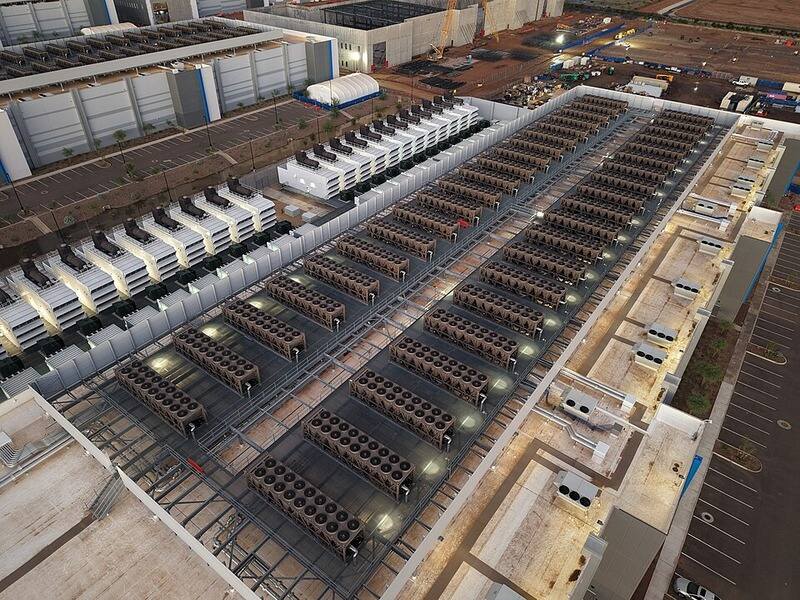
Averages don't drain anyone's aquifer, though. Specific facilities do. A single hyperscale campus can use up to 5 million gallons a day. Texas data centers were on track to use 49 billion gallons in 2025 and as much as 399 billion by 2030, and a lot of new construction is going up in drought-prone country.
Myth 4: They bring thousands of permanent jobs.
Fact: They bring dozens to a couple hundred. Economists Dany Bahar and Greg Wright built a dataset of about 1,500 facilities and compared counties that got one against counties where a project was announced and canceled.
Data processing employment rose 56% over the first decade, telecom 43%. In a typical county, that's 100 to 200 jobs. Wages didn't move. Home prices rose 2 to 5%.
A September 2026 working paper titled "Capital Without Labor" found no local employment gain at all, while a separate NBER paper found positive effects. The evidence is split. What nobody finds is the number people like Donald Trump are using in the sales pitch.
Myth 5: The tax breaks pay for themselves.
Fact: Depends entirely on who's counting. Virginia gave up $1.6 billion in sales and use tax revenue in one year, a 118% jump, according to the watchdog group Good Jobs First. The state's own legislative auditors ranked the exemption its second-best incentive, returning $6.10 in labor income per dollar.
Incentives make up about 2% of construction investment at hyperscale sites, which are built for power, land and fiber regardless. At colocation sites, incentives are 62% of the investment. States are paying most for the facilities that deliver the least.
Myth 6: The AI buildout runs on clean energy.
Fact: Some of it runs on unpermitted gas turbines. xAI's Colossus 2 in Memphis is powered from across the state line by 59 gas turbines in Southaven, Mississippi. Those turbines produce more nitrogen oxides than any facility in Tennessee, Mississippi or Arkansas, outpacing TVA's Cumberland coal plant, and will release 7 to 8 million tons of CO2 equivalent a year.
The NAACP, represented by the Southern Environmental Law Center and Earthjustice, sued under the Clean Air Act. EPA closed the loophole in January 2026 that let the company call industrial turbines temporary equipment.
University of Tennessee modeling found the turbines added little to ambient neighborhood pollution, which sounds reassuring until you read the next sentence: the baseline was already above the national limit for fine particulates, in a county the American Lung Association graded F for ozone.
Myth 7: Somebody made sure the grid could handle this.
Fact: The plan has been to keep old coal plants running and send you the invoice. The Energy Department has issued more than 20 emergency orders under the Federal Power Act forcing plants to stay open past retirement.
IEEFA calculated at least $300 million in extra ratepayer costs by mid-May, climbing more than $30 million a month. Michigan's J.H. Campbell plant alone ran up $295 million, billed to ratepayers across 11 states. On September 11, 2026, the D.C. Circuit rejected the department's claim of emergency authority.

Myth 8: All those announced gigawatts are real.
Fact: Most of them aren't. Utilities call them phantom projects. In a Capgemini survey of more than 600 electricity executives, 67% described the requests they receive as phantom load, and about 19% never become real demand.



Developers file the same project with multiple utilities because filing is cheap and losing a queue spot is expensive. Wood Mackenzie counted more than 1,000 gigawatts requested nationally against roughly 298 that utilities are on pace to actually commit to.
Utilities build substations and transmission to match the forecast. When the project evaporates, the concrete doesn't.
Myth 9: This is a left-wing issue.
Fact: It is one of the least partisan issues in America right now. A June 2026 Reuters/Ipsos poll found 77% of Americans worried about data centers raising electricity costs, with two-thirds of Democrats and half of Republicans saying they'd oppose one nearby.
The National Republican Senatorial Committee warned in an internal memo that data centers have become a sleeper issue for the whole cycle. Ohio Republican Vivek Ramaswamy suggested the companies pay their neighbors' power bills. Bernie Sanders and Alexandria Ocasio-Cortez introduced a federal moratorium bill in March.
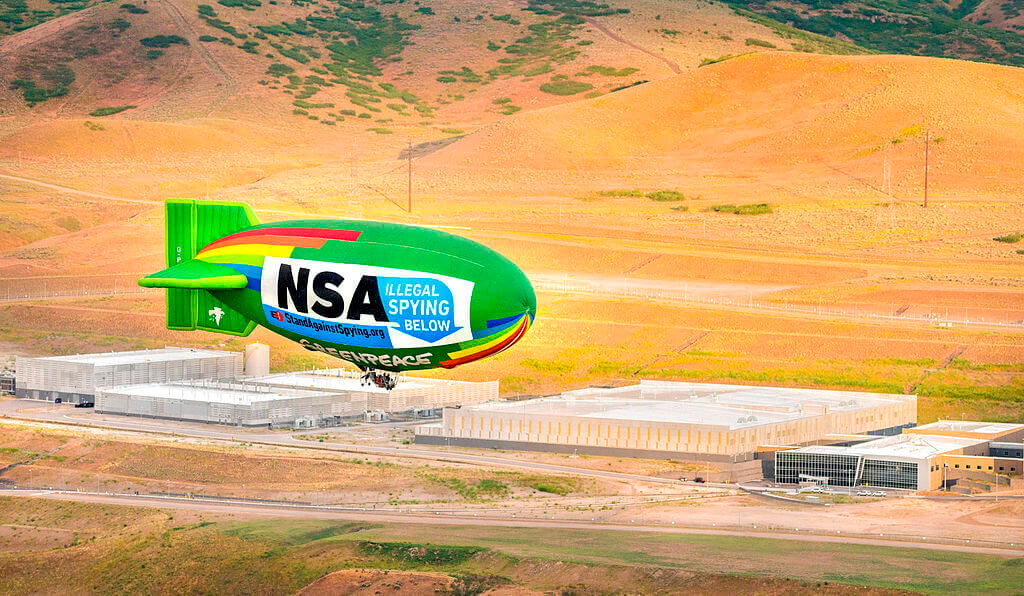
Where all of these decisions are made
Not in a viral post. In rate cases, zoning hearings and public utility commission dockets that nobody covers. Ohio now forces large users to pay 100% of their buildout costs. Virginia created a separate rate class for them starting in 2027.
South Dakota requires reimbursement for costs they cause, including the abandoned infrastructure if they walk away. Texas made them help pay for interconnection. New York passed a one-year construction pause.
Nobody serious is asking you to be against computers. The question on the table is harder to dodge: when the power bill comes, does it go to the people who own the servers, or to you?