
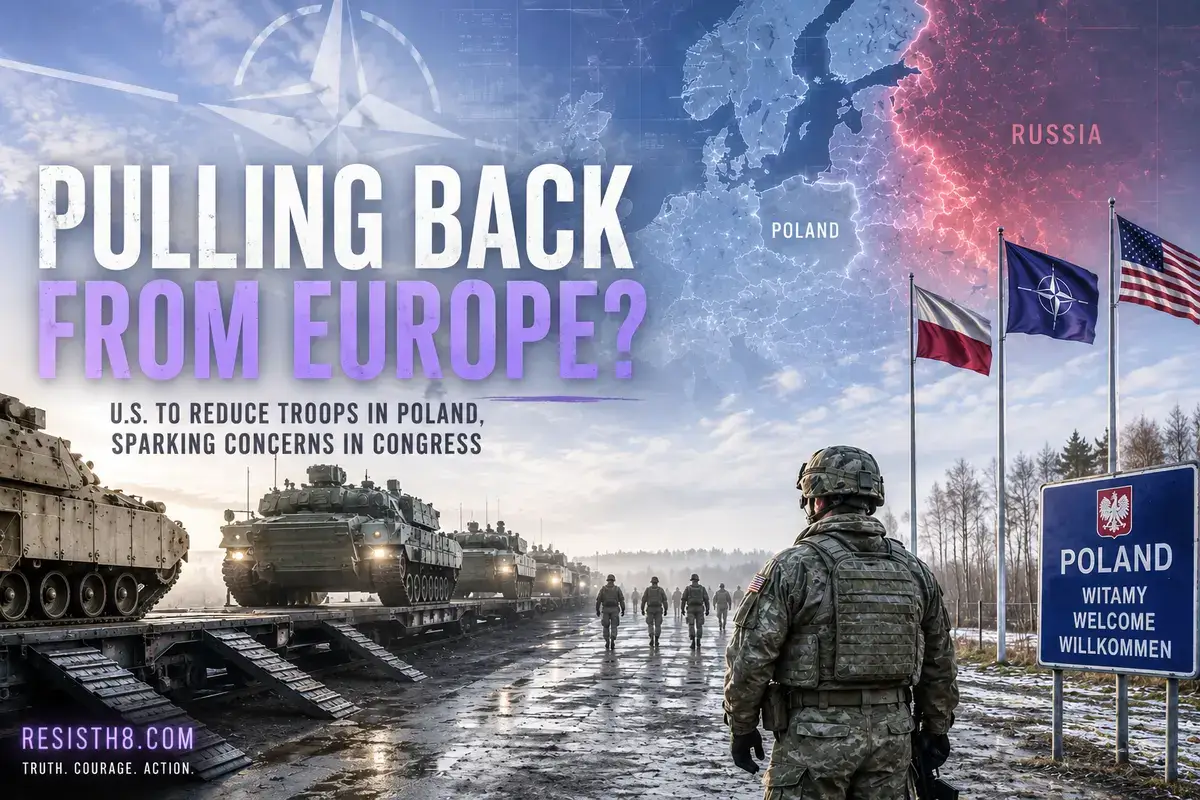

The U.S. withdrew troops from Germany. Then, during a routine rotation, deployed 4,000 troops to Poland. There were soldiers already on the ground in Poland. Equipment was already in port. Families had said their goodbyes at Fort Hood.
Then, with almost no warning, the Pentagon pulled the plug — and nobody in Congress, in Warsaw, or even in U.S. European Command got a heads-up.
On Friday morning, Army Secretary Dan Driscoll and acting Army Chief of Staff Gen. Christopher LaNeve sat in front of the House Armed Services Committee and admitted they had been informed of the decision “just a couple of days ago.”
The order came down from Defense Secretary Pete Hegseth’s office. The 2nd Armored Brigade Combat Team, 1st Cavalry Division — roughly 4,000 soldiers from Fort Hood, Texas — would not be carrying out its nine-month rotation in Eastern Europe after all.
The deployment had been billed as a deterrent against Russian aggression. At a casing ceremony on May 1, the 1st Cavalry Division’s commander told his soldiers that “when an armored brigade combat team deploys forward, it sends a clear and unmistakable signal.”
Two weeks later, the only signal being sent was the sound of soldiers being told not to leave for the airport.
A Decision Made in the Dark
According to officials who spoke to the Associated Press, the rollout was chaotic in a way that bordered on cruel. Some soldiers had already arrived in Poland and had to be sent back.
Others were called shortly before heading to the airport in Texas and told not to bother. A U.S. military official based in Europe said they were summoned to a meeting on Monday with only 20 minutes’ notice to discuss what was happening.
Most of the brigade’s equipment had already crossed the Atlantic and was sitting in European ports.
This wasn’t a routine planning adjustment. Long-scheduled deployments are rarely canceled, and almost never after they have already begun. The Pentagon offered no public explanation. Press officers referred reporters to Hegseth’s office, which has said little beyond a written statement claiming the decision followed “a comprehensive, multilayered process.”
The soldiers and their families learned the news the way many learn bad news these days — through texts to friends and loved ones, hours before anyone in uniform had been officially told.
Poland Got the News From a Phone Call
Rep. Don Bacon, a Republican from Nebraska and a retired Air Force brigadier general, told the committee that Polish officials called him on Thursday because they couldn’t get answers from anyone else.

They had not been contacted by Hegseth. They had not been briefed by the State Department. They simply read about it.
“They called me yesterday, they did not know, they were blindsided,” Bacon said. “These are some of our best allies, and they had no idea. They still don’t know what the plan is.”
Bacon called the cancellation “reprehensible” and “an embarrassment to our country.” He went further, calling it “a slap in the face to Poland,” “a slap in the face to our Baltic friends,” and “a slap in the face to this committee.”
Poland is the country that has been carrying the heaviest burden in NATO’s eastern flank for years. Warsaw will spend nearly five percent of its GDP on defense this year — a figure Trump himself has demanded of allies. Polish soldiers train alongside American soldiers.
Polish ports unload American equipment. Polish citizens have absorbed the costs of being the bulwark closest to Russian and Belarusian territory.
And the thank-you they received this week was a phone call from a Republican congressman because their supposed ally couldn’t be bothered to pick up the phone.
Trump’s Iran Grudge Comes Home to Roost
The cancellation comes roughly two weeks after Trump ordered the withdrawal of 5,000 American troops from Germany. According to defense officials cited by multiple outlets, the troop reductions are tied directly to Trump’s anger that European nations refused to participate in his war with Iran.
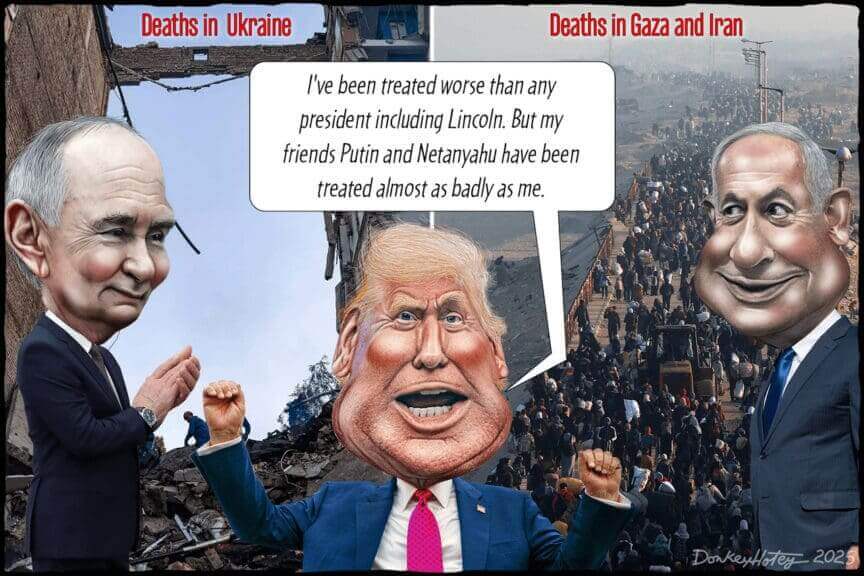
That is the throughline that connects what would otherwise look like scattered decisions: a president who treats American military deployments as personal leverage, who uses the safety of allied nations as a chip to be played, and who punishes friends for not joining a war they had every right to refuse.
Russian forces this week launched one of the deadliest strikes on Kyiv since the war began. That is the moment the Pentagon chose to scale back the American presence in the region. Lawmakers from both parties said openly during Friday’s hearing that the move sends exactly the wrong message to Vladimir Putin.
Congress Was Cut Out — and Even Republicans Are Furious
Rep. Mike Rogers, the Alabama Republican who chairs the House Armed Services Committee, opened the hearing by telling Driscoll and LaNeve flatly that the committee was “not happy.”



Federal statute requires the Defense Department to consult with Congress before making changes to force posture in European Command. That consultation did not happen.
“We don’t know what’s going on here, but I just tell you we’re not happy with what’s being talked about, particularly since there’s been no statutory consultation with us,” Rogers said.
He went on to warn that the committee would “mandate that the department follow the statutory minimums” and “impose a pain” if the Pentagon kept ignoring the law.
Rep. Austin Scott, a Georgia Republican, read aloud a Pentagon statement claiming the decision involved input from leaders across the chain of command.
“I don’t see how that statement can be true,” Scott said, after LaNeve admitted he didn’t even know what day the order had been signed.
Democratic Rep. Joe Courtney of Connecticut said the decision telegraphs to American adversaries that the United States is scaling back its ready combat power in the region.
Sen. Jack Reed, the top Democrat on the Senate Armed Services Committee, noted earlier this week that the Army is facing a budget shortfall of at least $2 billion — driven in part by Trump’s domestic deployments of the National Guard to Washington, D.C., and Army units to the southern border.
So while soldiers were being yanked from a NATO mission, those same soldiers’ colleagues were being pulled into political theater on American streets.
What This Actually Means
Strip away the procedural language and what happened is straightforward. The President of the United States cut Congress out of a major national security decision. He blindsided one of America’s closest allies.
He moved soldiers and their equipment across an ocean and then turned them around because European leaders declined to back his war. He left U.S. commanders in Europe scrambling to find out what their own government was doing.
The damage isn’t just diplomatic. It is the credibility of every commitment the United States has ever made to an ally. NATO members watching this unfold are doing the math on what American protection is actually worth.
Russia is doing the same math, and arriving at a more encouraging answer.
There is a version of foreign policy worth debating where the United States meaningfully reduces its overseas footprint, invests in diplomacy, and asks allies to take more responsibility for their own defense. That is not what happened this week.
What happened this week was a petty act of retribution, executed by a Defense Secretary who couldn’t be bothered to make a phone call, ordered by a president who treats the U.S. military as a tool for settling personal scores.
The soldiers caught in the middle of it deserved better. So did the Poles. So did the rest of us.