
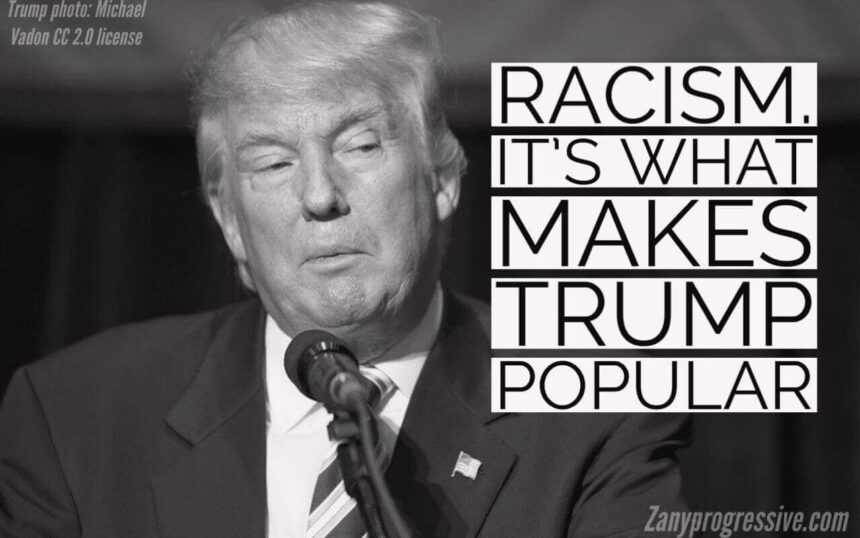

Racism is Why Trump is So Popular

Trump’s popularity with his base isn’t the result of economic anxiety, as many claimed in 2016. It’s about race and demographics.

James Risen
James Risen
James Risen
The Intercept
Jim Risen, a best-selling author and former New York Times reporter, is The Intercept’s Senior National Security Correspondent, based in Washington, D.C. Risen also serves as...
- The Intercept

Trump’s popularity with his base isn’t the result of economic anxiety, as many claimed in 2016. It’s about race and demographics.

To understand the rise of Donald Trump, you don’t need to go to a diner in the Midwest or read “Hillbilly Elegy,” J.D. Vance’s memoir.

You just need to know these basic facts:

In 1980, white people accounted for about 80 percent of the U.S. population.

In 2024, white people account for about 58 percent of the U.S. population.

Trump appeals to white people gripped by demographic hysteria. Especially older white people who grew up when white people represented a much larger share of the population. They fear becoming a minority.

While the Census Bureau says there are still 195 million white people in America and that they are still the majority, the white population actually declined slightly in 2023, and experts believe that they will become a minority sometime between 2040 and 2050.

Every component of the Trump-Republican agenda flows from these demographic fears.

The Trump phenomenon and the surge of right-wing extremism in America was never about economic anxiety, as too many political reporters claimed during the 2016 presidential campaign. 

It was, and still is, about race and racism.

Continue reading on The Intercept

See more of our content in Google search results!

Share This Article
James Risen
The Intercept
Jim Risen, a best-selling author and former New York Times reporter, is The Intercept’s Senior National Security Correspondent, based in Washington, D.C. Risen also serves as director of First Look Media’s Press Freedom Defense Fund, which is dedicated to supporting news organizations, journalists, and whistleblowers in legal fights in which a substantial public interest, freedom of the press, or related human or civil right is at stake. Risen was himself a target of the U.S. government’s crackdown on journalists and whistleblowers. He waged a seven-year battle, risking jail, after the Bush administration and later the Obama administration sought to force him to testify and reveal his confidential sources in a leak investigation. Risen never gave in, and the government finally backed down. As a New York Times reporter, Risen won the 2006 Pulitzer Prize for National Reporting for his stories about the National Security Agency’s domestic spying program, and he was a member of the reporting team that won the 2002 Pulitzer Prize for explanatory reporting for coverage of the September 11 attacks and terrorism. Risen began his career as a reporter at the Fort Wayne Journal-Gazette, and later worked at the Miami Herald, the Detroit Free Press, and the Los Angeles Times. He joined the New York Times in 1998, where he remained until the summer of 2017. He is the author of four books: “Wrath of Angels: The American Abortion War”; “The Main Enemy: The Inside Story of the CIA’s Final Showdown With the KGB”; “State of War: The Secret History of the CIA and the Bush Administration”; and “Pay Any Price: Greed, Power and Endless War.”