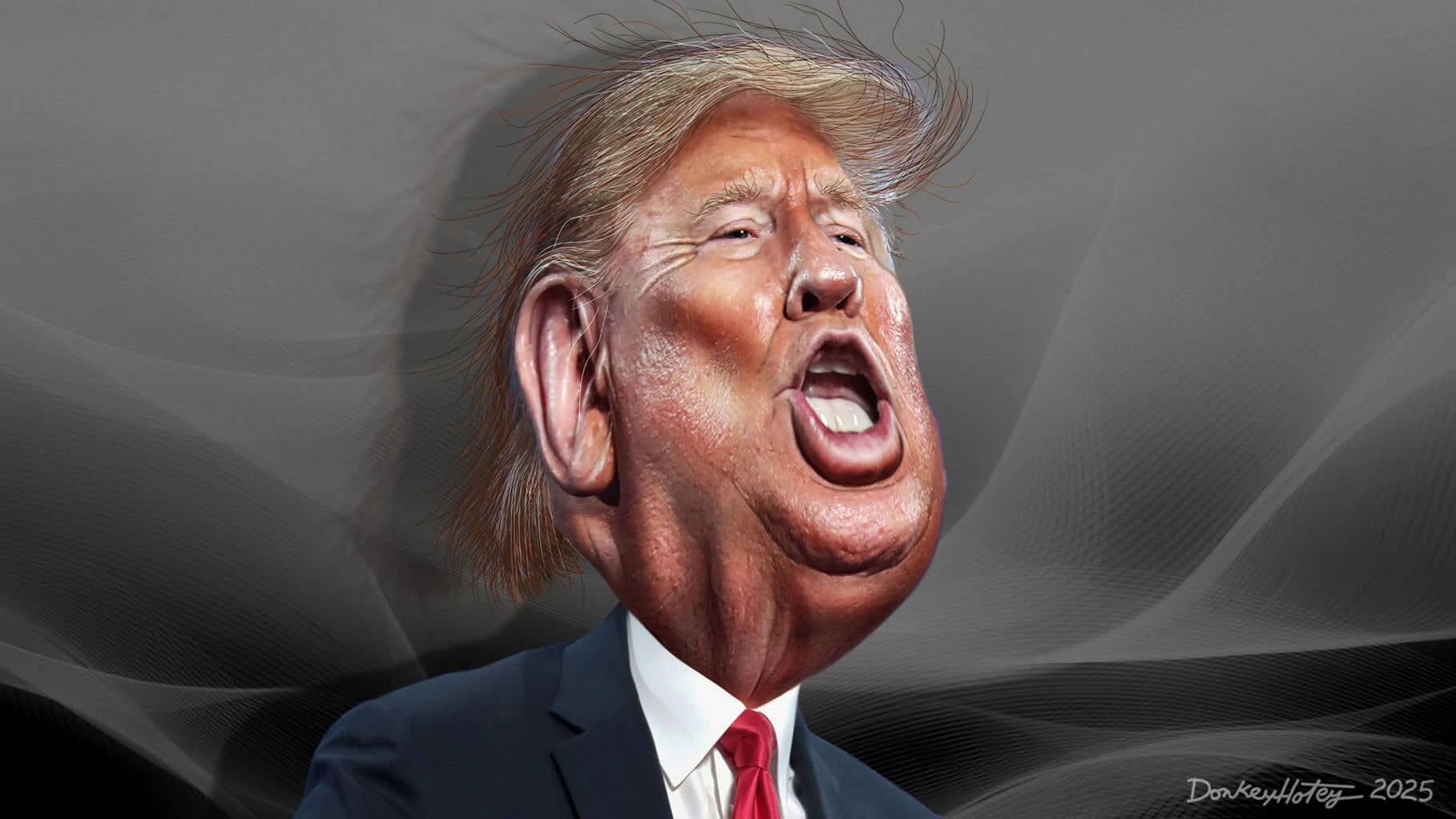

Donald Trump is a wild card in Latin America. Who will he galvanize more? His natural allies, including leaders who share many of his culture-war obsessions? Or politicians and activists who see in Trump the long history of U.S. conquest made flesh, who bristle at his threats to seize the Panama Canal and bomb fentanyl labs in Mexico?
In trying to answer these questions, it’s helpful to take a moment to recall that Latin America, not too long ago, defied another controversial U.S. president on matters related to war and trade: George W. Bush.
By the time the Bush administration was gearing up for its 2003 invasion of Iraq, Latin America was beginning a remarkable run of elections. Leftists were coming to power in nearly every country south of Panama, many with ambitious agendas and outsized personalities. Among them were Hugo Chávez in Venezuela, Luiz Inácio Lula da Silva in Brazil, Néstor Kirchner in Argentina, and Evo Morales in Bolivia.
For a region that had long been under the sway of Washington, a run of dissent to Bush — dated, say, from Lula’s first election to presidency in 2002 to Chávez’s death from intestinal cancer in 2013 — was extraordinary and, for a time, extraordinarily successful. In Latin America, diplomats talked about a new “polycentric world,” while Beltway think tanks like the Council on Foreign Relations pronounced the Monroe Doctrine “obsolete.”
A new generation of reactionaries draw energy from the tactics that animate Trumpism in the U.S.
The tide eventually turned. Where more traditional conservatives had found it hard to compete at the polls against politicians like Lula and Chávez, a new generation of reactionaries began to find their footing, drawing energy from the tactics and issues that animate Trumpism in the U.S. — an obsession with gender orthodoxy, a defense of patriarchy and Christian supremacy, and a love of cryptocurrency.
Latin America’s New Right stands opposed to “wokeismo,” used, as it is in the U.S., as a catchall for a range of social policies aimed at lessening class, gender, and racial inequality.