

If you've seen "super flu" in the headlines this month, here's the good news first. It's not a brand-new disease, and so far there's no sign it's deadlier than a normal flu.
The not-so-good news: it's spreading fast, it showed up early, and this year's flu shot isn't a perfect match for it. That makes getting vaccinated more important, not less.
What the "Super Flu" Variant Is
The nickname refers to a version of the flu virus called H3N2 subclade K. There are two main types of influenza A, and H3N2 is one of them. Flu viruses mutate constantly. When enough small changes pile up, scientists give the new branch its own label. Subclade K is one of those branches.
It has grown quickly in several countries since August. Experts at Harvard's Belfer Center say current data doesn't show that it causes more severe illness than other seasonal flu strains. They call it a story about how the virus evolves and spreads, not a true "super flu."
So why the worry? Seasons dominated by H3N2 tend to be rough. WHO Europe's regional director, Hans Kluge, warned that H3N2 seasons usually bring more severe illness than H1N1 seasons. Older adults are hit especially hard.
Why This Flu Season Started Early
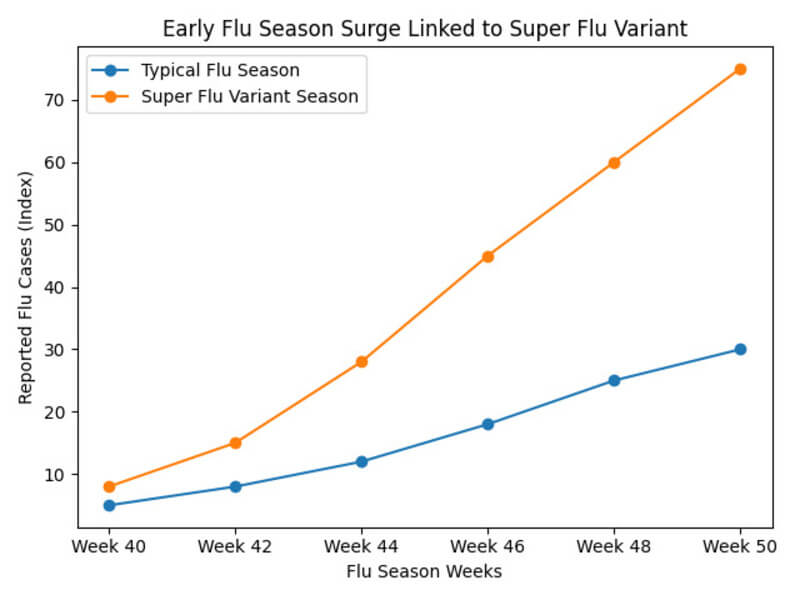
Flu usually ramps up in the U.S. in December and peaks later in winter. This year, Europe saw cases climbing unusually early, in October and November, and subclade K was behind much of it.
In England, most of the flu viruses scientists have sequenced this season belong to subclade K. The same thing is happening here. Subclade K is now the dominant version of H3N2 in the U.S., and flu activity is rising across the country.
As of mid-December, the CDC estimates the U.S. has already seen at least 4.6 million flu illnesses, 49,000 hospitalizations and 1,900 deaths this season. Three children have died. And the holidays, with all that travel and family time, haven't even hit yet.
Does the Flu Shot Still Work?
Yes. It's just not a perfect fit this year.
The World Health Organization picks the strains for each year's vaccine months in advance. Subclade K picked up its key changes after those choices were made. Lab tests in England found that antibodies made against this year's vaccine strain react less strongly to subclade K.
But real-world results tell a better story. The UK Health Security Agency found this season's vaccine is 70% to 75% effective at keeping kids ages 2 to 17 out of the hospital, and 30% to 40% effective for adults. Those numbers fall within the normal range for a flu shot.
A shot might not stop you from catching the flu. But it can be the difference between a miserable week on the couch and a stay in the hospital.
Antiviral medicines like Tamiflu (oseltamivir) still work, too. So far, surveillance hasn't found signs that subclade K resists them. If you get sick, especially if you're high-risk, call your doctor early. These drugs work best when started soon after symptoms begin.
Symptoms to Watch For
Subclade K looks like regular flu:
- Fever and chills
- Cough and sore throat
- Headache and body aches
- Exhaustion
- Stuffy or runny nose
Most people recover within a week or two. The people most likely to end up in the hospital are young children, adults 65 and older, pregnant people, and anyone with a chronic health condition like asthma, diabetes, or heart disease.
Get medical help right away if you or a loved one has trouble breathing, chest pain, confusion, or a fever that comes back after getting better.
Where Are the Flu Shot Campaigns?
In a normal year, federal health agencies would be all over TV and social media right now, urging people to get their shots. This year, it's been a lot quieter.
Back in February, during one of the worst flu seasons in years, Health Secretary Robert F. Kennedy Jr.'s HHS ordered the CDC to shelve promotions for several vaccines, including its "Wild to Mild" flu shot campaign.
HHS said it wanted the message to focus on "informed consent." Around the same time, the FDA canceled the expert advisory meeting that normally helps choose the strains for the next flu vaccine.
Then in June, Kennedy removed all 17 members of the CDC's vaccine advisory committee, the panel that makes vaccine recommendations for the whole country.
Kennedy has a long record of casting doubt on flu shots. Now a fast-moving strain is here, and the people who most need a reminder to get vaccinated aren't hearing much from their own government.
How to Protect Yourself and Your Family
- Get your flu shot if you haven't yet. It's not too late, and it takes about two weeks to kick in.
- Stay home when you're sick, and keep sick kids home from school.
- Wash your hands often with soap and water.
- Cover coughs and sneezes with a tissue or your elbow.
- Wear a mask in crowded places or around vulnerable people, especially during holiday gatherings.
- Call your doctor early if you're high-risk and start feeling sick.
FAQs
What is a super flu variant?
It's a nickname for H3N2 subclade K, a mutated branch of a common seasonal flu virus. It isn't a new disease, and current data doesn't show it's more severe. It does spread quickly, and it started the season early.
Is the flu vaccine effective against it?
Yes. The match isn't perfect, but early data from England shows the vaccine is 70% to 75% effective at preventing hospital visits in children and 30% to 40% in adults. That's within the normal range.
Who is most at risk?
Children under 5, adults 65 and older, pregnant people and people with chronic conditions like asthma, diabetes or heart disease face the highest risk of serious illness.
How can I protect my family?
Get everyone 6 months and older vaccinated, keep sick family members home and away from vulnerable relatives, wash hands often and consider masks in crowded places. If a high-risk family member gets sick, call their doctor right away about antiviral medicine.