


Police and prosecutors in at least four European countries are investigating Epstein and his co-conspirators following the release of some of the files. To move those cases forward, they need evidence that’s sitting in a filing cabinet in Washington.
For a year now, they say, they've asked the U.S. Justice Department for it and haven’t gotten anything back.
That's the finding of a Washington Post investigation published September 9 by reporter Maegan Vazquez, who interviewed law enforcement officials across the continent. One year after the first batch of files went public, the Justice Department has yet to respond to their formal requests for help.

What They're Requesting
There’s a boring-sounding process at the center of this story, but it matters, so here’s the explanation.
When police in one country need evidence held by another country — documents, bank records, witness testimony — they can’t just call and ask.
They file what’s called a mutual legal assistance request. It’s a formal government-to-government ask, governed by treaty.
The receiving country reviews it, decides whether it’s legitimate, and either hands over the material or doesn’t.
Europe has filed these requests. The DOJ hasn’t responded.
Jeffrey Epstein Investigations: Country by Country
Poland
Prime Minister Donald Tusk announced in February that Poland would investigate the Epstein files, including whether Epstein had ties to Russian intelligence.
The National Prosecutor’s Office opened a human trafficking investigation in March and filed its request in April, asking for unredacted documents that involve anything Polish.
Spokesman Przemysław Nowak says Warsaw is still waiting.
Norway
Three well-known Norwegians face corruption charges tied to their relationships with Epstein: former Prime Minister Thorbjørn Jagland and former diplomats Terje Rød-Larsen and Mona Juul.
All three deny wrongdoing. Norway’s economic crimes unit, Økokrim, wants records from the DOJ and investigative steps taken at the International Peace Institute in New York, where Rød-Larsen once served as president.
State prosecutor Marianne Bender said her office is in contact with the department but the request hasn’t been approved. “This is very unfortunate for the Norwegian investigation,”she said.
Latvia
The State Police have a criminal investigation open and have already identified one Latvian victim.
A police spokeswoman said they’ve sent several requests to U.S. authorities. None have been answered.
Britain
London submitted a formal request for unredacted files after informal conversations with the DOJ went nowhere.
British police had already moved: Andrew Mountbatten-Windsor, the former Prince Andrew, was arrested in February on suspicion of misconduct in public office and released under investigation.
Four days later, Lord Peter Mandelson, the former UK ambassador to the United States, was arrested on the same suspicion and released on bail.

Both deny wrongdoing. The Telegraph reported last month that the DOJ and FBI still hadn’t responded to Britain’s request.
Germany’s federal police say they’ve asked the FBI to loop them in on anything with a German connection. Prosecutors in France, Turkey, and Lithuania have investigations open too, according to Forbes.
The DOJ’s Excuse
The department says it doesn’t comment on the status of these requests. Pressed by the Telegraph last month, a spokesperson said the DOJ “has not refused to assist any jurisdiction investigating potential criminal conduct related to Jeffrey Epstein” and remains committed to cooperating.


Both things can be true. Nobody has to sign a piece of paper saying “request denied” for an investigation to die. Silence does the same job.
There are real reasons these requests move slowly. They’re legally complex, they involve victim privacy, and material tied up in active litigation can stall for months.
A 2021 inspector general report found the DOJ office that handles foreign requests was short-staffed, buried in cases, and running on outdated technology.
A former lawyer in that office told the Post the difficulty only compounds when the records are voluminous and the redactions are contested.
But slow is a description, not an explanation. Poland filed in April. Norway is still waiting. Latvia has sent several requests.
The Same Wall, at Home
Americans trying to get these files have run into the same brick wall.
Congress passed the Epstein Files Transparency Act — Public Law 119–38 — after lawmakers complained the first release was gutted.
Months later, Rep. Laura Friedman went to DOJ headquarters, reviewed what she’d been told were unredacted files, and found hundreds of pages still completely blacked out.
Rep. Jamie Raskin went to DOJ headquarters to view the unredacted documents and was shocked at what he saw in the files.
Rep. Nancy Mace had to go around the department entirely, writing directly to the U.S. Attorney in Manhattan to demand an unredacted 2019 memo on Epstein’s potential co-conspirators.
Then there’s New Mexico. Attorney General Raúl Torrez sued the Justice Department in August over its refusal to hand over unredacted records for the state’s investigation into Zorro Ranch, Epstein’s 27,000-square-foot compound outside Santa Fe.
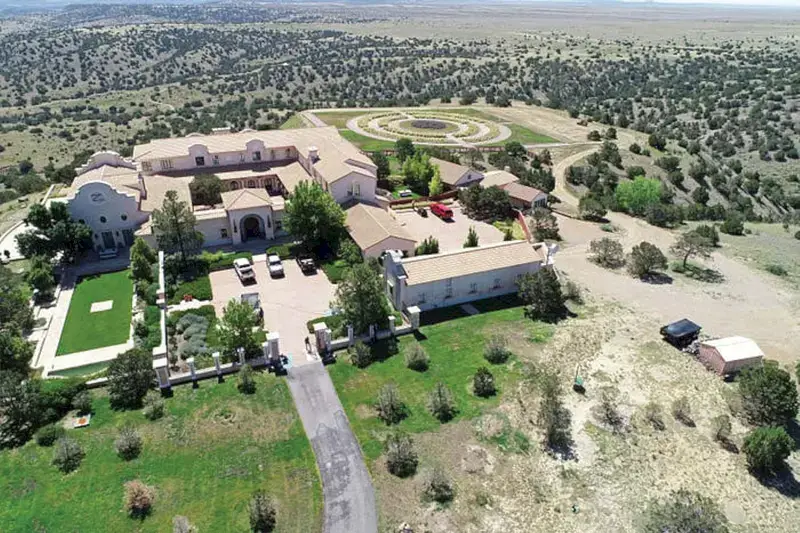
The complaint says federal prosecutors asked New Mexico to stand down back in 2019 and promised to share what they had when they were finished. They never did.
Delay, the state argued, “prolongs and compounds the suffering of survivors.”
The DOJ's response to New Mexico rested on victim privacy: “Protecting victim privacy remains a top priority for the Department.”
Who’s Waiting
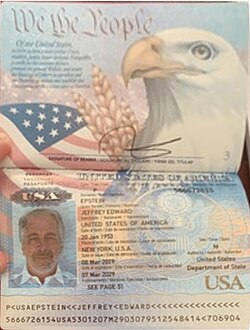
Strip out the acronyms and the legal jumbo jumbo and here’s what’s left.
A woman in Latvia has been identified as one of Epstein’s victims. Her case exists. Investigators have her file open.
The evidence that could move it forward is in the United States, and the answer she is getting, through her own police force, is nothing at all.
Epstein died in a federal jail cell in August 2019. Ghislaine Maxwell was convicted in 2021 and is serving 20 years.
Not one new charge has come out of the U.S. file release.
Every remaining path to accountability for the men in Epstein’s orbit now runs through foreign courts — and every one of those courts is waiting on a phone call from Washington they haven’t received.
The Justice Department says it isn’t refusing anyone. Survivors have waited decades. The DOJ has repeatedly let them down. It’s time the survivors of Jeffrey Epstein get the justice they deserve — even if it takes another country to give it to them.