

A security guard is dead, 198 Russian workers are fleeing the country, and the world’s nuclear watchdog is begging for restraint.
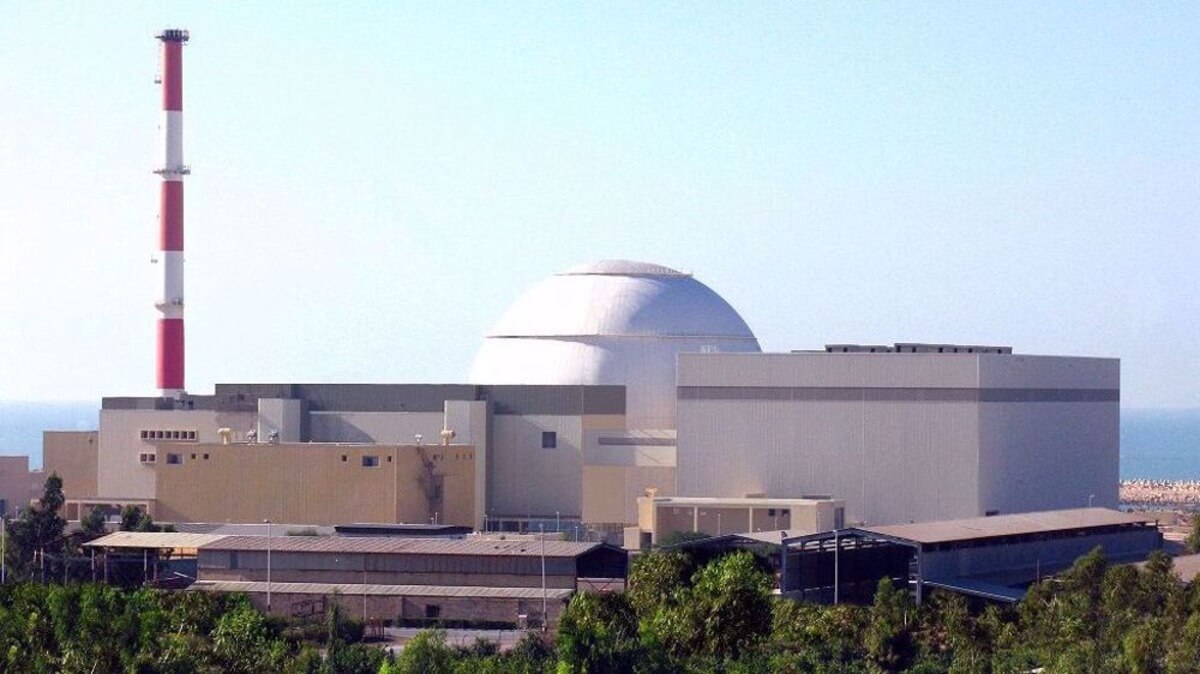
Saturday’s strike near Iran’s Bushehr nuclear power plant marks the fourth time U.S. and Israeli forces have targeted the facility since the war began on February 28 — and it comes just two days before Trump’s self-imposed deadline to begin destroying Iran’s entire energy grid.
This isn't the first time a nuclear facility has been targeted. The WHO recently issued guidance on what to do in the event of a nuclear disaster.
A Guard Killed, a Building Shattered
The projectile struck near the perimeter fence of the Bushehr complex at approximately 8:30 a.m. local time Saturday morning. A security guard — a man whose job was to protect a nuclear facility, not fight a war — was killed by shrapnel.
A building on the site was damaged by the blast wave. Iran’s Atomic Energy Organization confirmed the impact but said the main reactor was not hit and electricity generation continues.
The International Atomic Energy Agency, the global body tasked with preventing nuclear disasters, confirmed the strike and issued a statement: Nuclear power plant sites “must never be attacked.”
Director General Rafael Grossi called for “maximum military restraint” and invoked the agency’s seven principles for protecting nuclear facilities during armed conflict — principles that were developed in response to the crisis at Ukraine’s Zaporizhzhia plant.
That detail matters, and Iran’s Foreign Minister Abbas Araghchi made sure no one missed it. He pointed directly to the international outrage that erupted when Russian forces attacked the Zaporizhzhia nuclear plant in Ukraine — and asked, essentially, where that outrage is now.
250,000 People Live Here
Bushehr is not a remote military installation sitting in the desert. It’s Iran’s only operational nuclear power plant, located in a city of roughly 250,000 people on the Persian Gulf coast.
The facility generates about 1,000 megawatts of power — enough to supply hundreds of thousands of homes — and has been operational since 2011.
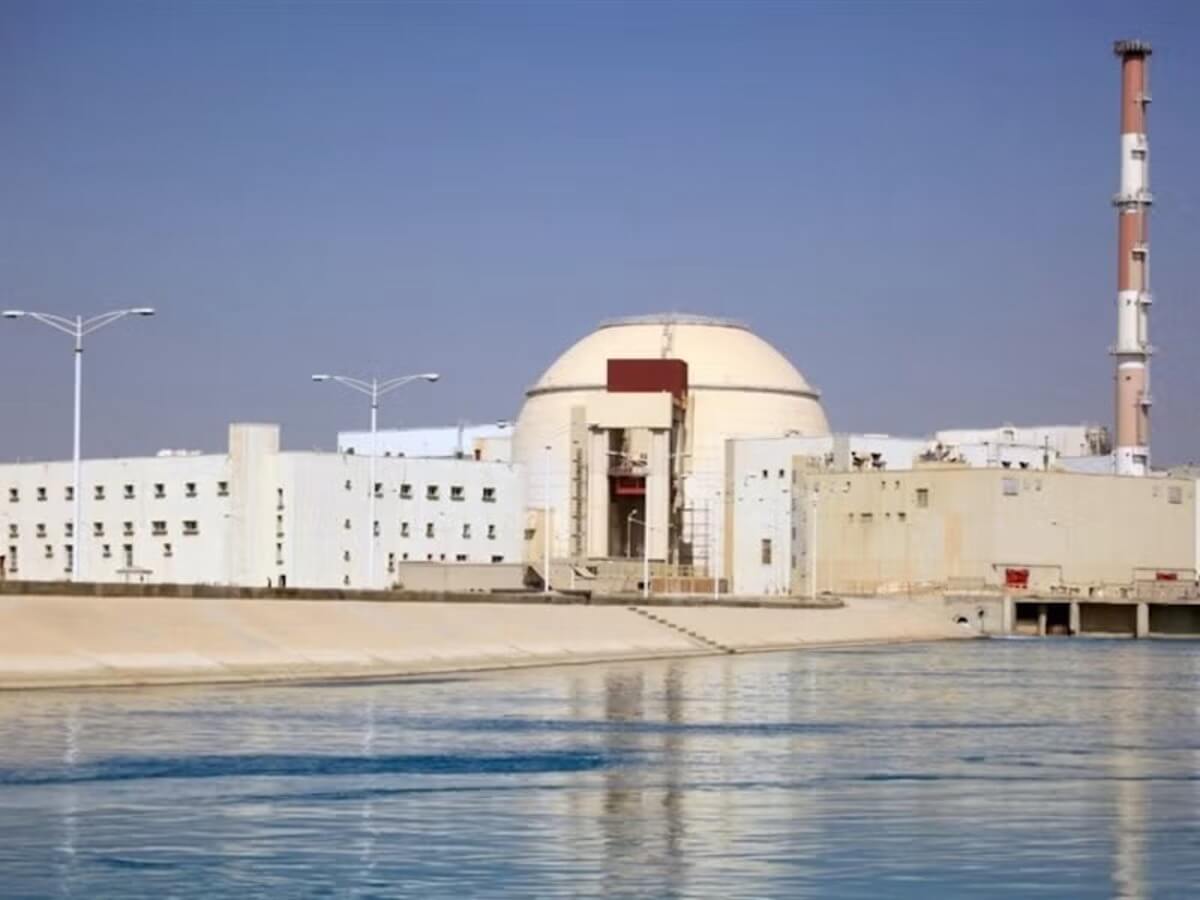
Russia’s Rosatom helped build it and has been actively constructing two additional reactor units at the site.
That construction is now frozen. And the Russian workers are leaving. Rosatom chief Alexei Likhachev confirmed Saturday that 198 staff were evacuated by bus toward the Iranian-Armenian border in the largest single wave of personnel withdrawal since the war began. Evacuations of Russian staff had already been underway, but Saturday’s strike accelerated the urgency. A previous wave had already moved approximately 250 employees and their families out of the country.
Araghchi issued a warning that deserves far more attention than it’s received: any radioactive contamination from Bushehr wouldn’t threaten Tehran, which sits hundreds of miles to the north.
It would devastate the capitals of the Gulf Cooperation Council countries — the UAE, Saudi Arabia, Qatar, Bahrain, Kuwait, and Oman — whose populations live directly across the Persian Gulf from the facility.
The Petrochemical Targets
Saturday’s strikes weren’t limited to Bushehr. U.S. and Israeli forces also hit multiple petrochemical facilities in Iran’s southern Khuzestan province, a critical energy hub.


Explosions rocked the Mahshahr Special Petrochemical Zone, hitting the Fajr, Rijal, and Amirkabir complexes. The state-run Bandar Imam petrochemical complex, which produces liquefied petroleum gas, polymers, and other chemical products, sustained damage.
At least five people were injured, and Iranian authorities ordered a complete evacuation of all active industrial units in the area.
The targeting pattern tells its own story. These aren’t military installations. They’re industrial facilities that employ thousands of workers and supply energy and materials to the civilian economy.
Two Days Until the Deadline
All of this is unfolding against a ticking clock. President Trump set an April 6 deadline — this Monday, at 8 p.m. Eastern — for Iran to reopen the Strait of Hormuz and accept a U.S. peace proposal.
If those conditions aren’t met, Trump has said he will begin systematically destroying Iran’s power plants, energy infrastructure, and potentially its desalination facilities.
International law experts have already said the quiet part out loud: deliberately targeting civilian power infrastructure constitutes collective punishment, which is prohibited under the Geneva Conventions.
Amnesty International called Trump’s threats a promise to commit war crimes. When Russia struck Ukraine’s energy grid, the International Criminal Court issued arrest warrants.



The legal framework doesn’t change because the attacker is the United States.
The Strait of Hormuz, which Iran blockaded in retaliation for the February 28 invasion, carries more than one-fifth of the world’s oil supply. Its closure has sent oil prices soaring past $100 per barrel and rattled global markets.
Trump’s calculus appears to be a coercive trade: you remove your economic leverage, or I remove your ability to keep the lights on for 88 million people.
The Hypocrisy You’re Not Supposed to Notice
There is a word for attacking a civilian nuclear power plant in a populated city four times in five weeks, and it is not “self-defense.” The international community spent months expressing horror at Russian strikes near Zaporizhzhia.
The IAEA created an entire framework of principles to prevent exactly this scenario. World leaders gave speeches. Sanctions were imposed.
Now the U.S. and Israel are doing the same thing — and the response from Western governments has been silence.
The guard who died Saturday at Bushehr had a name, a family, and a life that ended because a projectile struck his workplace — a nuclear power plant in a city full of civilians. Two days from now, if Trump follows through on his threat, the number of people at risk won’t be measured in the hundreds. It will be measured in the tens of millions.
The rules of war exist precisely for moments like this. The question is whether anyone with the power to enforce them will bother.