
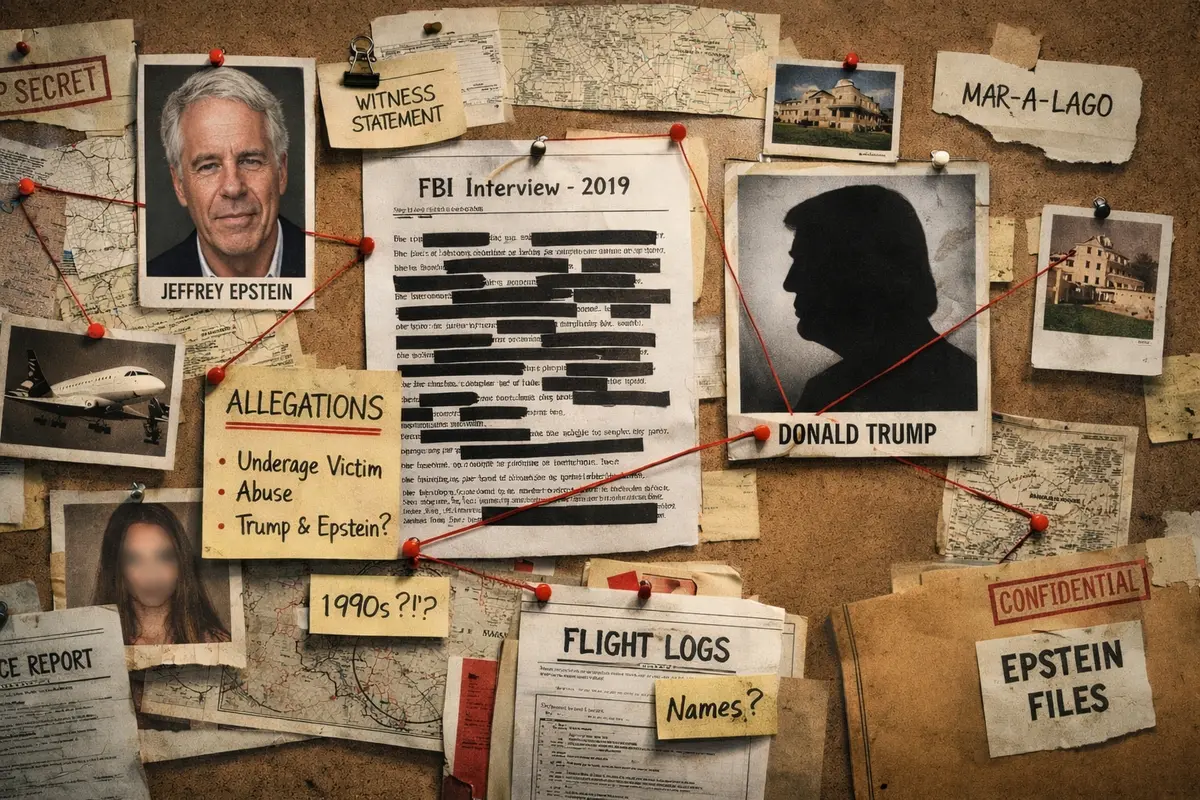
The DOJ on Thursday released previously withheld documents from the Epstein files that include detailed FBI interview summaries with a woman who alleged she was sexually assaulted by both Jeffrey Epstein and Donald Trump when she was between the ages of 13 and 15.
The documents — three FBI interview reports known as 302s — describe a series of interviews the FBI conducted with the woman in 2019.
The DOJ claimed the files were left out of earlier releases because they had been “incorrectly coded as duplicative.”
Congressional Democrats had spent weeks accusing the department of illegally hiding the documents to protect the president.
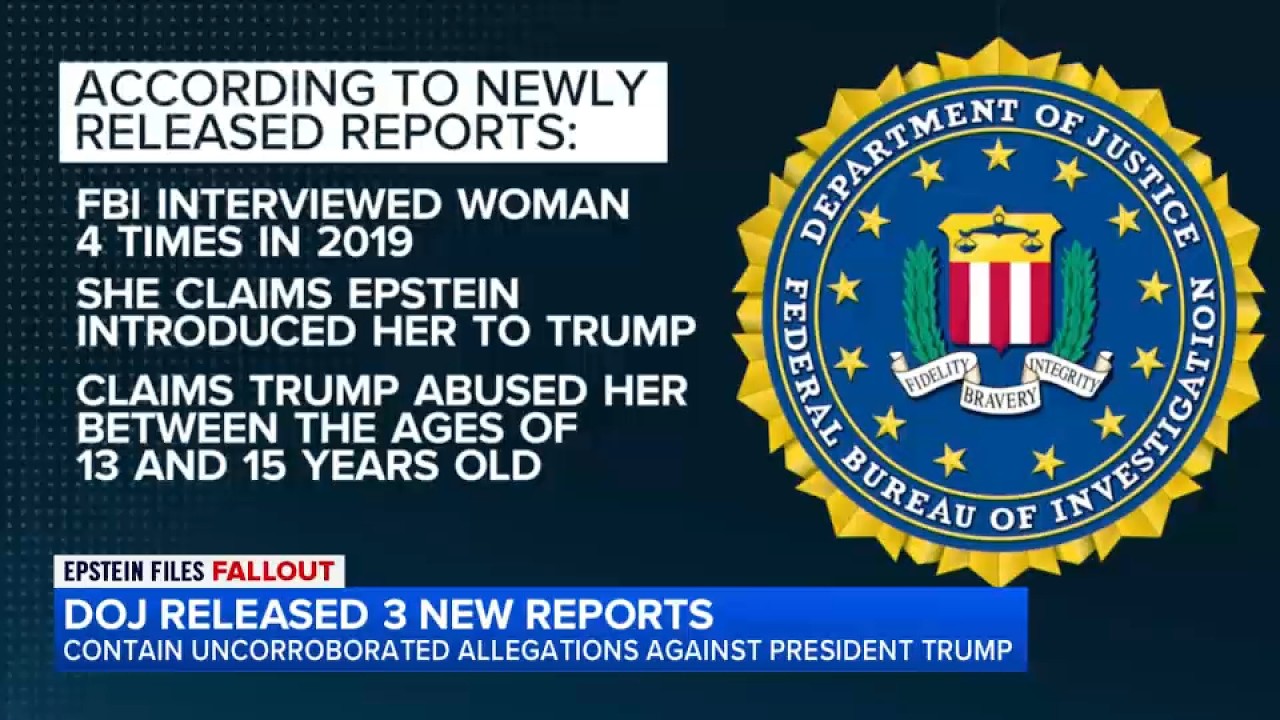
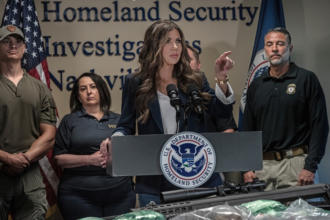
News report about the release of the documents
What the Documents Reveal
The woman, whose identity is redacted, first contacted federal law enforcement shortly after Epstein’s arrest in 2019.
She described being sexually abused by Epstein beginning when she was around 13 years old, after being hired for what she thought was a babysitting job at a location on Hilton Head Island, South Carolina.
There were no children present.
In her second interview with the FBI, she alleged that Epstein drove or flew her to either New York or New Jersey, where she was taken to a “very tall building with huge rooms.”
There, she said, Epstein introduced her to Trump, who then sexually assaulted her.
According to NPR’s reporting on the documents, the woman described Trump forcing her head down toward his exposed penis. She told agents she bit him, and that he struck her in the head and said something to the effect of “get this little b**** the hell out of here.”
She told the FBI she had two additional interactions with Trump but asked to move on to another subject during the interview.
The woman also described years of intimidation she believed was directed by Epstein, including threatening phone calls and incidents where she was “almost run off of the road” by other cars.
She told agents her mother had been blackmailed by Epstein.
In an interview with the woman’s mother — which was separately removed from the DOJ database and has not yet been fully restored — the mother recalled hearing that “a prince and Donald Trump visited Epstein’s house,” which made her believe Epstein couldn’t be a criminal if such prominent people were associated with him.
By the fourth FBI interview in October 2019, the woman no longer had an attorney present.
She asked the agents “what’s the point” of coming forward when the statute of limitations had likely passed.
She declined to provide further details about Trump when asked.
The agents encouraged her to take time to think about whether she wanted to continue cooperating.
An internal FBI email from the summer of 2025, included in the broader Epstein files, noted that “one identified victim claimed abuse by Trump but ultimately refused to cooperate.”
Related
A Pattern of Concealment
The documents did not appear on the DOJ’s public Epstein files database at any point before Thursday, based on a review of the Wayback Machine internet archive.
NBC News first identified the missing interviews by cross-referencing an evidence catalog from the criminal case against convicted Epstein co-conspirator Ghislaine Maxwell with the files the DOJ had published.
That evidence log listed FBI summaries from four separate interview dates in July, August, and October 2019.
Only the first — which did not mention Trump — had been included in the DOJ’s January release. The other three, which contained the Trump allegations, were held back.
The DOJ initially insisted that “ALL responsive documents” had been released unless they were duplicates, privileged, or part of an ongoing investigation.
On Thursday, the department acknowledged that 15 documents had been “incorrectly coded as duplicative” — but offered no explanation for how the error occurred beyond possible human mistake.
Rep. Robert Garcia of California, the top Democrat on the House Oversight Committee, had previously confirmed that the documents were also missing from the unredacted collection available for lawmakers to review at the Justice Department. He called the withholding “unconscionable” and “illegal.”
“We are going to end this White House cover-up,” Garcia wrote on social media Thursday.
Even with the new release, 37 pages of related records remain unavailable, including handwritten interview notes, a law enforcement report, and license records.
Over 100 additional files identified in the Maxwell evidence catalog are also still missing from the DOJ website.
The White House Response
The White House has not accused the woman of lying to the FBI directly but has repeatedly attempted to discredit the allegations.
White House Press Secretary Karoline Leavitt described the claims as “completely baseless accusations, backed by zero credible evidence, from a sadly disturbed woman who has an extensive criminal history.”

Leavitt also argued that the Obama and Biden Justice Departments had known about the allegations for years and did nothing with them — framing their inaction as proof the claims lacked merit.
“If they have a shred of credibility, they certainly would have been weaponized against President Trump already,” the DOJ stated in January.
Trump has consistently denied any wrongdoing in connection with Epstein. Authorities have not accused Trump of any criminal conduct related to the case.
The woman filed a lawsuit against Epstein’s estate in 2019, identified as “Jane Doe 4.”
She was deemed ineligible for the Epstein Victims’ Compensation Program for reasons that remain unclear.
She voluntarily dismissed her lawsuit in 2021, and her attorney told the Post and Courier newspaper that she received a financial settlement from the estate.
The Bigger Picture
The release came one day after the Republican-led House Oversight Committee voted 24-19 to subpoena Attorney General Pam Bondi to testify about the DOJ’s handling of the Epstein files.
Democrats on the committee have opened an investigation into both the allegations against Trump and the department’s decision to withhold these specific documents.
The Epstein Files Transparency Act, passed overwhelmingly by Congress in late 2025, required the DOJ to release all Epstein-related documents in its possession within 30 days.
The law explicitly prohibits withholding documents “on the basis of embarrassment, reputational harm, or political sensitivity, including to any government official, public figure, or foreign dignitary.”
The Justice Department has said it is not currently investigating any individual connected to Epstein. Maxwell, who is serving a 20-year sentence for sex trafficking, is seeking clemency from Trump.
The newly released documents do not indicate whether FBI agents considered the woman’s allegations credible or whether they conducted any additional investigation to verify or disprove her claims.
What the documents do make clear is that the FBI took her initial account of Epstein’s abuse seriously enough to interview her four separate times — and that the interviews describing an assault by the sitting president of the United States were kept from the public until journalists and lawmakers forced the question.