



The Trump administration is now arguing that a federal judge’s order to stop construction on the president’s massive White House ballroom is a threat to national security.
In an emergency motion filed Friday with the U.S. Court of Appeals for the District of Columbia, administration lawyers argued that the construction pause has left the executive mansion “open and exposed,” creating what they describe as grave dangers to the president, his family, and White House staff.
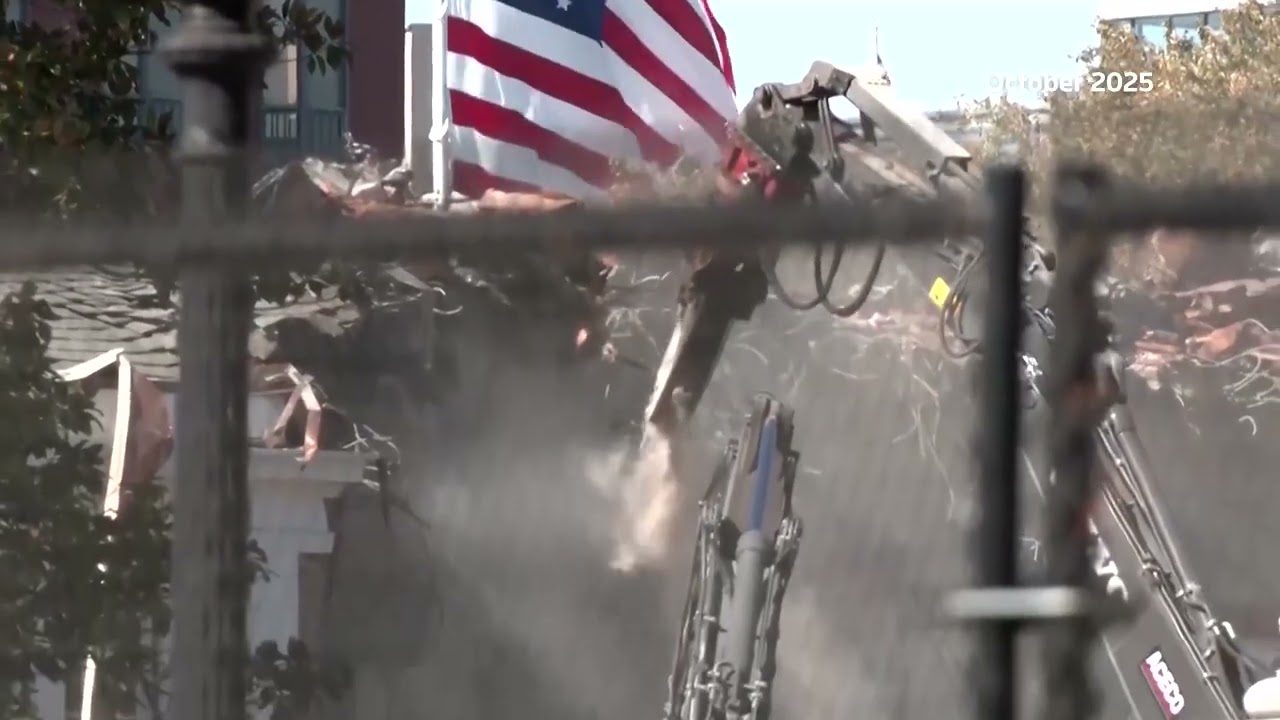
The administration’s claim would be easier to take seriously if the security risk hadn’t been created by Trump’s decision to demolish the East Wing in the first place.
The motion calls the lower court’s ruling “shocking, unprecedented, and improper” and demands it be overturned immediately.
Here’s the part the administration would rather you not think too hard about: the only reason the White House grounds are “open and exposed” is because Trump ordered the demolition of the East Wing last October to make way for his pet project — a 90,000-square-foot ballroom that would dwarf the 55,000-square-foot Executive Mansion itself.
What Happened
On March 31, U.S. District Judge Richard Leon — a George W. Bush appointee, not exactly a radical leftist — issued a 35-page ruling ordering all ballroom construction to halt.
His reasoning was blunt: no law gives the president authority to unilaterally build a structure of this scale on the White House grounds without congressional approval.
“The President of the United States is the steward of the White House for future generations of First Families,” Leon wrote. “He is not, however, the owner.”

Leon concluded that the National Trust for Historic Preservation, the nonprofit that filed the lawsuit in December 2025, is likely to win the case on its merits.
He gave the administration 14 days to appeal before the injunction takes effect — and the administration filed that appeal within hours.
The AI video below went viral last year as Trump was still planning his [then] $200 million ballroom. At the time, it gave me hope that his supporters would soon “wake up” to the President’s corruption.
Hope that they would finally see his complete disregard and total lack of respect for the American people (those who aren't billionaires). If you haven't seen it, you’re in for a treat.

Now, with Friday’s emergency motion, the administration is escalating further. The filing argues that the federal court lacks constitutional authority to even hear the case, dismissing the lawsuit as resting on nothing more than “a single pedestrian’s subjective architectural feelings.” The motion also claims that the National Trust has no legal standing to sue and that the president has “complete authority to renovate the White House” however he sees fit.
The Security Argument Falls Apart Under Scrutiny
The administration’s national security framing deserves scrutiny, because the timeline tells a very different story than the one the government is presenting.
Trump ordered the East Wing demolished in October 2025. The East Wing had stood since 1902 and was expanded under Franklin D. Roosevelt during World War II.
Beneath it sat the Presidential Emergency Operations Center (PEOC) — the bunker that protected George W. Bush and his staff on September 11, 2001.
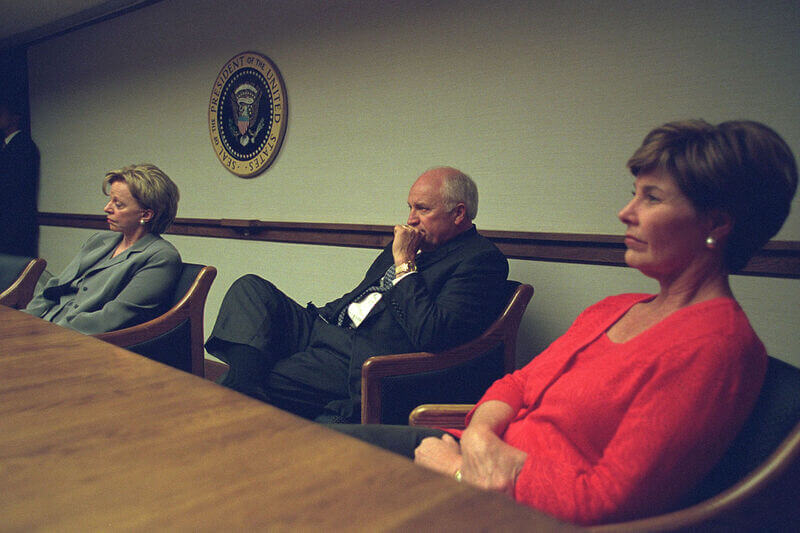
Trump himself has publicly confirmed that a new secret bunker is being constructed beneath the ballroom site.
“The military is building a big complex under the ballroom,” he told reporters aboard Air Force One in late March, before complaining that the lawsuit had made details of the classified project public.
So the administration’s argument boils down to this: Trump tore down a historic building and its functioning security bunker, began construction on an unauthorized replacement, got ordered by a court to stop, and is now claiming the resulting security gap is so dire that the court must let him continue building without legal authorization.
The emergency motion even highlights specific security features planned for the ballroom, including drone-resistant roofing and blast-proof glass — details about classified security infrastructure that the administration is apparently willing to reveal publicly when it serves their legal strategy, even as Trump complains about others making the project “unsecret.”
The Bigger Picture
This fight is about much more than a White House ballroom. It’s a test case for whether the president can bypass Congress, ignore federal review processes, and reshape public property on a massive scale without any accountability.
The National Trust’s lawsuit argued that the project violated multiple layers of legally required oversight. The ballroom was never filed with the National Capital Planning Commission as federal law requires. No environmental assessment was conducted. No public comment period was held. And Congress never authorized it.



Trump has maintained that none of this applies because the project is funded by private donors, not taxpayers. But Judge Leon rejected that argument.
The source of funding doesn’t determine whether congressional authorization is needed — the scope and nature of the project does.
The White House ballroom is part of Trump’s broader ambitions to remake Washington’s monumental core, including a proposed 250-foot ‘Arc de Trump’ and renovations to the Kennedy Center.
It’s an effort to leave a permanent physical imprint on the capital that goes far beyond what any previous president has attempted.
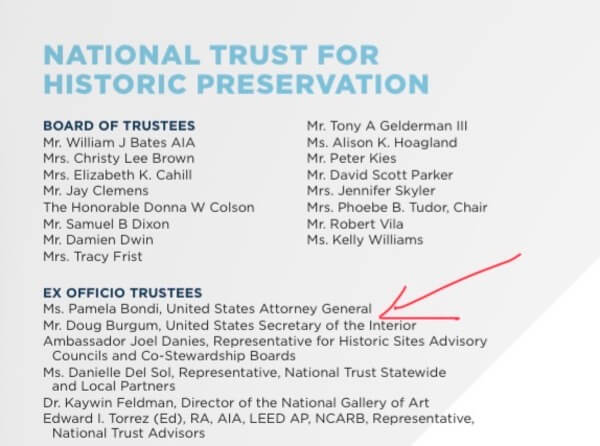
Meanwhile, Attorney General Pam Bondi, who oversees [used to] the Department of Justice that is defending Trump in this case, is listed as an ex-officio trustee of the National Trust for Historic Preservation — the very organization her department is fighting in court.
What Comes Next
The appeals court will now decide whether to grant the emergency stay and allow construction to resume while the legal battle continues. The 14-day window before Judge Leon’s injunction takes full effect gives the court a tight timeline to act.
Trump has shown no sign of backing down. He responded to the original ruling by calling the National Trust “a Radical Left Group of Lunatics” and insisting his improvements to Washington would be “among the most magnificent Buildings of their kind anywhere in the World.”
But this case isn’t about aesthetics or ambition. It’s about whether a president can demolish historic public property, launch a half-billion-dollar construction project without legal authorization, and then argue that the mess he created is too dangerous to clean up — so he should be allowed to keep building.
The White House belongs to the American people. And right now, a court is trying to make sure it stays that way.