
Last Updated on February 5, 2026 by Serena Zehlius, Editor
In communities around the world, life-saving health care, clean water, vaccination campaigns, and nutritional support have for decades been supported bythe United States Agency for International Development (USAID). Since its founding, USAID programs have helped reduce death rates from infectious diseases, improved maternal and child health, and bolstered health systems in some of the world’s poorest regions.
But in 2025, sweeping budget cuts and the de facto closure of much of USAID’s operations have reverberated far beyond Washington D.C. These changes represent an experiment in global health and humanitarian assistance — with human lives hanging in the balance.
Lives Saved in the Past
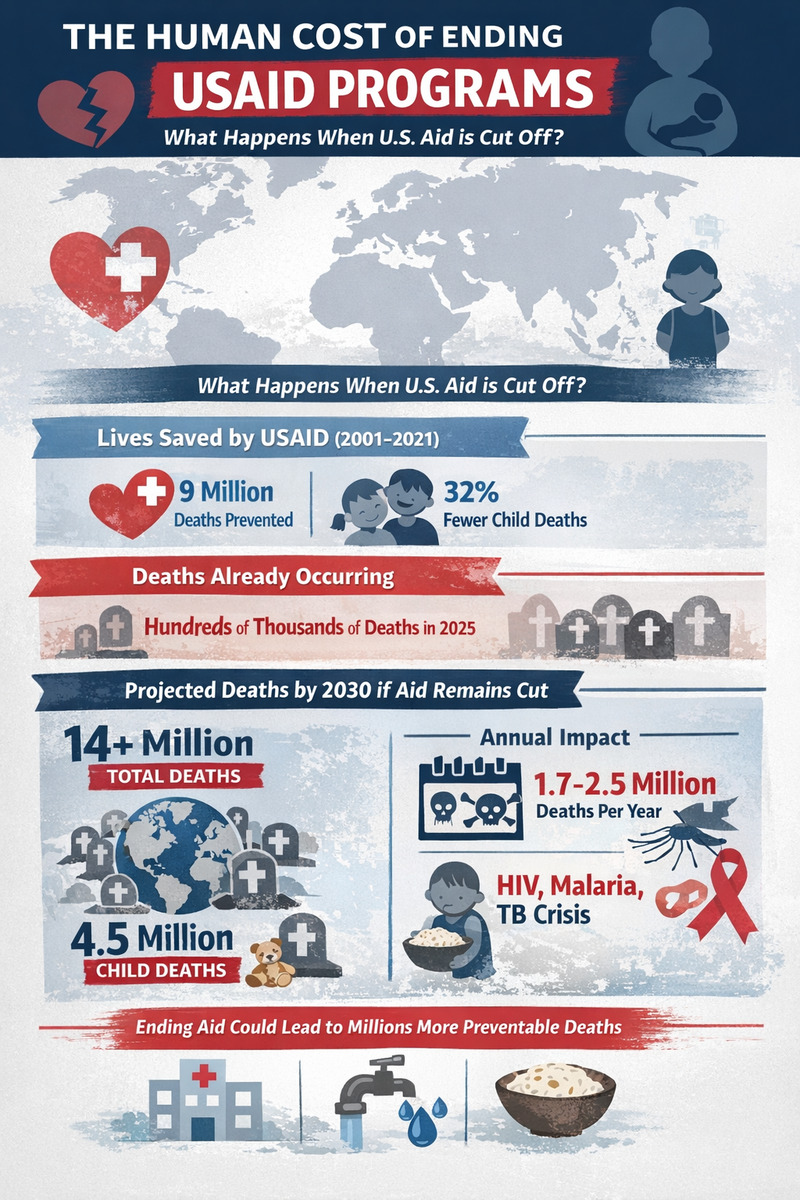
From 2001 through 2021, USAID programs are estimated to have prevented approximately 91 million deaths worldwide in low- and middle-income countries. This includes millions of lives spared from HIV/AIDS, malaria, tuberculosis and other major causes of preventable mortality.
Researchers estimate that USAID contributed to a 15 percent reduction in all-cause mortality and a 32 percent reduction in deaths among children under five during that period by funding treatment, prevention, and public health infrastructure.
These are not abstract numbers. They reflect families kept whole by vaccination campaigns, children who survived diarrheal illness because of clean water programs, and communities that were able to keep malaria under control because of sustained investment in bed nets and treatment.
This legacy of lives saved underscores the role that sustained global health efforts can play in improving survival outcomes.
Deaths Already Occurring
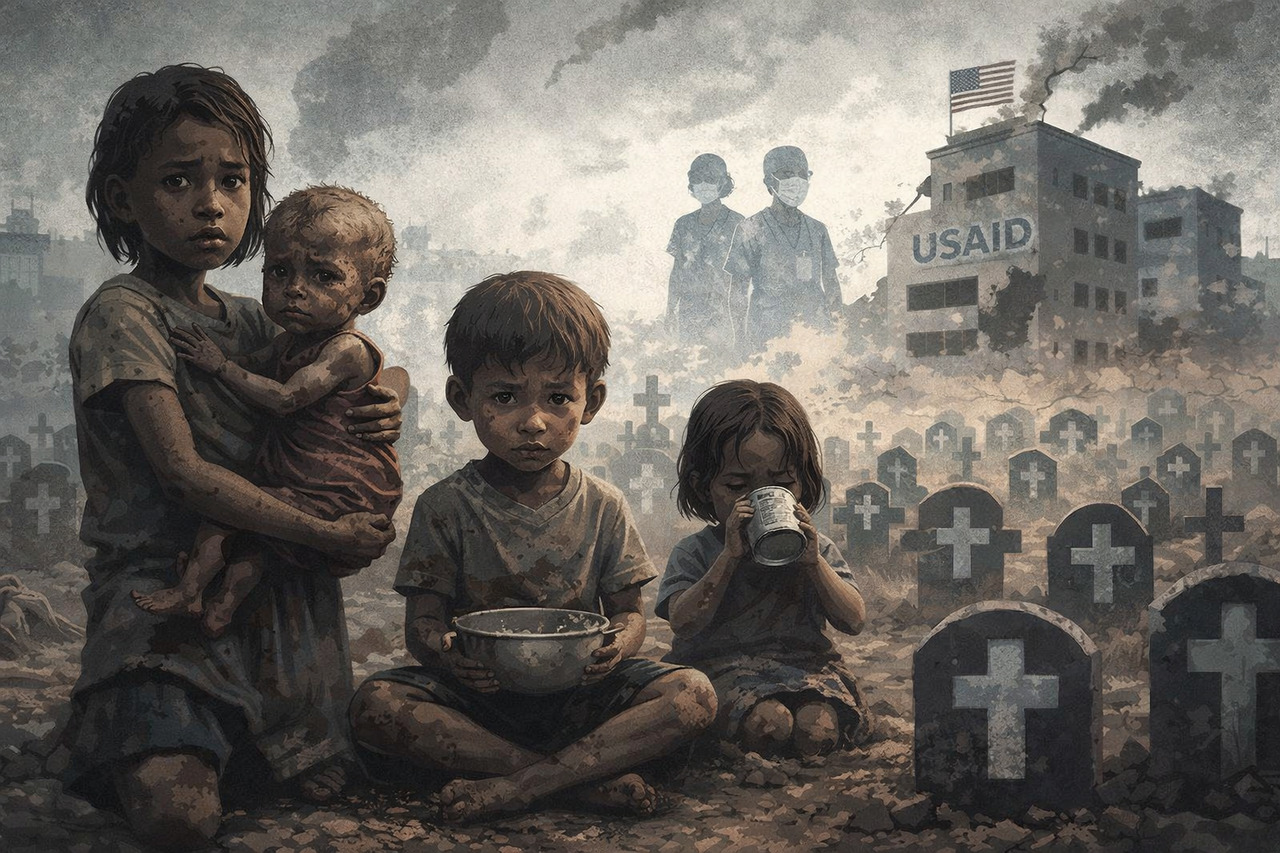
Now, as much of USAID’s programming has been scaled back or cancelled, researchers and humanitarian observers are documenting a grim toll. Independent modeling tools launched earlier in 2025 have estimated that hundreds of thousands of deaths — including a disproportionate number of children — have already occurred worldwide as a result of disrupted services, halted vaccinations, and the collapse of essential health and nutrition programs.
These deaths are difficult to verify comprehensively in real time, but they provide an early indication of what happens when critical support systems fail.
The loss of basic health services in conflict zones, interrupted HIV and TB treatments, and the breakdown of food security programs all contribute to rising mortality in the short term.

Projections for Future Deaths
The most stark predictions come from modeling studies published in peer-reviewed journals and analyzed by global health experts. According to research published in The Lancet, if USAID’s deep funding cuts continue and much of its programming remains shuttered, more than 14 million additional deaths could occur globally by 2030 as a direct consequence.
Of those, an estimated 4.5 million could be children younger than five years old.
These models project that between 1.7 and 2.5 million people could die each year over the next five years because of reduced access to health services, nutrition support, clean water, sanitation, and disease control efforts.
The health effects are expected to be especially pronounced in sub-Saharan Africa and South Asia, where health systems have less resilience and rely more heavily on international assistance.
Another layer of forecasting comes from detailed sector analyses. For example, the abrupt suspension of HIV/AIDS programs such as PEPFAR — previously administered in part through USAID — could lead to millions of new HIV infections and hundreds of thousands of avoidable deaths related to HIV over the coming decade.
Similar models suggest millions more cases of malaria and additional mortality from tuberculosis if programs remain unfunded or fragmented.
Why These Predictions Matter
These numbers are not fate. They are projections based on changes in policy, health service delivery, and funding levels. They reflect a counterfactual scenario — what might occur if lifesaving programs are not restored or replaced by equally effective alternatives.
Importantly, many global health stakeholders, including public health institutions, humanitarian groups, and international partners, argue that even partial restoration of aid could significantly reduce projected deaths.
They emphasize that a policy of disengagement — as distinct from reform or strategic partnership — risks reversing decades of progress in areas like child survival, infectious disease control, and maternal health.
As the world approaches 2030, the choices made by our government about foreign aid and international cooperation have consequences that ripple far beyond the halls of Congress and budget offices.
Cutting off support may save money in the short term, but it carries a heavy human cost measured in lives lost and preventable suffering. The estimates of millions of future deaths serve as a stark reminder that global health and humanitarian investment isn’t just charity — it’s a matter of survival for millions around the world.