
If you’ve been watching the news about the U.S.-backed wars spreading across the Middle East and wondering what’s really driving it all, there’s a concept you need to understand: the Greater Israel project.
It’s not new. It’s not a conspiracy theory. And it’s not hiding. Senior Israeli officials are now saying it out loud.
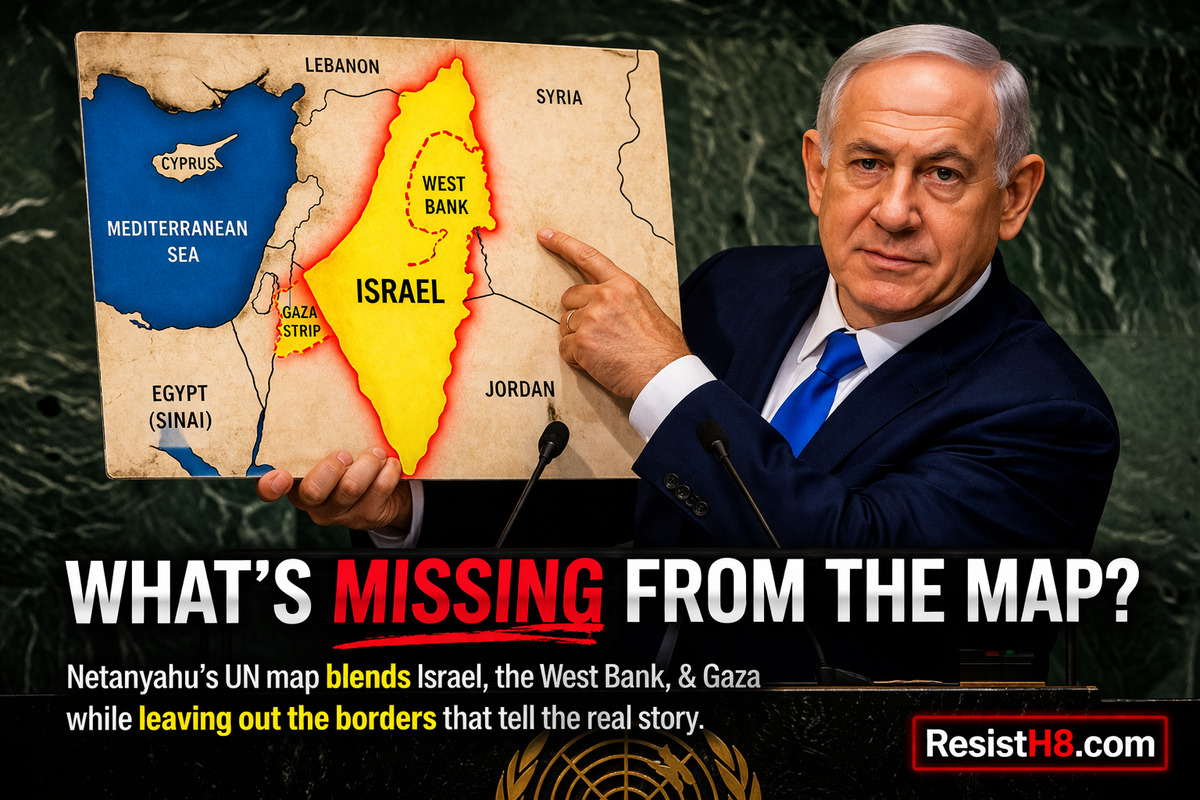
Israeli Prime Minister Benjamin Netanyahu recently told an Israeli media outlet that he was on a “historic and spiritual mission”. Asked if he supported the Greater Israel project, he replied: “Very much.”
So, what is the Greater Israel project? This explainer will answer that question in a way that’s easy to understand. There’s an episode of Al Jazeera’s podcast, The Take, available as well with the host talking about the Greater Israel project. (Jump to podcast)
Here’s what it means, where it came from, and why it matters to you as an American.
The Basic Idea
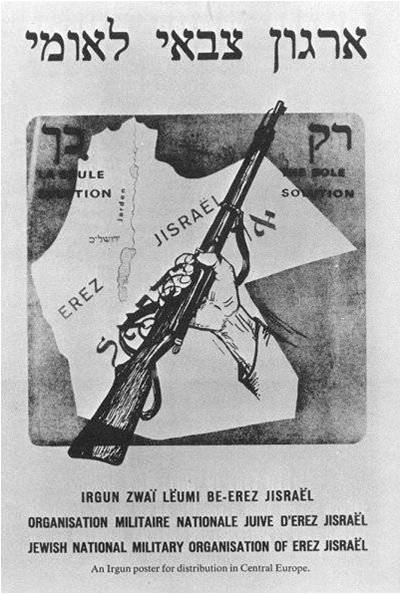
The Greater Israel project — known in Hebrew as Eretz Yisrael HaShlema, or “the Whole Land of Israel” — is a territorial vision that says Israel’s borders should extend far beyond their current lines. How far depends on who you ask.
At its narrowest, it means Israel should permanently absorb the occupied West Bank, East Jerusalem, Gaza, and the Golan Heights — territories that Israel captured from neighboring countries during the 1967 Six-Day War and has occupied ever since.
Under international law, these are not Israeli territory. The United Nations, the International Court of Justice, and the vast majority of the world’s countries recognize them as occupied land.
At its most expansive, the vision gets much bigger. Some proponents claim the entire region between the Nile River in Egypt and the Euphrates River in Iraq — a massive swath of land encompassing parts of Egypt, all of Jordan, Lebanon, Syria, and chunks of Iraq and Saudi Arabia.
Netanyahu used the phrase, “From the river to the sea,” to describe how much land Israel should control.

This maximalist version is rooted in a passage from the Book of Genesis (15:18-21), where God makes a covenant with Abraham promising his descendants the land between those two rivers.
That’s not a metaphor. There are senior officials in the current Israeli government who have invoked this biblical claim as a basis for real-world policy.
Where Did This Come From?
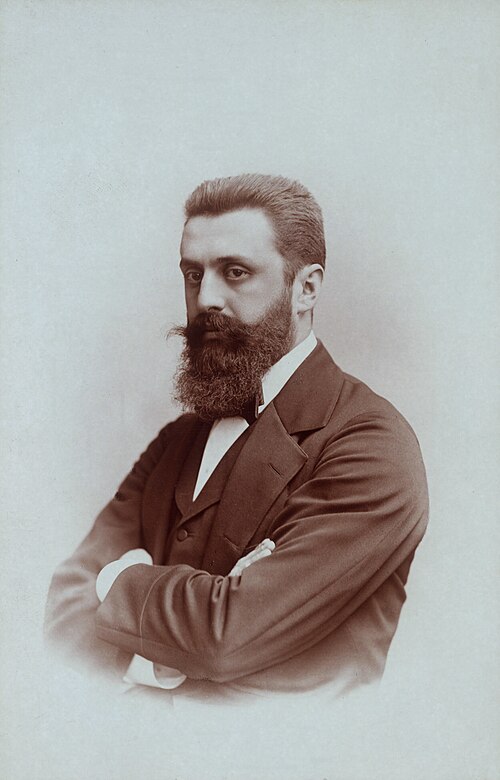
The idea has roots going back to the founding of the Zionist movement. Theodor Herzl, considered the father of political Zionism, wrote in his diaries that the Jewish state should stretch “from the Brook of Egypt to the Euphrates.”
Early Zionist factions, particularly the Revisionist Zionists led by Ze’ev Jabotinsky — the ideological forebears of today’s Likud party — pushed for a state that would include not just present-day Israel and Palestine, but also Jordan.
When Israel was established in 1948, the Labor Zionist leadership accepted a pragmatic partition of the land into Jewish and Arab states. But the Revisionist faction never accepted those borders as final.
When Israel captured the West Bank, Gaza, Sinai, and the Golan Heights in 1967, it reignited the dream. A political movement called the Movement for Greater Israel formed within a month of that war, calling on the government to keep all the captured territory and fill it with Jewish settlers.
The Yinon Plan
In 1982, a former Israeli Foreign Ministry official named Oded Yinon published an article (below) in a journal of the World Zionist Organization called “A Strategy for Israel in the Nineteen Eighties.”
It laid out a chilling blueprint. Yinon argued that Israel’s long-term survival required it to become a dominant regional power — and that the way to do this was to break up every major Arab state surrounding it into smaller, weaker pieces divided along ethnic and religious lines.
A-Strategy-for-Israel-in-the-Nineteen-EightiesIraq, Yinon wrote, should be split into three parts: a Shiite south, a Sunni center, and a Kurdish north. Egypt should be fractured. Syria should be dismantled. Lebanon should be carved up by sect. Jordan should be dissolved.
The goal was not peace — it was permanent regional fragmentation that would leave no Arab state strong enough to challenge Israel.
Israel has taken advantage of the current war in Iran to invade Lebanon.
Israeli forces have displaced millions of Lebanese citizens and pushed them into northern Lebanon. They destroyed all bridges between north and south Lebanon to prevent citizens from returning. Their plan is to move Israeli Settlers into the region and occupy southern Lebanon.

The Yinon Plan was not an official government policy document. But scholars have noted that its vision influenced a 1996 policy paper called “A Clean Break: A New Strategy for Securing the Realm,” written for incoming Israeli Prime Minister Benjamin Netanyahu by a group of American neoconservatives.
Several of those authors — including Richard Perle and David Wurmser — later held senior positions in the George W. Bush administration and were architects of the 2003 invasion of Iraq. Whether you consider that a coincidence is up to you.
Clean_BreakWhat’s Happening Right Now
For decades, the Greater Israel concept lived mostly on the fringes of Israeli politics — spoken about in religious circles and nationalist rallies but not in polite diplomatic company. That has changed dramatically.
In August 2025, Prime Minister Benjamin Netanyahu told Israeli outlet i24NEWS that he felt “very” connected to the vision of Greater Israel and described himself as being on a “historic and spiritual mission.”
The interviewer presented him with an amulet depicting a map of the “promised land,” and Netanyahu embraced it. A coalition of 31 Arab and Muslim nations condemned his remarks as a direct threat to their sovereignty.
Political Scientist Explains: What is the Greater Israel Project?

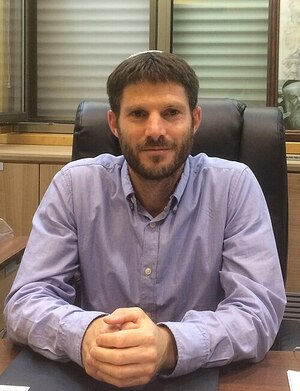
Netanyahu’s Finance Minister, Bezalel Smotrich, has been even more explicit. In 2023, he spoke from a podium displaying a map that showed Jordan absorbed into Israel and declared that “there is no such thing” as the Palestinian people.
In a documentary, he was filmed saying that Israel’s borders should eventually reach Damascus, and that the state would grow to encompass parts of Jordan, Lebanon, Egypt, Syria, Iraq, and Saudi Arabia.
In February 2026, U.S. Ambassador to Israel Mike Huckabee — a Christian Zionist — told Tucker Carlson in an interview that it would be “fine” if Israel took over the entire Middle East. He declined to disavow the biblical claim to all land between the Nile and the Euphrates.
And in March 2026, as the U.S.-Israeli war against Iran escalated, Smotrich declared that Israel’s northern border “must be the Litani River,” calling for the outright conquest and annexation of southern Lebanon.
This came as Israeli forces were already operating deep inside Lebanese territory.
In July 2025, the Knesset — Israel’s parliament — adopted a motion calling for the annexation of the entire West Bank, declaring it an “inseparable part of the Land of Israel.”
These are not fringe voices. These are the people running the government.
Why Americans Should Care
This matters to Americans for a very direct reason: we are paying for it.
The United States provides Israel with billions of dollars in military aid every year, and U.S. forces are now actively engaged in a joint war against Iran alongside Israel. American tax dollars fund the weapons. American soldiers are deployed in the region.
American diplomatic cover at the United Nations shields Israel from accountability.
When Israeli officials talk about expanding their borders to the Euphrates, they are describing a project that would require the destabilization or conquest of multiple sovereign nations — nations that the United States would be expected to help subdue.
The wars spreading across the Middle East right now are not random. They follow a pattern that was literally written down more than 40 years ago.
A UN Special Committee report from November 2025 explicitly warned that Israel is pursuing “a systematic policy of territorial expansion through settlement, military occupation, and eventual annexation” consistent with the Greater Israel project.
The committee documented Israeli military operations in southern Lebanon and Syria, the establishment of so-called “buffer zones,” and attempts by Israeli settlers to sell Lebanese land and establish outposts in occupied territory.
What is the Greater Israel Project? The Take podcast
The Greater Israel project is not a conspiracy theory you stumble across in dark corners of the internet. It is a documented political ideology with roots going back over a century, a strategic blueprint articulated in published papers, and — most importantly — a vision that the sitting Israeli prime minister has publicly embraced.
Understanding it doesn’t require you to take a side. It requires you to pay attention.
Because whether or not this vision is fully realized, the pursuit of it is already reshaping the Middle East, costing lives on a massive scale, and doing it with American money and American firepower.