The Trump administration has deployed US Special Forces to Ecuador in a joint operation targeting alleged drug trafficking organizations — opening yet another military front even as American bombs continue falling on Iran.
The move marks the first time US forces have participated in a land-based operation against cartels in South America under the current administration, and it happened despite Ecuadorian voters explicitly rejecting the return of US military bases just months ago.
Boots on the Ground, Democracy Be Damned
On March 3, US Southern Command announced that American and Ecuadorian military forces had launched joint operations against what the Pentagon calls “Designated Terrorist Organizations” in Ecuador.
SOUTHCOM commander General Francis Donovan, who had met with Ecuadorian President Daniel Noboa in Quito the day before, praised the effort as a model of hemispheric partnership.
The deployment expands Operation Southern Spear, the Trump administration’s sweeping anti-narcotics military campaign that Defense Secretary Pete Hegseth formally unveiled in November 2025.
Until now, that campaign had been limited to naval and air operations — bombing suspected drug-trafficking boats in the Caribbean Sea and Eastern Pacific.
At least 44 boats have been destroyed in those strikes, killing more than 150 people.
The administration has claimed without providing evidence that all targets were drug traffickers.
The Intercept has reported that SOUTHCOM has been unable to keep up with civilian casualty reports from those operations and has left survivors of some boat strikes to drown.
Now, with the Ecuador operation, that same military campaign has moved onto dry land.
What makes this deployment especially striking is its defiance of the Ecuadorian people’s clearly expressed will.
In a referendum last November, 67 percent of voters rejected President Noboa’s proposal to reopen US military bases in the country — bases that were shut down under former President Rafael Correa, who famously expelled the US military and said he would only allow an American base if Ecuador could put one in Miami.
Correa responded to the new operation with outrage, asking on social media how Ecuador’s armed forces could allow such an incursion.
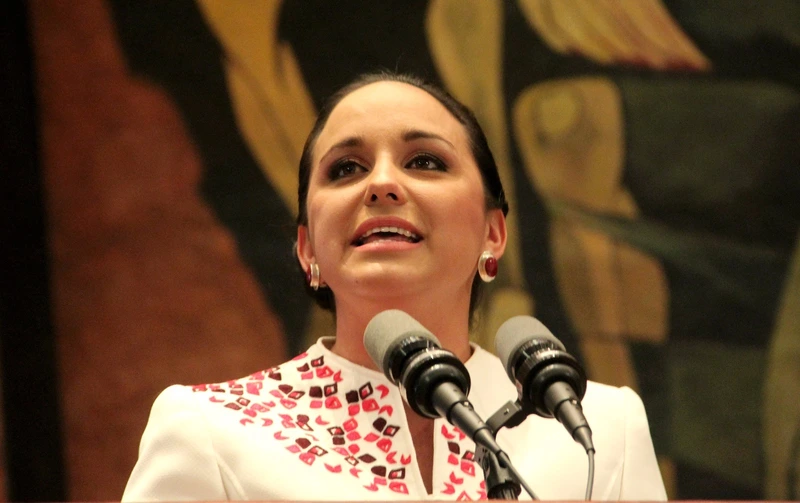
Former National Assembly president and Imbabura Province Governor Gabriela Rivadeneira pointed out in a television interview that Ecuador’s constitution — the only one in the world with such a provision — explicitly prohibits foreign military presence within its borders.
The Noboa Connection
Ecuador’s willing participation in the operation is largely the product of President Noboa’s close alignment with Washington.
A right-wing billionaire whose family shipping empire has been linked by investigators to cocaine trafficking, Noboa declared Ecuador to be in an “internal armed conflict” in January 2024 and has since pursued deep integration with US security programs.
Noboa celebrated the joint operation as a “new phase against narco-terrorism,” citing the country’s ports as a primary smuggling pipeline.
Ecuador, once among the most peaceful nations in Latin America, has in recent years seen a dramatic surge in violence as drug cartels exploit its strategic location between major cocaine-producing nations Colombia and Peru.
The country has become what many observers describe as a corridor through which the majority of South American cocaine reaches international markets.
But critics argue that Noboa’s embrace of US military involvement has nothing to do with protecting ordinary Ecuadorians.
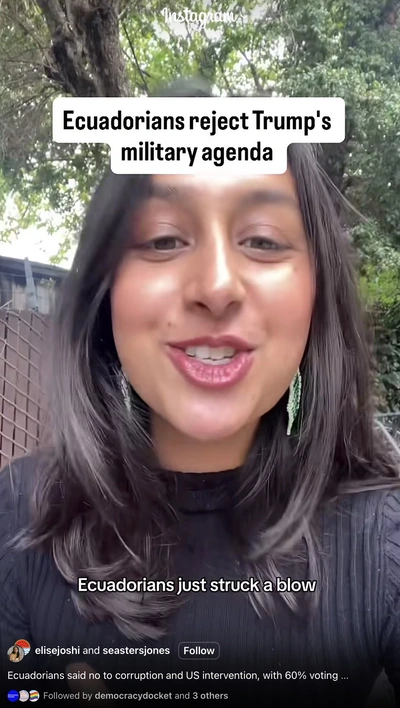
Climate campaigner Elise Joshi noted that Noboa invited Trump’s military in while simultaneously gutting public services, Indigenous rights, and free speech protections.
Former Human Rights Watch executive director Kenneth Roth warned that US troops in Ecuador could be authorized to kill drug suspects rather than capture them — effectively committing extrajudicial murders.
The Intercept reported that two government officials confirmed the joint operations would not be a one-off raid, suggesting a sustained and potentially expanding US military presence on Ecuadorian soil.
One official, when providing details about the Ecuador operation, initially referred to it as happening in Venezuela before correcting the mistake — telling the reporter that keeping track of all the different military operations had become difficult.
The Broader Pattern
The Ecuador deployment did not happen in a vacuum.
It is the latest expansion in a rapidly growing constellation of US military operations across the Western Hemisphere and beyond.
The Trump administration launched Operation Southern Spear last year with boat strikes in the Caribbean, then escalated dramatically in January 2026 by bombing Caracas and abducting Venezuelan President Nicolás Maduro.
Now it has put American boots on the ground in South America.
Simultaneously, the US-Israeli war on Iran — which has killed more than 1,300 people including at least 192 children — continues to intensify, with schools, hospitals, and residential neighborhoods under sustained bombardment.
Iran is the tenth country bombed on orders from Trump, who has also directed strikes on Afghanistan, Iraq, Libya, Nigeria, Pakistan, Somalia, Syria, and Yemen.
The self-described “president of peace” now has American military forces fighting, advising, or bombing on multiple continents at once.
The magazine In These Times drew a direct line connecting the various interventions, writing that Trump is in Ecuador for the same reasons he is in Iran and Venezuela: resources secured through force, dressed up as fighting a dictatorship or combating drugs.
The publication noted that Ecuador’s Indigenous organizers successfully pushed back against oil drilling in 2019 — and now face the US military instead.
What Comes Next
Ecuador’s constitution may prohibit foreign military presence, and its people may have overwhelmingly voted against US bases, but none of that has stopped the deployment.
The question now is whether the Ecuador operation becomes a template — a model for inserting American forces into other willing nations under the banner of counter-narcotics while bypassing democratic objections and constitutional limitations.
As Rivadeneira warned: wherever US militarization advances, organized crime and drug trafficking advance further. Ecuador, she said, was safer without foreign bases.
The people of Ecuador already said no. Their government said yes anyway.