


Russia is feeding intelligence to Iran about U.S. military positions in the Middle East, including the locations of American troops, aircraft, and ships, according to multiple U.S. officials.
The revelation marks the first known involvement of a major U.S. adversary in the Iran conflict and raises the stakes of a war the White House insists is going exactly as planned.
The intelligence sharing was first reported by the Washington Post and confirmed by NBC News and other outlets through multiple sources, including a senior U.S. official with direct knowledge.
The information Russia is providing could enable Iran to target specific locations with ballistic missiles and drones — the same kind of attack that killed six U.S. Army Reserve members in Kuwait on March 1.
The White House Response: “It Doesn’t Matter”
The administration’s reaction was striking in its dismissiveness.
White House Press Secretary Karoline Leavitt, asked on Fox News about reports that Russia is feeding intelligence to Iran on U.S. assets with Iran, said she could not comment on “intelligence reports that are leaked to the press.”
She then added: “Whether or not this happened, frankly, it doesn’t really matter.”
She later walked that back slightly, telling reporters what she meant was that if Russia is feeding intelligence to Iran, it “clearly is not making a difference with respect to the military operations in Iran, because we are completely decimating them.”
White House principal deputy press secretary Anna Kelly offered a similarly dismissive statement: “The Iranian regime is being absolutely crushed. Their ballistic missile retaliation is decreasing every day, their navy is being wiped out, their production capacity is being demolished, and proxies are hardly putting up a fight. Operation Epic Fury is meeting or surpassing all of its goals, and the United States will continue to dominate.”
Editor’s Note: I would prefer our government officials didn’t talk about an active war in the Middle East like it’s a WWE wrestling match.

Defense Secretary Pete Hegseth, asked earlier this week what message he had for Russia and China — Iran’s two most powerful allies — said he had none, adding: “They’re not really a factor here.”
But a nuclear-armed adversary with some of the most sophisticated intelligence capabilities on the planet feeding targeting information about American troops to a country the U.S. is actively bombing is, by any reasonable measure, a significant factor.
Six Americans Already Dead
Six U.S. service members have been killed in Operation Epic Fury so far.
All six died on March 1 when an Iranian strike hit a tactical operations center in Kuwait.
They were members of a U.S. Army Reserve unit based in Des Moines, Iowa.
Two additional service members were killed later in the week by an Iranian drone attack on a Kuwaiti military base that hosts American forces.
President Trump is expected to attend the dignified transfer when the fallen service members’ remains are returned to the United States.
If Russia sharing intelligence with Iran is helping them to identify where U.S. forces are positioned — including aircraft carriers, fighter jets, and ground installations — the risk of additional American casualties grows.
The fact that Iran has already successfully struck a U.S. facility in Kuwait makes the threat more than theoretical.
A Deepening Russia-Iran Alliance
The intelligence sharing didn’t come out of nowhere. Moscow and Tehran have been expanding their military partnership since Russia’s 2022 invasion of Ukraine.

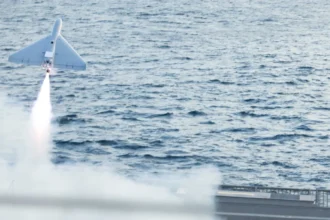
Iran has supplied Russia with Shahed attack drones — the same type Iran is now using against U.S. and allied positions in the Middle East — which Russia has deployed extensively against Ukrainian cities and infrastructure.
Iran also helped Russia establish a domestic facility to manufacture Iranian-designed drones inside Russia.
Now, in what amounts to a reciprocal arrangement, Russia appears to be returning the favor by providing Iran with intelligence that could be used to target the very country brokering peace talks between Russia and Ukraine.
Iranian Foreign Minister Abbas Araghchi said Friday that Russia and China were assisting Iran politically and “in other ways” — a vague acknowledgment that tracks with the intelligence reports.
Kremlin press secretary Dmitry Peskov confirmed Russia was in “dialogue” with Iranian leadership but declined to comment on intelligence findings that Russia is feeding intelligence to Iran when asked by the Washington Post.
The CIA also declined to comment.
Ukraine Drawn Into the Conflict
In an ironic twist, the U.S. has turned to Ukraine — the country Russia is actively trying to destroy — for help defending against the very drone technology Iran originally supplied to Russia.
Ukrainian President Volodymyr Zelenskyy said this week that the U.S. had asked Ukraine for its expertise in drone defense to help protect Gulf countries from Iranian drone strikes.
Zelenskyy said he had given instructions “to provide the necessary means and ensure the presence of Ukrainian specialists who can guarantee the necessary security.”
Ukraine has spent years developing countermeasures against Iranian-made Shahed drones after enduring thousands of attacks.
That hard-won expertise is now being enlisted to protect U.S. allies from the same weapons — while Russia is feeding intelligence to Iran about where to aim them.
What This Means
The White House wants this story to be simple: the U.S. is winning, Iran is losing, and nothing else matters.
But Russia’s involvement transforms the conflict from a regional military operation into something with far broader geopolitical implications.
A major nuclear power is actively helping America’s enemy target American troops during a war.
That’s not a footnote. It’s the kind of escalation that, in previous eras, would have dominated the national conversation for weeks.
Instead, the administration’s message is that it “doesn’t really matter.”
The war in Iran is now in its second week.
Gas prices have risen to $3.32 nationally, up from $2.90 a month ago.
Congress has voted down war powers resolutions to halt the strikes.
Gulf allies have complained the U.S. didn’t notify them before the attacks began.
Trump has demanded “unconditional surrender” and said he must have a role in choosing Iran’s next leader.
And now Russia is in the mix, providing the intelligence Iran needs to strike back.