

Update from Fox 11 Los Angeles: “United Airlines confirmed with FOX 26 Houston that all flights to Puerto Vallarta (PVR) and Guadalajara (GDL) have been canceled for Sunday. Southwest Airlines says their flights arriving to and departing from PVR are also canceled. American Airlines says they’ve canceled their remaining Sunday flights to PVR, GDL, and Mazatlán. As of this report, no flight changes have been announced for after Sunday.”
The Mexican military killed the head of the Jalisco New Generation Cartel on Sunday in what may be the most significant blow to organized crime in Mexico in years — but history suggests the aftermath could be far more dangerous than the man himself.
Nemesio Rubén Oseguera Cervantes, widely known as “El Mencho,” was wounded during a military operation in the town of Tapalpa, in the western state of Jalisco, roughly two hours southwest of Guadalajara. He died while being transported by air to Mexico City, according to a statement from Mexico’s Defense Department.
During the raid, Mexican troops came under fire and killed four people at the location. Three more individuals, including Oseguera Cervantes, were wounded and later died. Two others were arrested, and soldiers seized armored vehicles, rocket launchers, and additional weapons.
Three members of the armed forces were injured and are receiving medical treatment.
Chaos Erupted Across Multiple States
The news of El Mencho’s death triggered immediate and widespread violence — a grim pattern familiar to anyone who has watched Mexican cartels respond to the loss of a leader.
The killing set off hours of roadblocks with burning vehicles in Jalisco and other states, a tactic cartels commonly use to disrupt military operations. Jalisco’s government canceled school statewide for Monday.
Social media videos showed thick plumes of smoke rising over the tourist city of Puerto Vallarta, while panicked travelers were seen running through the airport in Guadalajara, the state capital.
Air Canada suspended flights to Puerto Vallarta, and the U.S. State Department warned American citizens across five Mexican states to shelter in place.
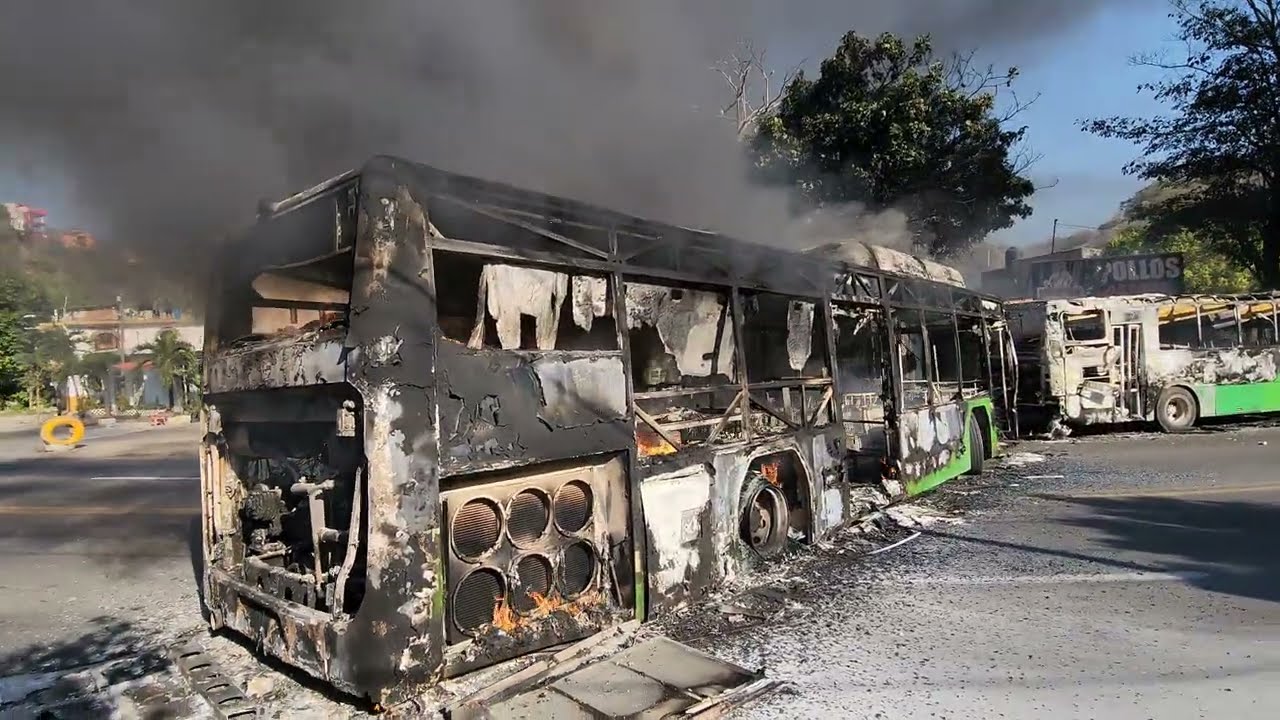
Guadalajara, Mexico’s second-largest city, saw burning vehicles blocking major roadways — a particularly alarming development given that the city is scheduled to host matches during this summer’s FIFA World Cup.
Who Was “El Mencho”?
Oseguera Cervantes was 59 years old and originally from Aguililla in the neighboring state of Michoacán. He had been deeply involved in drug trafficking since the 1990s. As a younger man, he migrated to the United States, where he was convicted of conspiracy to distribute heroin in a California federal court in 1994 and served nearly three years in prison.
After his release, he returned to Mexico and climbed the ranks of the drug trade. Following the death of drug lord Ignacio Coronel Villarreal, Oseguera Cervantes co-founded the Jalisco New Generation Cartel around 2007.
The group initially worked under the Sinaloa Cartel but eventually broke away, and the two organizations have waged a bloody territorial war across Mexico ever since.
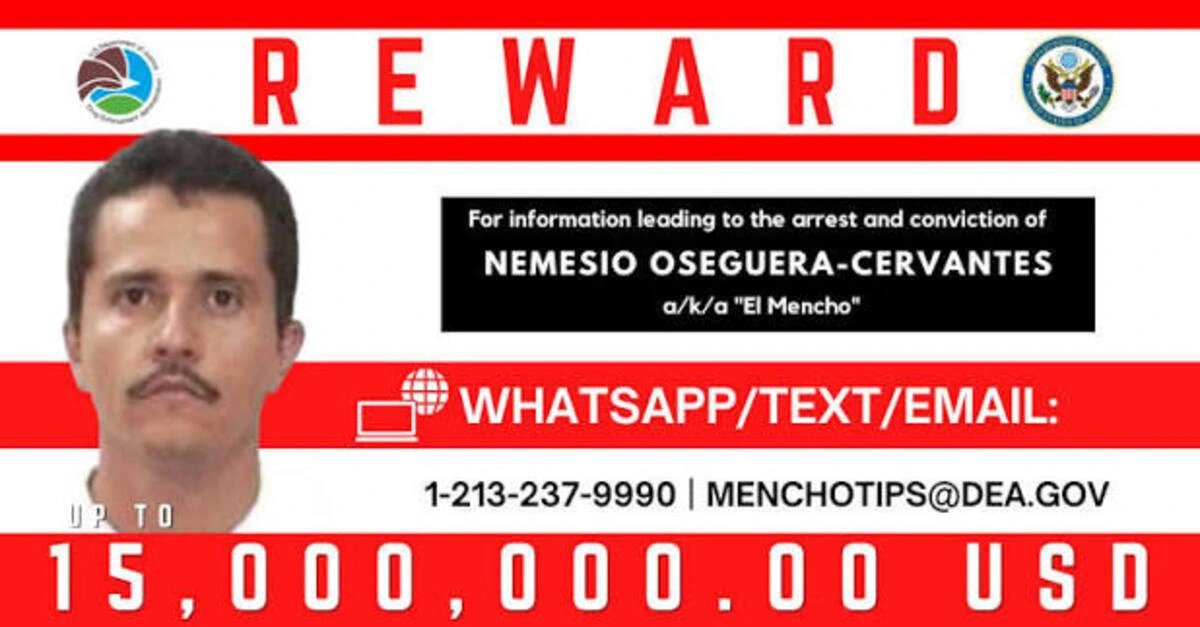
The U.S. State Department had placed a $10 million, which increased in December, 2024 to $15 million, bounty on information leading to El Mencho’s arrest. He had been indicted multiple times in U.S. federal court on charges including conspiracy to distribute fentanyl, methamphetamine, and cocaine, as well as firearms offenses connected to drug trafficking.
The CJNG: A Cartel Unlike Any Other
The Jalisco New Generation Cartel, known by its Spanish acronym CJNG, is not just another drug trafficking organization. The DEA considers it as powerful as the Sinaloa Cartel, with a presence in all 50 U.S. states, and it is one of the primary suppliers of cocaine, fentanyl, and methamphetamine to the American market.
What sets the CJNG apart is its brazen willingness to take on the Mexican state directly. The cartel has attacked military helicopters, pioneered the use of explosive-laden drones, and planted land mines.
In 2020, it carried out a dramatic assassination attempt in the heart of Mexico City using grenades and high-powered rifles against the capital’s top police official.
Just last year, families searching for missing loved ones discovered piles of shoes, clothing, and bone fragments at a site authorities later identified as a CJNG recruitment and training camp — a chilling reminder of the cartel’s capacity for terror against ordinary people.
What Comes Next Could Be Worse
This is where the celebration gets complicated.
Mexican President Claudia Sheinbaum, like her predecessor, has long criticized the “kingpin strategy” — the approach of targeting cartel leaders — because history has shown that eliminating a boss often triggers explosive factional violence as rival groups rush to fill the power vacuum.
That concern is not theoretical. The Sinaloa Cartel has been weakened by devastating internal warfare following the captures of its own leaders, “El Mayo” Zambada and Joaquín “El Chapo” Guzmán. There is every reason to expect a similar — or worse — wave of violence as the CJNG fractures.
The U.S. Embassy confirmed that the operation was carried out by Mexican special forces with American intelligence support. The Trump administration, which designated the CJNG a foreign terrorist organization earlier this month, will almost certainly frame this as a victory for its pressure campaign on Mexico.
But for everyday people living in Jalisco, Michoacán, and the many other states where the CJNG operates, the coming days and weeks are likely to be terrifying. The cartel’s vast drug empire will not simply disappear — it will be fought over, violently, by armed factions with no loyalty to anyone but themselves.
The people who will pay the highest price for this power vacuum are not drug lords or politicians. They are the families, workers, and communities caught in the crossfire — people who never had a say in any of it.
This is a developing story. Resist Hate will continue to monitor the situation and provide updates as they become available.