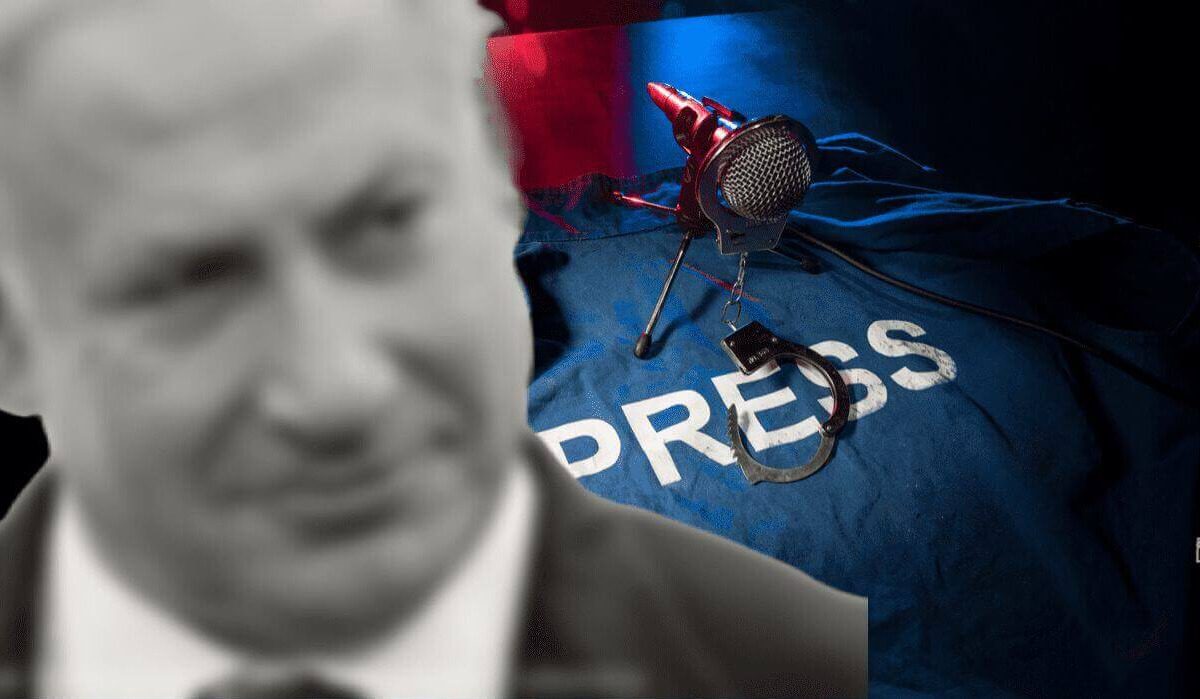

An Israeli airstrike hit a clearly marked media vehicle on the Jezzine highway in southern Lebanon on Saturday, killing three journalists — the deadliest single attack on the press in Lebanon since the conflict escalated in March.
The dead are Ali Shuaib, a veteran war correspondent for Hezbollah-affiliated Al Manar TV; Fatima Ftouni, a reporter for Al Mayadeen TV who had filed a live broadcast from the field just moments before the strike; and her brother Mohammad Ftouni, a freelance photojournalist.
According to Al Mayadeen, four precision missiles struck the vehicle while the journalists were en route to cover an assignment.
The Israeli military confirmed it carried out the strike but only addressed one of the three deaths. In a statement, the IDF accused Shuaib of being a member of Hezbollah’s Radwan Force who had been using journalism as cover to gather intelligence and expose the positions of Israeli soldiers.
It offered no evidence to support the claim. The military made no mention of the Ftouni siblings, neither of whom has been accused of any militant affiliation.
A Pattern the World Keeps Watching
The Committee to Protect Journalists said it is investigating the attack and pushed back hard on Israel’s framing.
CPJ noted a long-running pattern in which Israel labels journalists as combatants or terrorists after killing them — without producing credible evidence to back it up.
This is not a new tactic. It’s one Israel has deployed repeatedly since October 2023, when the war in Gaza began. And the numbers tell a devastating story.
CPJ’s most recent data, updated March 26, shows at least 256 journalists and media workers killed across Gaza, Yemen, Lebanon, Israel, and Iran since the conflict began.
Israel has now killed more journalists than any other government in CPJ’s entire recorded history, dating back to 1992.
In 2025 alone, a record 129 journalists were killed worldwide — and Israel was responsible for roughly two-thirds of them.
Saturday’s strike brings the total journalist death toll in Lebanon to 11 since the war began, with five killed this year alone.
The strike also came just two days after Israeli forces killed photojournalist Hussain Hamood in Nabatieh, and nine days after the killing of Al Manar journalist Mohammed Sherri in an Israeli strike on a Beirut apartment.
In a related event, RT correspondent Steve Sweeney and his cameraman were covering the Israeli military’s invasion of southern Lebanon when a bomb fell directly behind Sweeney. He ducked and ran forward, attempting to escape the blast.
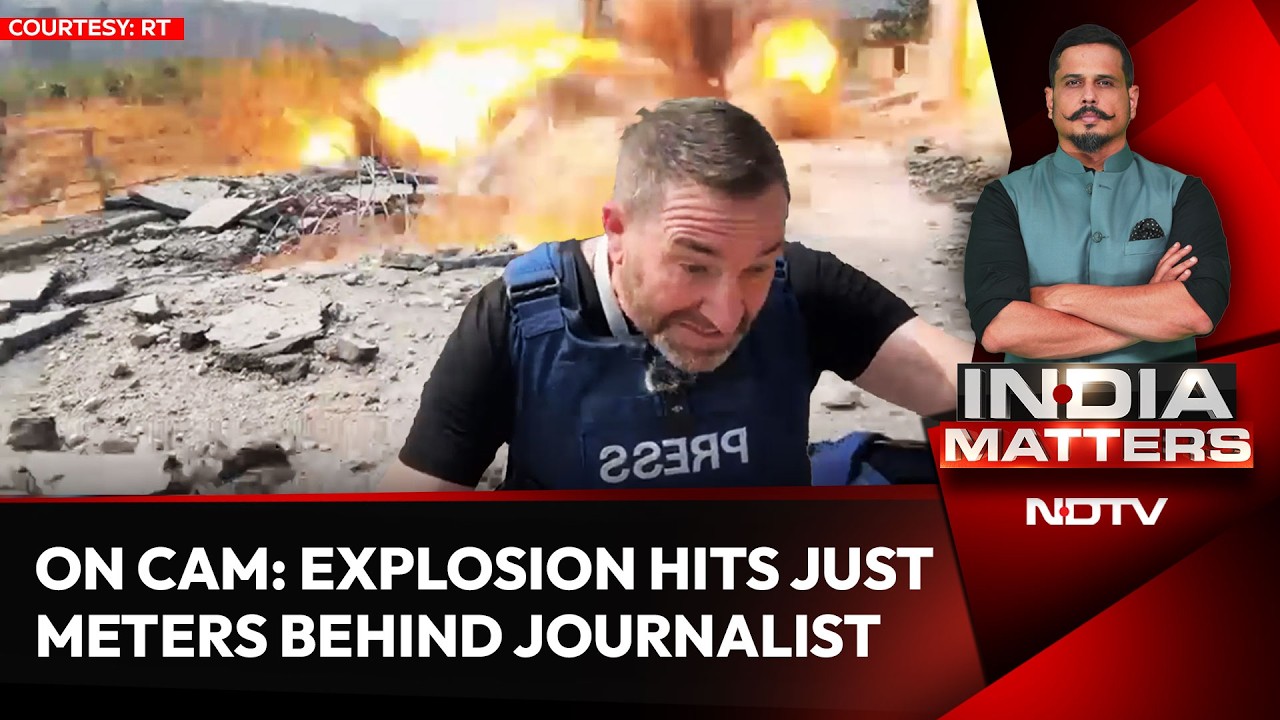
The video of that attack is further evidence that the IDF is killing journalists covering war crimes in Gaza— and now in Lebanon.
When he later spoke about the incident, Sweeney revealed injuries he sustained in the explosion from shrapnel embedded in both arms.
“This Vest Was Supposed to Protect My Colleagues”
In a broadcast from the scene, Al Mayadeen journalist Jamal Al-Gharabi stood beside the charred remains of the car where his colleagues died. He held up a bulletproof vest marked “PRESS” in Arabic, its bottom edge torn apart by the blast.
His voice broke as he spoke. Then he started shouting.
He picked up a second vest — Fatima Ftouni’s — and asked where the international laws that are supposed to protect journalists and civilians had gone.

Israel’s military has been ignoring international laws and committing war crimes throughout the genocide in Gaza.
With a U.S. Defense Secretary publicly calling for the U.S. military to ignore the “stupid rules of engagement,” the days when militaries around the world respected international law are over.
The scene of the murders carried a cruel echo. In October 2024, Fatima Ftouni survived an Israeli strike that CPJ confirmed hit a compound housing 18 journalists in southern Lebanon, killing two reporters and a media worker.
After that attack, she stood in front of a destroyed vehicle holding her vest, her helmet, and her microphone. She called the microphone the only weapon journalists carry.
Lebanon Responds, Israel Stays Silent on Two of the Dead
Lebanese President Joseph Aoun called the strike a crime that violated “the most basic rules of international law” by targeting civilians doing their jobs.
Prime Minister Nawaf Salam condemned it as “a flagrant violation of international humanitarian law.”
Lebanon’s Information Minister Paul Morcos announced at a press conference that the government would file a formal complaint with the UN Security Council, calling the strike a deliberate war crime against the press.
The Ftouni siblings’ father appeared in footage aired by Al Mayadeen. He said he was proud of his children, that his head was held high even as his eyes filled with tears and his heart ached. He said his family would not be broken.

The Bigger Picture
Israel’s escalating offensive in southern Lebanon has killed more than 1,100 civilians, including 120 children and 42 paramedics, since operations resumed on March 2, according to Lebanon’s Ministry of Health.
More than a million people have been displaced. On the same day the three journalists were killed, the World Health Organization reported that eight additional paramedics were killed and seven wounded in five separate attacks on healthcare workers in southern Lebanon.
Four hospitals and 51 primary healthcare centers have been forced to close.
When a government can kill journalists and then retroactively label them as terrorists — with no evidence, no accountability, and no consequences — the legal framework designed to protect the press in wartime has effectively collapsed.
And the journalists still working in southern Lebanon know it. As one reporter on the ground told Al Jazeera after the strike: the journalists who remain are going to keep doing their jobs, despite knowing they could be next.
An X user commented, “Stop wearing vests that say PRESS!” Perhaps it’s time for journalists in the Middle East to accept that the protective label they wear when they cover conflicts involving the IDF is precisely why they are targeted.