
Cuban protesters in the city of Morón attacked a Communist Party headquarters overnight Friday, torching furniture and hurling rocks through windows in a rare explosion of public fury driven by weeks of crippling blackouts and food shortages.
The unrest marks the most dramatic episode yet in a deepening humanitarian crisis directly tied to the Trump administration’s oil blockade of the island.
What Happened in Morón
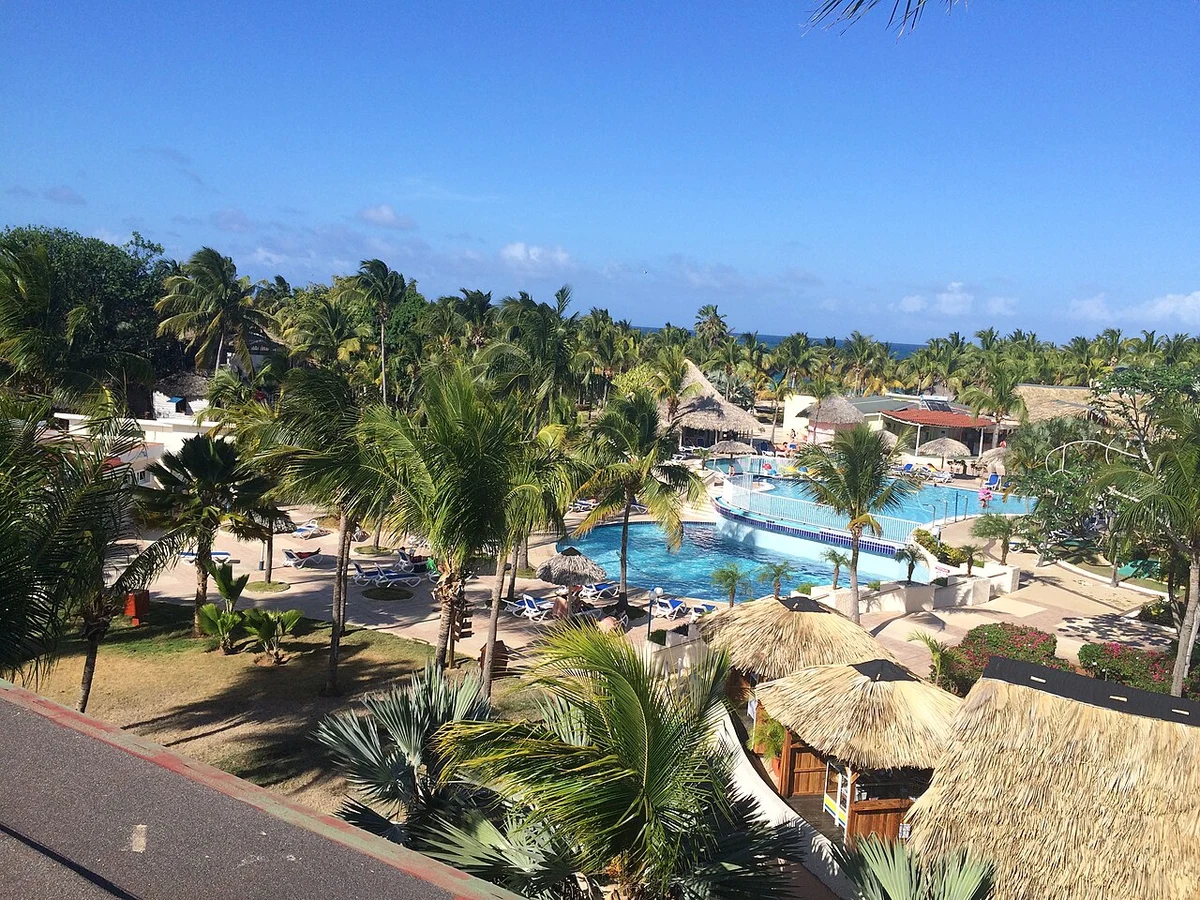
The protest began peacefully on Friday evening in Morón, a city on Cuba’s northern coast roughly 250 miles east of Havana, near the tourist resort of Cayo Coco.
Residents marched through unlit streets banging pots and pans, a form of protest that has spread across the island over the past week. After what state media described as an initial exchange with local authorities, the demonstration turned violent.
State-run newspaper Invasor reported that the crowd vandalized the municipal Communist Party headquarters, with a smaller group stoning the entrance and setting reception furniture on fire in the street.
Social media videos showed a large bonfire fed by furniture and documents pulled from inside the building. Demonstrators were seen carrying torches and breaking into the building as voices in the crowd chanted “Down with communism” and “Liberty.”
The government described the events as “vandalism acts” and said five people were arrested. Protesters also damaged a pharmacy and a government-run market in the area.
One particularly disturbing video appeared to show a young man collapsing after what bystanders claimed was gunfire. People nearby can be heard screaming that authorities had opened fire despite promises not to shoot, and the injured man was carried away by other protesters.
Cuban state media disputed this account, claiming no one was injured by gunfire and attributing the man’s injuries to a fall, describing him as “drunken.”
Public protests of this nature are exceedingly rare in Cuba. Some participants in the July 11, 2021 protests — the largest anti-government demonstrations in decades — were punished with prison sentences of more than a decade.
The rights group Justicia 11J tracks at least 760 political prisoners currently behind bars on the island.

The Oil Blockade Behind the Crisis
The immediate cause of Cuba’s suffering is no mystery. The Trump administration has deliberately strangled the island’s fuel supply in an openly stated campaign for regime change.
On January 29, 2026, President Trump signed Executive Order 14380, declaring a national emergency and authorizing tariffs on any country that directly or indirectly supplies oil to Cuba.
The order came weeks after the U.S. military intervention in Venezuela in January, which removed President Nicolás Maduro from power and effectively ended Venezuelan oil shipments that had covered roughly half of Cuba’s needs.
Mexico had been Cuba’s other steady supplier, delivering a final small cargo on January 9. After Trump threatened tariffs on any nation exporting oil to Cuba, Mexico ceased shipments as well, cutting off that flow entirely.
The consequences have been catastrophic. Cuba has lost an estimated 90 percent of its fuel supply. Bloomberg’s satellite imagery analysis found that nighttime light levels in major cities like Santiago de Cuba and Holguín have dropped by as much as 50 percent.
Havana residents have endured blackouts lasting up to 15 hours a day. On March 4, a boiler failure at the Antonio Guiteras thermoelectric plant — the island’s largest — collapsed the national power grid, leaving millions without electricity. Two additional power plants had already shut down for lack of petroleum.
The crisis extends well beyond electricity. Cuba suspended jet fuel services at its airports, prompting Air Canada, Rossiya, and Nordwind to cancel flights to the island.
Schools have cut afternoon sessions because there’s no transportation to deliver food to cafeterias. Hospitals are operating under severe strain.
The UN Secretary-General warned that Cuba’s humanitarian situation could “worsen, or even collapse” without adequate fuel.
The New York Times described the blockade as the first effective U.S. blockade of Cuba since the Cuban Missile Crisis.
A Manufactured Crisis
It is important to be clear about what is happening here. Cuba’s government bears responsibility for decades of economic mismanagement, political repression, and the systematic denial of basic freedoms that have left the island vulnerable.
The Cuban people have legitimate grievances against their own government that long predate this moment.
But the current crisis — the one driving people into the streets to burn Communist Party offices — is not an organic consequence of Cuba’s internal failures alone. It is the direct, predictable, and intended result of a deliberate U.S. policy to make life on the island unbearable until the government falls.
Trump has been explicit about this. He told reporters that Cuba is “in a big deal of trouble” and suggested a “friendly takeover.” He predicted the island “is going to fall pretty soon.” A White House official described Cuba as a “failing nation” and said a deal “would be very easily made.”
The strategy follows the January overthrow of Venezuela’s Maduro and comes alongside the ongoing military campaign against Iran — a pattern of aggressive U.S. action against governments it considers adversaries in the region and beyond.
The human cost of this strategy falls entirely on ordinary Cubans — people who did not choose the government they live under and who have no power to change it through democratic means because their government does not permit that.
They are the ones sitting in the dark, the ones watching their children’s schools close, the ones who cannot find medicine.
As one Havana resident, a 40-year-old single mother of two who works as a part-time house cleaner, described it: her older daughter’s school cut afternoon classes because there’s no transportation to bring food, and her younger daughter’s asthma medication is unavailable. She said everything is going to get worse.
Diplomatic Maneuvering and Prisoner Releases
Against this backdrop, both sides are making tentative moves toward negotiation.
On Friday, President Miguel Díaz-Canel publicly confirmed for the first time that his government was in talks with Washington. He offered few details, saying only that the conversations aimed to find “solutions, through dialogue, to the bilateral differences.”
He said the talks were being supported by unnamed “international factors.”
The day before, Cuba’s Foreign Ministry announced the release of 51 prisoners, framing the move as a goodwill gesture stemming from close relations with the Vatican. The Holy See confirmed that discussions regarding prisoner releases had taken place, following a February 28 meeting between Pope Leo XIV and Cuba’s Foreign Minister.
The Justicia 11J rights group confirmed that at least two of those released had been imprisoned for participating in the 2021 protests, including one man serving a 13-year sentence and another serving 14 years.
Díaz-Canel insisted the releases were a sovereign Cuban decision, not a response to U.S. pressure. But the timing — coming hours before his confirmation of talks with Washington — suggests they are very much part of a diplomatic calculation.
U.S. media reports indicate that Raúl Guillermo Rodríguez Castro, a grandson of former president Raúl Castro, has been conducting back-channel discussions with Secretary of State Marco Rubio. Rodríguez Castro was reportedly seated in the front row during Díaz-Canel’s televised address on Friday.
Mexico’s President Claudia Sheinbaum, who offered to mediate, welcomed the talks and denounced the “injustice of the blockade against the Cuban people.” Mexico has sent three shipments of humanitarian aid to Cuba since February, with two Navy ships carrying 1,000 tons of supplies arriving Friday.
What Comes Next
The Morón riot is a warning sign. Cuba’s pot-banging protests have been spreading nightly for over a week, with Havana as the epicenter but demonstrations reported in multiple provinces.
The storming of a Communist Party building is a significant escalation — an act of defiance that would have been nearly unthinkable just a few years ago and that carries enormous personal risk for those involved.
The Cuban government faces a dilemma with no good options. It cannot restore the fuel supply on its own. It cannot meet its people’s basic needs without either capitulating to U.S. demands — the nature of which remain unclear — or finding alternative sources of oil that don’t exist in sufficient quantities.
Russia has signaled interest in sending shipments, but the logistics and the threat of U.S. retaliation make that path uncertain.
For the Trump administration, the strategy appears to be working exactly as designed. The suffering is real, the pressure is mounting, and the government is coming to the table. Whether what follows is a genuine negotiation for the benefit of the Cuban people or simply the next phase of a regime change operation dressed in diplomatic language remains to be seen.
What is already clear is who is paying the price. It is the mother in Havana who cannot find asthma medicine for her daughter. It is the family in Ciego de Ávila province getting one hour of electricity a day. It is the people of Morón, driven to such desperation that they stormed a government building in the dark, knowing full well what the consequences might be.
Their anger is real and justified. The question the world should be asking is not whether they have a right to be furious — of course they do — but whether a U.S. policy designed to manufacture that fury, to weaponize hunger and darkness against an entire civilian population as leverage for geopolitical objectives, is something that should be tolerated in 2026.