



Let’s learn more about “Tollund Man” and our ancestors. What do they teach us?
Our great human mistake is to think we’re special. Whole academic careers have been devoted to demonstrating human exceptionalism, compared to other species.
Whole empires have been built on beliefs of racial and cultural supremacy and hierarchy. But these untruths and injustices are now, at least, visible to everyone. With clearer sight, we can act to repair the harm, and proceed with curiosity, humility and care.
If we turn that same curiosity, humility and care to the past, what might it teach us about ourselves, our world, where we’ve come from and where we’re headed?
Monuments
‘Neanderthal’ is often shorthand for primitive, uncivilized, backward. But archaeological evidence proves this human species was anything but. In Bruniquel, south west France, cavers discovered a large chamber more than 300m from the entrance, filled with strange arrangements of broken stalagmites.
There were three rough circles, the largest 7m across. There were small heaps of stalagmites, and flecks of charcoal and burned earth, showing where fires had been lit on the cave floor.
Altogether, 2.2 tons of rock had been stacked and intentionally arranged. Why? We don’t know. There’s nothing practical about making small circles of cave rocks far from natural light or fresh air – they’re not obviously shelters or storage structures, for example.
But we do know who made them. We know they were made some 176,500 years ago, plus or minus approximately 2,000 years, based on the chemical dating of mineral deposits over the stalagmite arrangements.
Which means it must have been Neanderthals, as they were the only human species in Europe at the time. Far from knuckle-dragging, these ancients were building…monuments?
Interbreeding
That requires a level of symbolic thinking and cultural complexity we usually consider the sole preserve of our species, Homo sapiens. It probably also means Neanderthals had complex language.
Year on year, new discoveries showcase Neanderthal art, innovative tools, habitat engineering. We find careful Neanderthal burials, collections of potent items like eagle talons, and pierced shells that were probably used as beads.
Scatters of flint debris tell the story of Neanderthal children learning at the feet of their elders. We see evidence of long term care of sick, elderly and disabled family members.
“Humans continue to be messy and complex, and future archaeologists will look at our time with the same mix of fascination and bafflement.”
Neanderthals became extinct as a distinct species around 40,000 years ago – we’re often told it’s because they were outcompeted by their smarter Sapiens cousins.
But the truth demands more humility. We didn’t ‘beat’ them because we’re better. In fact, we didn’t beat them at all. It was probably luck, and climate, and interbreeding that meant they became extinct as a distinct species, and we’re still here.
Longevity
Homo sapiens (us) and Homo neanderthalensis (them) regularly had children together around 50,000 years ago, after bands of Sapiens migrated out of north east Africa and met the Neanderthals already in European and Eurasian lands.



As a result, if your family ancestries trace to Europe or Asia, it’s likely that you have Neanderthal ancestors and around two to three per cent of your DNA comes from those Neanderthal grandparents. So they didn’t die out. Rather, they were bred in.
And the other truth? It’s kind of too soon to tell who’s been ‘successful’. Neanderthals are first visible in the archaeological record around 430,000 years ago and are no longer present around 40,000 years ago – a solid 390,000 years’ existence.
The earliest Homo sapiens fossils found so far date to around 300,000 years ago – it’s anyone’s guess whether we’ll still be around in another 90,000 years.
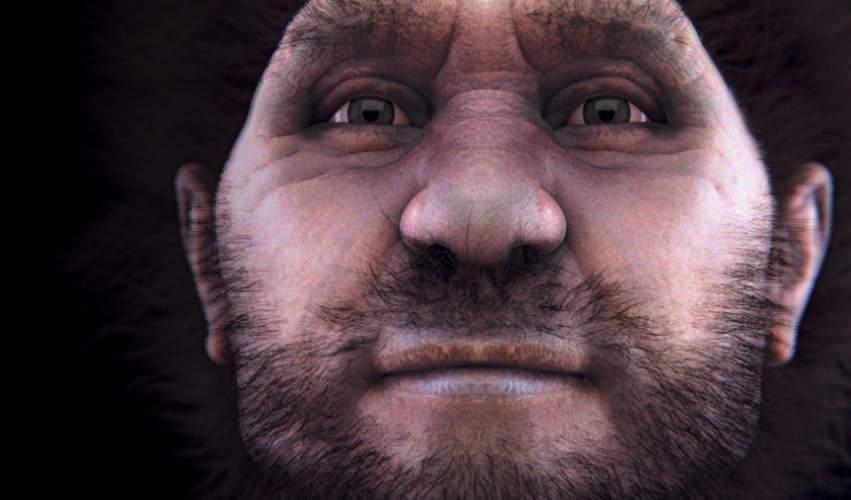
In terms of longevity, both Neanderthals and Sapiens are put in the shade by an earlier ancestor species, Homo erectus. Also smart, creative and social, these early people lived from around two million years ago and only died out around 115,000 years ago, a staggering 1.9 million years’ existence.
Reviled
As a species, Homo sapiens are supremely adaptable and sociable: we can thrive in Arctic tundra, tropical rainforest, dense megacities and the International Space Station.
But, as with all life, we have limits. A clear reckoning of our deep history could help us shift from a self-aggrandising domination mindset to something more humble, and more true. People have come, and gone, before. It will happen again. The more social and creative we can be, the more we meet our basic behavioural needs.
Tollund Man
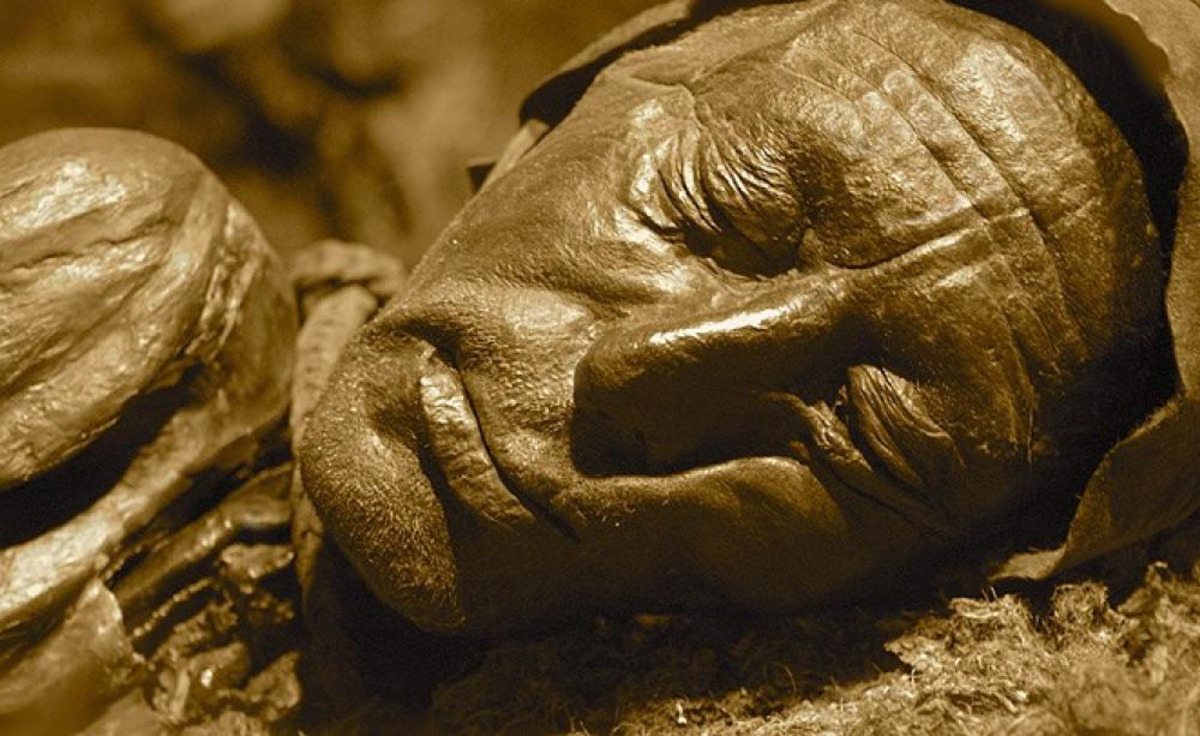
Tollund Man (in the main photo) was deposited in a Danish peat bog about 2,400 years ago during the Iron Age. We don’t know for sure, but he was probably a human sacrifice, ritually murdered and intentionally deposited in the bog.
Bogs are strange and powerful places in the landscape. They’re edgelands– not earth, not water. Not light, not dark. The water is neither fresh nor salt. So perhaps they were where dangerous or bad people could be disposed of in safety.
Or maybe bogs were sacred, or a portal to another realm, where precious offerings could be made. Was Tollund Man highly valued, and carefully given to the bog? Or was he feared and reviled, and abandoned in the bog?
The Mystery of Europe’s Most Famous Bog Bodies

Video added by Resist Hate Editor
Winnowed
For archaeologists, at least, bogs bring gifts. Low oxygen levels mean that organic matter is preserved.
Tollund Man should have decomposed long ago, but thanks to the bog, his body’s soft tissues and organic possessions are preserved. His little leather hat is still on his head, the plaited leather cord used to kill him is still around his neck. And his semi-digested last meal was still inside his guts.
He had lake fish, boiled in peaty water, and porridge made of barley. The porridge mix also contained pale persicaria and flax seeds and twenty other weeds including black bindweed, fat hen, hemp-nettle, corn spurrey and field pansy.
Some of these seeds found their way in with the porridge grains unintentionally – part of the natural weedscape in a northern European traditional barley harvest. But there are also barley rachis segments (the pieces of stem and seed skins that would usually be winnowed out during threshing) and pieces of sand and charcoal.
Efficiencies
The interpretation is that some of the sweepings of the threshing floor were collected up and intentionally added to Tollund Man’s porridge. Was this normal – a way to bulk or perhaps add flavour to everyday meals? Or is this an indication that he was a condemned man or otherwise marked for his boggy fate, by being fed ‘floor porridge’?
The seeds in Tollund Man’s porridge reveal the abundant natural world his community farmed amongst, and ate from. Farming was rarely intensive enough to be anything other than nature-friendly.
And by intention or accident, the range of plants and seeds consumed by Tollund Man in one meal stands in stark contrast to modern grain, ‘unadulterated’ by weeds.
If I want 20 different seeds and plants in my porridge, I have to buy a health supplement. The efficiencies of modern farming mean the field loses its abundance, and so too, do I.
Creative
The porridge shows that there is resilience in the messy edges. For the natural world and ourselves. Perhaps being singled out for ritual execution was the worst day of Tollund Man’s life, and he picked at his porridge with fear in his throat.
Or perhaps it was a final meal eaten with purpose and resolve, ready and willing for the task ahead. A meal rich in meaning and in nourishment.
The past can defy understanding just as the present does. Humans continue to be messy and complex, and future archaeologists will look at our time with the same mix of fascination and bafflement.
With cultivated humility and earnest curiosity – for other living peoples, for non-human life, and for past lives – we have the best chance of using our complex, creative and social selves to find the path forward.
This article has been published through the Ecologist Writers’ Fund. We ask readers for donations to pay some authors £250 for their work. Please make a donation now. You can learn more about the fund, and make an application, on our website.
The links in this article, added for context or to help readers learn more about a topic, were added by the Resist Hate Editor.
This article was originally published on The Ecologist and is republished here under a Creative Commons 4.0 license.