
You’ve heard both words thrown around in true crime podcasts, political commentary, and arguments with your ex. But what do “psychopath” and “sociopath” actually mean? And what does it look like in real life for someone with Antisocial Personality Disorder, or ASPD?
Here’s what you need to know — in plain language.
First, Let’s Clear Up the Terminology
Neither “psychopath” nor “sociopath” is an official medical diagnosis. You won’t find either term in the DSM-5-TR, the handbook that mental health professionals use to diagnose disorders. The clinical term doctors actually use is Antisocial Personality Disorder (ASPD).
That said, psychologists and researchers still use “psychopathy” and “sociopathy” to describe specific patterns of behavior that fall under the Antisocial Personality Disorder umbrella.
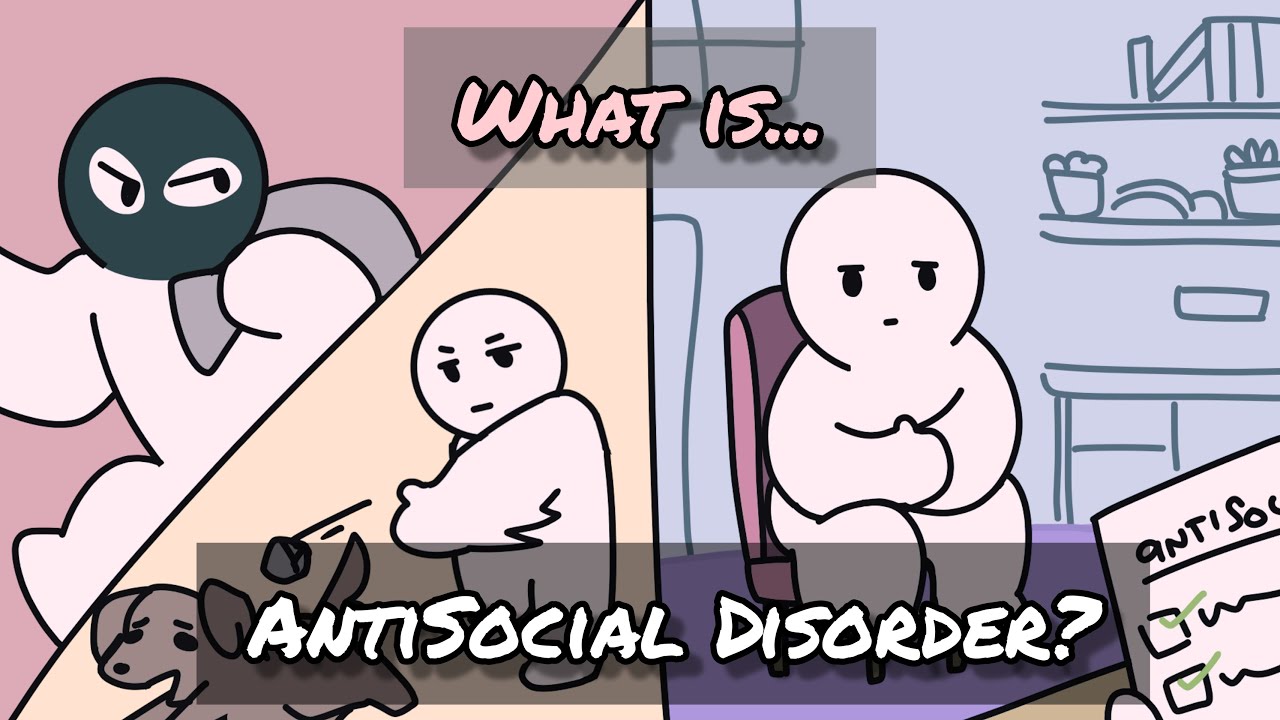
Think of ASPD as the broad category, and psychopathy and sociopathy as two different flavors within it.
Antisocial Personality Disorder: Psychopathy or Sociopathy?
Here’s the simplest way to understand the difference between the two:
- Psychopathy tends to be more calculated and controlled. People with psychopathic traits are often charming on the surface and may plan harmful behavior deliberately. Research suggests psychopathy has a stronger genetic and neurological component — certain areas of the brain that control empathy, guilt, and moral decision-making may be smaller or function differently.
- Sociopaths tend to be more impulsive and erratic. People with sociopathic traits are more likely to act out of emotional volatility rather than cold calculation. Sociopathy is more closely linked to environmental factors like childhood trauma, neglect, or growing up in an unstable home.
Both involve a disregard for other people’s rights. Both can involve manipulation, dishonesty, and a lack of remorse.
But the way they show up in a person’s life can look very different.
The Traits: What to Watch For

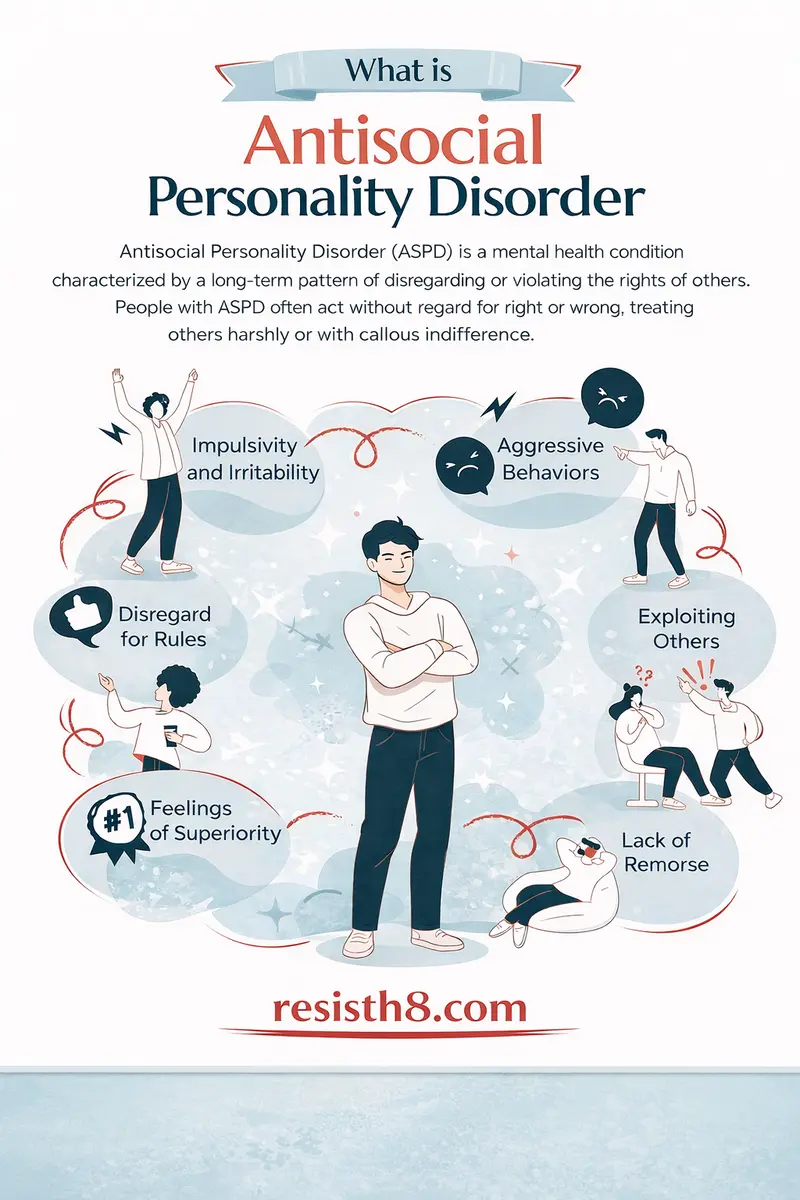
The following traits are associated with Antisocial Personality Disorder, psychopathy, and sociopathy. Not every person with these conditions will display every trait, and having one or two of these characteristics doesn’t make someone a psychopath. A clinical diagnosis requires a persistent, lifelong pattern of behavior that typically begins in childhood.
1. Superficial Charm
They can be magnetic. Engaging. The most interesting person in the room. But the charm is a tool, not a personality trait. It exists to gain trust, access, or control — and it can be turned on and off like a switch.
2. Grandiose Sense of Self-Worth
They genuinely believe they are superior to other people. This isn’t garden-variety confidence. It’s an unshakeable conviction that they are smarter, more important, and more deserving than everyone around them.
3. Pathological Lying
Lying isn’t occasional — it’s a way of life. They lie when they don’t need to. They lie when the truth would actually serve them better. And they do it so naturally that they often believe their own fabrications.
4. Manipulation and Conning
They use people. They study what makes others tick and then exploit those emotional vulnerabilities — for money, power, status, sex, or simply because they can. Gaslighting, love-bombing, and emotional blackmail are common tactics.
5. Lack of Remorse or Guilt
When they hurt someone, they don’t feel bad about it. They might say the right words if it serves them — “I’m sorry” can be part of the manipulation toolkit — but there is no genuine emotional weight behind the apology.
6. Shallow Emotions
They can mimic emotional responses they’ve observed in others, but the depth isn’t there. Joy, grief, love, and fear all exist on a much shallower level than they do for most people. Some researchers describe this as knowing the words to the song but not the music.
7. Lack of Empathy
They struggle to understand or care about how other people feel. This isn’t the same as occasionally being inconsiderate. It’s a fundamental inability — or unwillingness — to recognize that other people have feelings that matter.
8. Parasitic Lifestyle
They may rely on others financially, emotionally, or practically — not because they can’t support themselves, but because it’s easier to rely on others. They may cycle through relationships, jobs, and living situations, leaving a trail of drained and discarded people in their wake.
9. Impulsivity and Poor Behavioral Controls
This is where sociopathy tends to show up more prominently. Quick temper. Rash decisions. Walking out of jobs, relationships, and responsibilities without warning. An inability — or refusal — to think about consequences before acting.
10. Irresponsibility
Repeated failure to honor commitments, hold employment, meet financial obligations, or follow through on promises. They don’t see obligations the same way other people do.
11. Failure to Accept Responsibility
Nothing is ever their fault. They blame others, rationalize their behavior, minimize the harm they’ve caused, or simply rewrite history to cast themselves as the victim.
12. Criminal Versatility
While not everyone with these traits breaks the law, ASPD is the personality disorder most closely associated with criminal behavior. Roughly 1% of the general population displays psychopathic traits, but that number jumps to 15–25% among incarcerated individuals.
A Few Important Things to Keep in Mind
This is not a checklist for diagnosing your boss, your ex, or your in-laws. Only a qualified mental health professional can diagnose ASPD, and they can only do so in adults over 18. Many of these traits exist on a spectrum, and having some of them doesn’t make someone dangerous.
People with ASPD are not all violent. Pop culture has done an enormous disservice by equating these conditions with serial killers and horror movie villains. Research shows that some people with psychopathic traits can control violent tendencies and lead outwardly successful lives.
Many work in high-pressure careers where emotional detachment is rewarded rather than punished.
There is no cure, but there is treatment. Therapy — particularly specialized approaches — can help people with ASPD manage their symptoms and develop better behavioral patterns. The earlier the intervention begins, the better the outcomes tend to be.
Both nature and nurture play a role. Research estimates that 38–69% of ASPD cases have a genetic component. But childhood environment matters enormously. Abuse, neglect, and unstable family dynamics are significant risk factors.
This is a good time to have a discussion about the cause of the President’s behavior. We waste so much time and emotion trying to “figure out why” Trump makes certain decisions or lashes out in crazy rants and ‘posting sprees’ on Truth Social.

I’m not a psychiatrist, so I can’t diagnose Donald Trump with ASPD. What I can do is remind you that 27 top psychiatrists and mental health experts got together in Washington, D.C. and spoke with members of Congress about Trump in 2018.
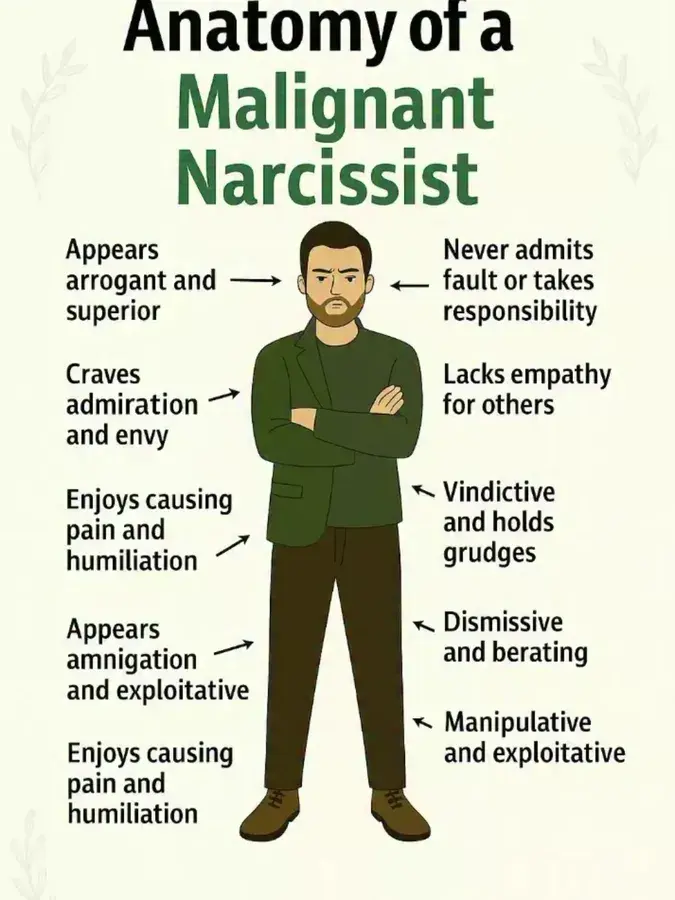
They felt they had a “duty to warn” the public about what they were seeing in Trump. They saw a malignant narcissist with sociopathic tendencies that would put the country in danger if he continued to serve as President.
If Congress had listened to the experts and removed Trump from office, January 6th never would have happened. And he wouldn’t have destroyed everything he has in his second term so far.
Imagine if Congress had taken the experts’ concerns about someone like that serving as president (with access to the nuclear codes) seriously. Maybe we could have avoided the pain and trauma caused by mass deportations. Renee Good and Alex Pretti would still be alive—along with the 30+ people who died in ICE custody.
We would still have allies and we wouldn’t be at war with Iran on behalf of Israel. Prices would be low, inflation going down, and millions of Americans would still have health insurance. The United States would have continued to help people all over the world through USAID, and we wouldn’t be cozied up to dictators like Putin and Orbán.
Unfortunately, members of Congress chose not to believe a group of experienced mental health professionals. They put party and/or politics over the country and the American people are paying the price.
Congress doesn’t shoulder all the blame, however. Millions of people watched a President mishandle a deadly pandemic, tell people to drink bleach, and refuse to participate in the peaceful transfer of power—-and then re-elected him for a second term.
In 2021, Trump attempted to overturn the results of an election he lost. He brought a crowd of angry supporters to Washington, D.C., told them lies and used rhetoric intended to make them angrier, then he aimed an angry mob chanting “Hang Mike Pence!” toward the Capitol as the counting of electoral votes took place inside.
Trump did not show remorse for what he did; instead, he gaslit the country about what took place on January 6, then pardoned his “personal army,” including a former Proud Boy who was serving 20 years in prison for ‘seditious conspiracy.’
33 of the January 6th insurrectionists who received pardons went on to commit crimes after being released, including: sexual abuse of children, assault, and child pornography.
ASPD, sociopathy, and psychopathy affect real people. The language of “psychopath” and “sociopath” gets tossed around casually — as insults, as jokes, or as political rhetoric.
But behind the labels are human beings dealing with a disorder that most of them did not choose and many developed as a result of trauma they experienced as children.
Understanding these conditions with accuracy and nuance isn’t just good science and reality-based reporting. It’s basic decency.
Resources:
If you or someone you know is experiencing a mental health crisis or having thoughts of suicide, call or text 988
To learn more about the psychiatrists who warned Congress about Donald Trump, watch this video:
‘There Are Thousands of Us.’ Mental Health Professionals Warn About the Mental Instability of Donald Trump