




The new policy states that “DHS may arrest and detain a refugee who has lived in the United States for at least one year and has not yet acquired” lawful permanent resident status. Approximately 100,000 refugees could be at risk for such arrest and detention.
The policy rescinds a 2010 DHS policy that limited the agency’s ability to arrest refugees.
The 2010 policy was cited in a 2026 court order that temporarily prohibited agents with U.S. Immigration and Customs Enforcement from arresting refugees in Minnesota in an effort to root out cases of fraud in the refugee admissions process.
As an immigration scholar, I believe the new DHS memo constitutes a massive departure from previous policy – one that could result in the detention of thousands of people who have lawful immigration status.
To better understand the new DHS policy and the change it represents, it’s helpful to clarify what it means to be a refugee.
Dhs-refugees-memo-2026The 2026 memo on change to refugee green card law
Refugees flee persecution
Refugees flee their countries to escape persecution due to their race, religion, nationality or political opinion.
Under U.S. immigration law, a refugee is someone who arrived in the U.S. through an official U.S. resettlement process.

After registering as a refugee abroad, the process for being resettled in the U.S. can take years – sometimes decades – and requires rigorous background checks.
Upon arrival, refugees are permitted to live and work indefinitely in the U.S. They are also eligible to “adjust” their immigration status to lawful permanent resident, also known as a “green card,” after one year in the country.
At issue with the new DHS policy is the interpretation of Section 209 of the Immigration and Nationality Act, the statute that governs refugee adjustments and moves them from refugee status to lawful permanent resident.
Section 209 states that refugees who have been physically present in the U.S. for one year and haven’t yet received lawful permanent resident status “shall, at the end of such year period, return or be returned to the custody of DHS for inspection and admission” as a lawful permanent resident.
Historically, this has meant that refugees are required to undergo a secondary screening, through an interview or paper application, before receiving their green cards.

But DHS is now interpreting the language in Section 209 to impose a duty on refugees to voluntarily return to DHS custody – which it defines as detention – after one year in the country.
This is despite the fact that refugees are not even eligible for legal permanent resident status until they have been in the country for a full year, putting refugees in an impossible situation.
Essentially, every refugee could face imprisonment unless immigration officials review and approve their green card applications at exactly the one-year mark.
History of refugee policy
The language in Section 209 arose after the passage of the Refugee Act of 1980, a law that created our current refugee resettlement framework.
Prior to this, there was no fixed legal mechanism for resettling refugees in the U.S.
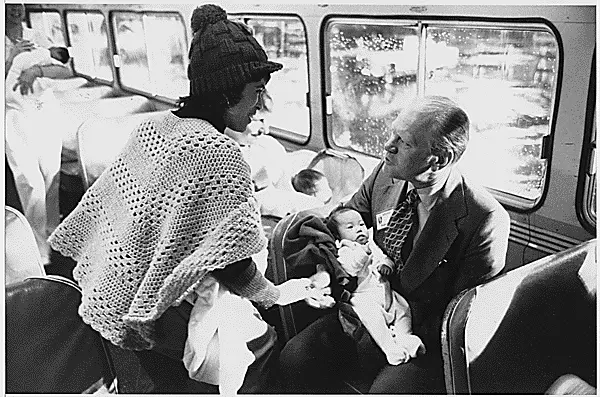
Instead, the government responded to humanitarian crises largely on an ad hoc basis. It temporarily allowed people into the U.S. from Vietnam and Cuba.
Once here, those individuals had no long-term legal status unless Congress managed to pass after-the-fact legislation authorizing them to apply for green cards, as it did for Cubans with the Cuban Adjustment Act of 1966.
The Refugee Act of 1980 was meant to solve this problem. It established a legal mechanism for refugee resettlement. It created a new refugee immigration status and ensured that refugees are eligible for permanent residency.
The earliest regulations implementing Section 209 show the “returned to custody” language was satisfied by attending an interview at a local immigration office.
It was part of the green card process that was eventually replaced with a paper application.
The regulations implementing that change state that the “‘custody’ requirement for refugees applying for adjustment of status” can be met by filing an application.
What the DHS memo means for refugees
So, what normally happens if a refugee fails to submit their application?
Usually, nothing.
Until relatively recently, refugees weren’t even permitted to file for lawful permanent residence until after living in the country for a year.
Previous ICE guidance recognized that even if a refugee fails to file a green card application at all, they still maintain their lawful refugee immigration status.
The failure to submit an application did not create any basis to deport a refugee. Therefore, absent other factors, immigration detention was inappropriate.
What will refugees do now?
Immigration attorneys are advising their refugee clients to file for lawful permanent status immediately, if they have not yet done so, to reduce the risk of detention. But that may not be enough.
The DHS memo states that a refugee “may be considered to have voluntarily returned to custody” if they filed their application and complied with any interviews.
But the wording of the memo leaves open the door to detain anyone who has not yet had their application approved.
This leads to another issue, which is DHS administrative delays. The government currently takes approximately 12 months to approve refugee green card applications for requests it’s willing to process.
In January 2026, another DHS policy put an indefinite hold on all applications for individuals from a list of 39 countries. Consequently, applications for refugees from countries including Haiti, Afghanistan and Republic of the Congo are not being reviewed at all.
“This means that refugees who have done everything right could be imprisoned indefinitely under this policy, because the U.S. government is refusing to judge their applications.”
Against this backdrop, the Trump administration has capped refugee admissions for 2026 to a record low of 7,500.
At least one federal lawsuit has already been filed to challenge this new policy.
What happens now depends on how far DHS is willing to go and whether the courts allow it to do so.
This article is republished from The Conversation under a Creative Commons license. Read the original article.