


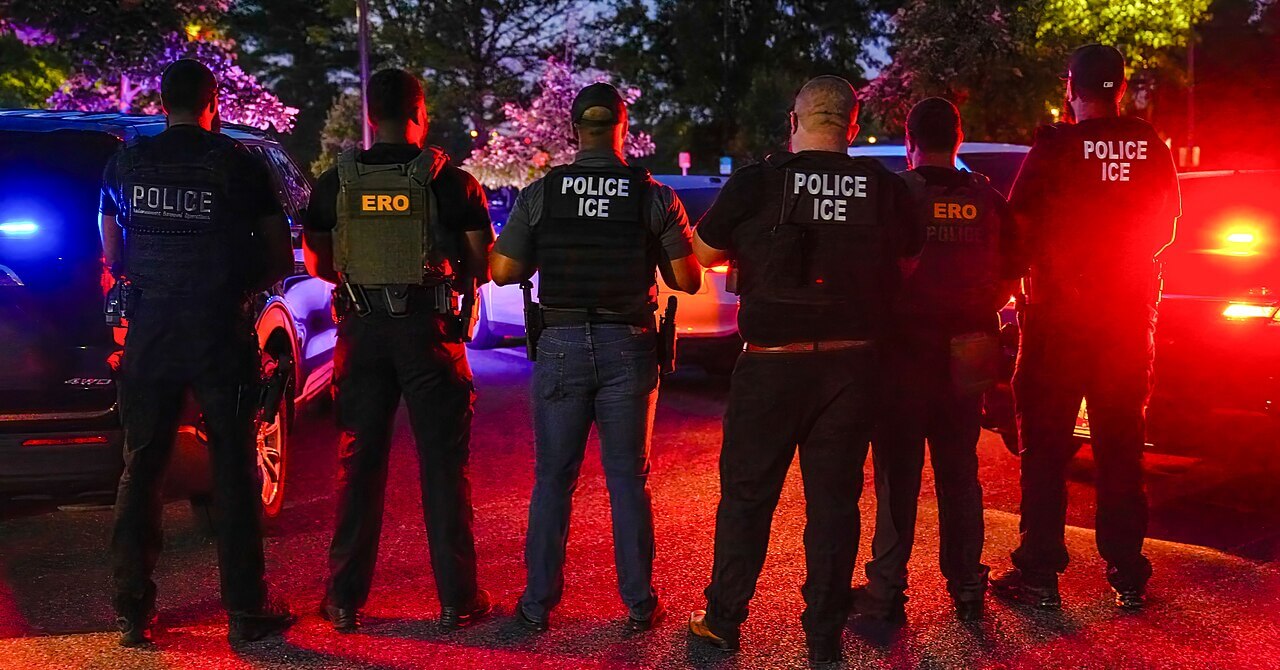
U.S. Immigration and Customs Enforcement (ICE) hired private contractors, quietly expanding its use of for-profit contractors to locate and track people facing immigration enforcement, according to newly surfaced records and reporting from The Intercept.
ICE Hired Private Contractors Tied to For-Profit Prison Operators
Internal contract documents show ICE has already paid millions to BI Incorporated, a subsidiary of the for-profit prison giant The GEO Group, to help pinpoint the locations of immigrants at their homes and workplaces.
The program represents a dramatic shift toward outsourcing what has traditionally been core federal law-enforcement work. Instead of relying solely on federal agents to locate individuals who have failed to appear for hearings or who are subject to removal orders, ICE hired private contractors and is now feeding batches of personal records to private firms with financial incentives tied to how many people they locate.
According to contract filings obtained by investigative outlets, ICE has spent at least $1.6 million so far on this scheme, and the commitment could grow to more than $120 million if the contract expands over time.
The agency’s procurement documents outline that contractors will receive detailed case packets containing personal data and will be expected to verify addresses, conduct surveillance, and report physical presence either at residences or places of employment.
This initiative is part of a larger push by the Trump administration to beef up deportation infrastructure, including a record-breaking budget for ICE operations and an increased emphasis on interior enforcement.
In response to political pressure and oversight concerns, ICE has also been exploring “skip tracing” — a strategy traditionally used by debt collectors and bounty hunters — to find people who have moved, changed addresses, or otherwise eluded federal agents.

Critics argue that promising performance-based bonuses or pay-per-location rewards could create perverse incentives. “When you put bounties on people’s heads, mistakes aren’t just possible, they’re inevitable,” one immigration attorney said in earlier coverage of the broader plan.
A Broader Retreat Into Privatization
The involvement of BI Incorporated, a long-standing vendor to ICE, isn’t new in principle — the company has managed electronic ankle monitors and other supervision programs for years — but its expanded role as a quasi-field enforcement arm marks a significant escalation.
Private companies like The GEO Group and its subsidiaries stand to benefit financially from this wider enforcement ecosystem, just as they have from the expansion in detention space and electronic monitoring programs.



Congressional budget expansions in fiscal year 2025 — including tens of billions in additional funding for detention and deportation operations — have turbocharged this dynamic, offering new revenue opportunities for contractors.
Supporters of the outsourcing model argue it could help ICE manage what they describe as an overwhelming docket of cases. With millions of pending removal orders nationwide, federal agents are stretched thin on both border and interior enforcement tasks.

Proponents say bringing in private expertise could theoretically free up agents for other duties.
Yet civil liberties advocates warn this model undermines due process and raises serious privacy questions. Contracts that push private firms to use “all technology systems available” — potentially including commercial databases and on-the-ground surveillance — could put sensitive personal information in the hands of entities not bound by the same public accountability standards as federal agencies.
Lawmakers from both parties have expressed concern. Some members of Congress have publicly questioned the legal and ethical foundations of outsourcing surveillance and what statutory authority allows such programs to proceed.
Oversight and Legal Questions Loom
As this program unfolds, it’s likely to face increased scrutiny from civil rights groups and privacy watchdogs. Critics point out that putting profit motives into enforcement work could lead to wrongful targeting or violations of constitutional protections against unreasonable searches and seizures.
The fact that ICE isn’t the only part of the Department of Homeland Security turning to private data and contractors — including expanded surveillance technologies, ankle-monitoring mandates, and predictive analytics tools — adds to the broader debate about the balance between enforcement and civil liberties in the digital age.
For now, advocates and legal experts are calling for greater transparency, clearer statutory limits, and independent oversight of any program that marries federal law-enforcement goals with private sector profit incentives.