

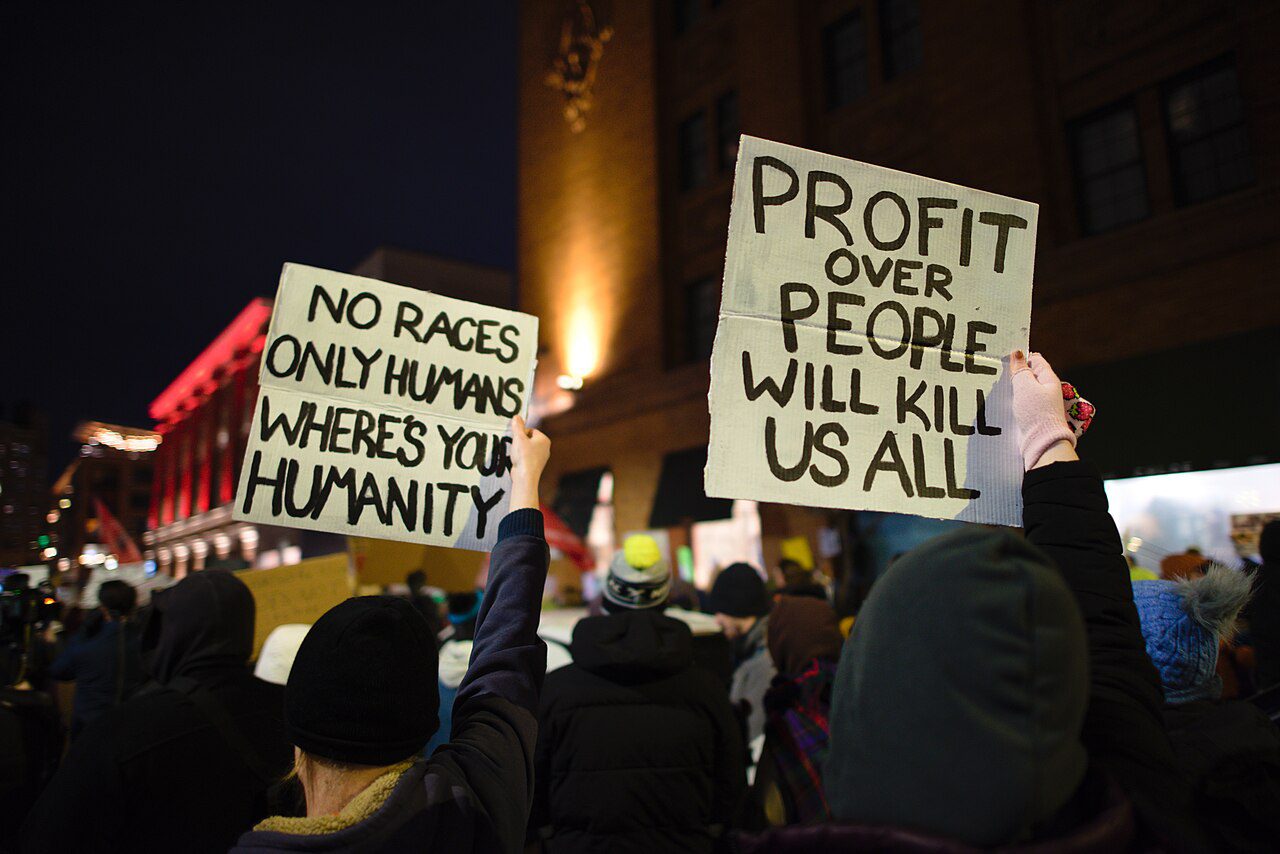
Today, Friday January 23, 2026, Minnesota became the site of a big, unusual public action called a Day of Truth & Freedom — a sort of “economic blackout.”
People were asked not to go to work, school, or shopping for the day as a way of showing how deeply upset many are with the federal government’s immigration enforcement policies in the state.
People aren’t just walking off jobs on a whim. This protest was organized by a mix of labor unions, community groups, faith leaders, and local politicians who say that recent actions by the U.S. Immigration and Customs Enforcement agency — better known as ICE — have gone too far and harmed everyday Minnesotans.
At the center of the anger is a shooting that happened earlier this month. On January 7, a 37-year-old woman named Renée Good was killed by an ICE agent in Minneapolis. Federal officials say she threatened agents with her vehicle, and that the agent acted in self-defense. But eyewitnesses and many local leaders dispute that version of what happened.
Video and an independent investigation by The New York Times has shown that Good was not a danger when she was shot. Her death has become a rallying cry for Americans against ICE.
That shooting didn’t happen in a vacuum. It came amid a much larger surge in federal immigration enforcement agents deployed to Minnesota earlier this month.
The Department of Homeland Security (DHS) sent around 3,000 officers — a huge number — to the state under what officials called an effort to arrest people they say have criminal records or are here illegally.
But many Minnesotans push back on that story. They say immigrants help the economy, aren’t criminals, and have been treated harshly or wrongly by federal agents. They also point out that most people held in immigration detention around the country don’t have a criminal history.
It’s these tensions that led to today’s economic blackout. People were encouraged to stay home from their usual activities to send a message: “We’re not okay with this.”
In some towns and cities people put their protest into action by closing businesses, staying off the job, and joining marches in downtown Minneapolis. Schools canceled classes or saw steep drops in attendance. Even in the frigid Minnesota winter cold, thousands turned out in the streets to show support.
Organizers outlined four main demands behind this action. They want:
- ICE to leave Minnesota entirely.
- Accountability for the agent responsible for Renée Good’s death.
- Congress to investigate ICE’s actions and stop new federal funding for the agency.
- Protection of workers and residents from what protesters call unconstitutional enforcement tactics.
This protest has drawn support from many corners — not just those immediately affected. Local labor unions like the Minnesota AFL-CIO have backed the strike, dozens of businesses closed in solidarity, and some national unions have signaled interest in taking similar actions in other cities.
But it isn’t without controversy. Federal officials, including a spokesperson for DHS and national political figures, have criticized the blackout and the protests.
They argue that immigration enforcement is necessary to protect public safety and that peaceful protest is one thing, but resisting laws and federal agencies is another.
The conflict has also drawn legal fights. Minnesota’s state government and some local governments filed lawsuits against the Department of Homeland Security, saying the federal push into Minnesota violates constitutional limits on federal power.
At the same time, federal prosecutors have been investigating claims that some local leaders interfered with law enforcement.
For many people on the ground — parents, teachers, workers, neighbors — the economic blackout is not just political talk. It’s a statement lived out in closed doors, empty classrooms, and chilled streets. It is a community saying, in effect, “This matters too much to carry on as normal.”
Whether you agree with the tactics, the fact that tens of thousands of people packed into protests in freezing weather shows how deeply the issue is felt. And it’s sparking conversations not just in Minnesota, but across the country about how immigration enforcement should work, how much power federal agencies should have, and what rights communities have to push back when they feel overrun.
In a democracy, protest is part of how people speak when they feel unheard. Today’s economic blackout in Minnesota is one of those moments. It’s a loud, unusual message from a state frustrated and worried about federal policies that many residents say violate civil rights and touch their lives every day.
Main photo by Fibonacci Blue, Flickr.